
 Abhiroop Das

Under the direction of Pablo Trapero and Pablo Fendrik, Netflix’s ‘Gordon’ follows Aníbal Gordon’s transition from a criminal to a participant in Argentina’s clandestine operations, and the chaos he unleashes in the process. While the Argentine crime drama series begins with him pulling off relatively small-scale heists, a turning point comes when he finds a nemesis in Julieta Melo. Initially training to be a lawyer, Julieta soon finds herself drawn to the world of intelligence and law enforcement, before eventually finding herself with a foot in both professions. As time passes, Julieta recruits Aníbal as an informant, drawing him deeper into the world of intelligence. However, their dynamic is anything but stable, marked by a sense of darkness and constant foreboding.
Julieta Melo Is a Fictional Operative Who Links Aníbal Gordon to Argentine Intelligence
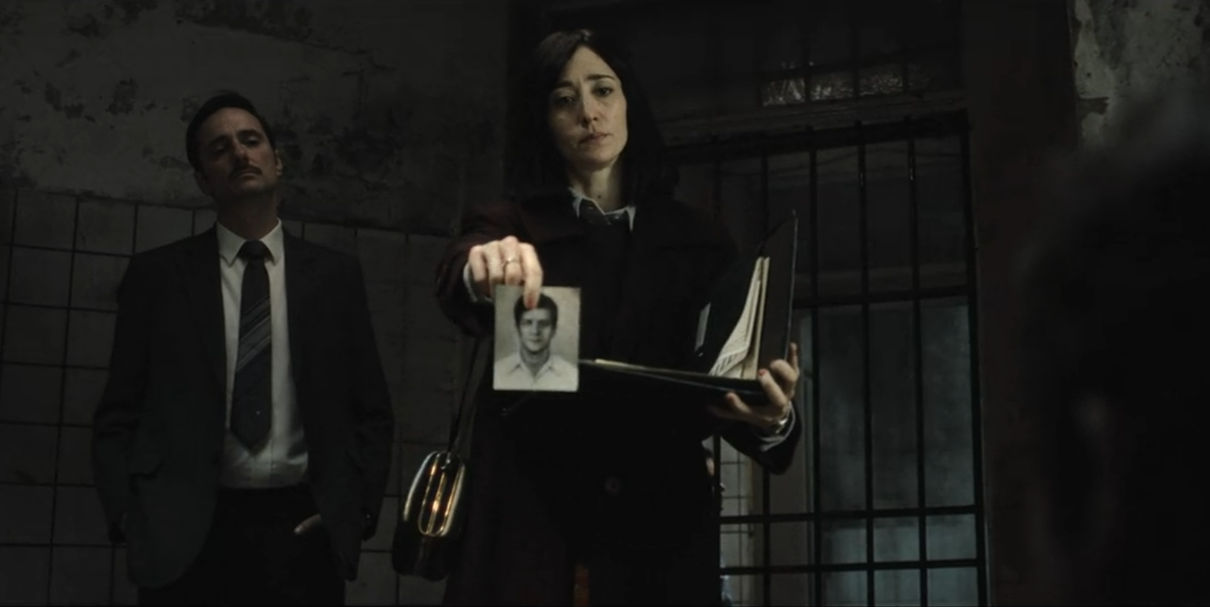
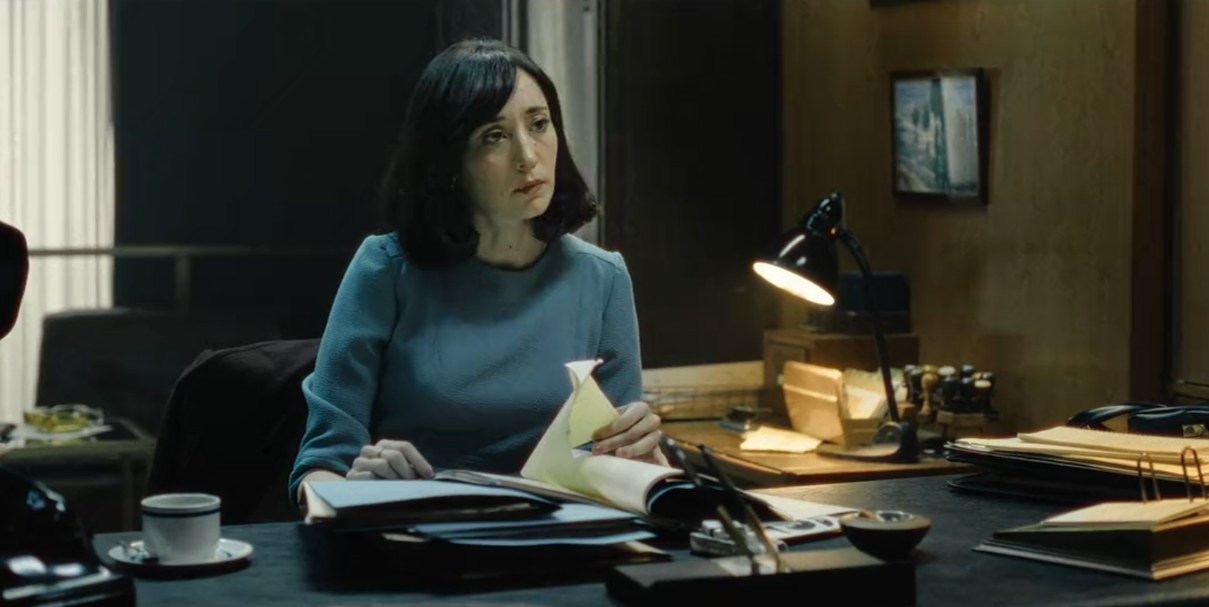
Julieta Melo is a fictional character created by author Marcelo Larraquy for his duology ‘Gordon’ and ‘Gordon, the Annihilator,’ though her role in the books, as well as the Netflix adaptation ‘Gordon,’ has a loose basis in Argentina’s intelligence machinery from the 70s. Introduced in the show as a law enforcement officer who joins Argentina’s state intelligence service, the Secretaría de Informaciones del Estado (SIDE), Julieta serves as an in-universe bridge between Aníbal Gordon and the state’s apparatus, something the show draws from real life. In reality, Aníbal was not just a criminal who benefited from protection within powerful institutions; rather, he also worked for the SIDE, reportedly using his connections and network of associates to assist in various intelligence operations.
During a judicial proceeding, Aníbal alleged that his association with SIDE began as early as 1968 and continued until his arrest in February 1984. In his testimony, former SIDE chief Otto Paladino described Aníbal as a paid collaborator who provided information in exchange for money, rather than a formal employee of the intelligence service. However, according to numerous records, his involvement extended beyond that of an occasional informant.
For instance, a 2011 federal court judgment examined documents showing that, in March 1974, Aníbal personally led a SIDE team during an operation in Quilmes. Another record, from September that year, documented his SIDE identification credential, numbered 50,061, during an inspection carried out in the city of Mar del Plata. While these records establish Aníbal’s real-life links to the SIDE, Larraquy explores the same intelligence network in his story through Julieta, a fictional character who forms part of a central action with Gordon and Acosta.
Julieta Melo Serves as a Vessel for the Author’s Take on Crime and Punishment
In addition to his work with the SIDE, Aníbal Gordon also had a complicated relationship with the police over the years, particularly because his criminal activities didn’t cease once he began working for state intelligence. In an interview with La Nación, author Marcelo Larraquy explained that Aníbal was simultaneously a fugitive facing ordinary criminal charges and a collaborator, but also that his connections allowed him to continue operating, sometimes using a false identity and presenting himself as an army captain. Reportedly, during the March 1974 operation in Quilmes, officers at the local police station contacted the SIDE to verify Aníbal’s credentials, only to be told that he had presidential authorization, which offers a glimpse into how multifaceted the arrangement was at the time.

While the exact nature of the dynamic between Aníbal, the SIDE, and the police can be hard to substantiate due to limited records, this is exactly where Julieta Melo’s fictionalized storyline steps in. Talking to Clarín, Larraquy explained that he developed Julieta to explore the blurred boundaries between political and ordinary crime in 1970s Argentina. He had spent 25 years researching political violence, interviewing intelligence personnel and studying guerrilla organizations, and all of that attention to detail can be felt in how she is written. For Camila Peralta, who essays the role, it was initially quite difficult to empathize with Julieta’s motivations, as she explained in a conversation with GDA. However, it is her commitment to the craft that ultimately results in such a powerful performance.
Read More: Gordon: Is Acosta Based on a Real Criminal Who Worked With Aníbal Gordon?


You must be logged in to post a comment.