
 Aahana Swrup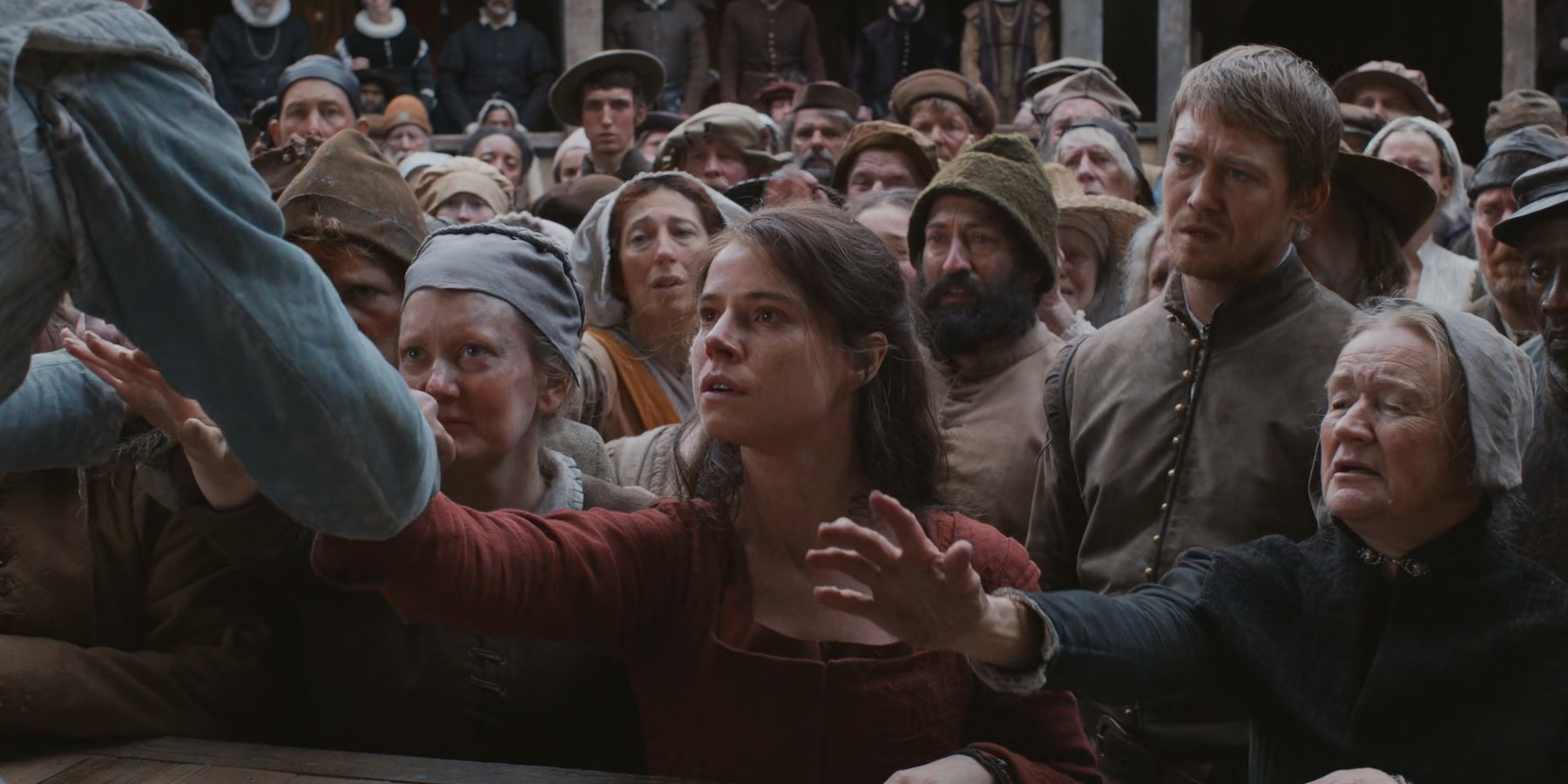
‘Hamnet‘ tells a profound story of grief, centering on a fictionalized account of William Shakespeare and his family. In the story, the playwright’s wife, Agnes Shakespeare, a healer and a naturalist at heart, witnesses the tragic death of her eleven-year-old son, Hamnet. The loss permanently changes the course of the family as the mother copes with the groundshaking death and grows resentful of her husband. Meanwhile, Will spends his time working in London, where he writes a play titled ‘The Tragedie of Hamlet.’
Initially, the news of the play isn’t well-received by Agnes, whose wounds remain fresh and untended. Even so, she ends up going to watch it at the Globe with her brother, Bartholomew. Despite her reservations, the play ends up opening Agnes’ eyes in unexpected ways. Even more surprisingly, Will’s work has a physical impact on the theatergoers, who forgo traditional protocol and reach out to the actor on the stage by the story’s end. SPOILERS AHEAD!
Agnes Reaches Out to Hamlet During His Death on Motherly Instinct
The climax of ‘Hamnet’ arrives as a culmination of multiple narratives. It’s a payoff to the stories building around Will’s artistry, his and Agnes’ marriage, as well as their shared but frictious grief over the death of their son. In the aftermath of the tragedy, the spouses had drifted apart, with Agnes beginning to resent her husband for not being present for the death of their child. Meanwhile, her anger pushes Will to grieve this monumental loss all on his own, all the while bearing his own guilt for being unable to say goodbye to Hamnet. His play, ‘The Tragedie of Hamlet,’ is born out of these same conflicting and overwhelming emotions. Although the play on the surface is about revenge, it also explores the deeper themes of grief and immobility through indecision. When the playwright conceptualizes the story, on some level, he molds it in the memory of his son.
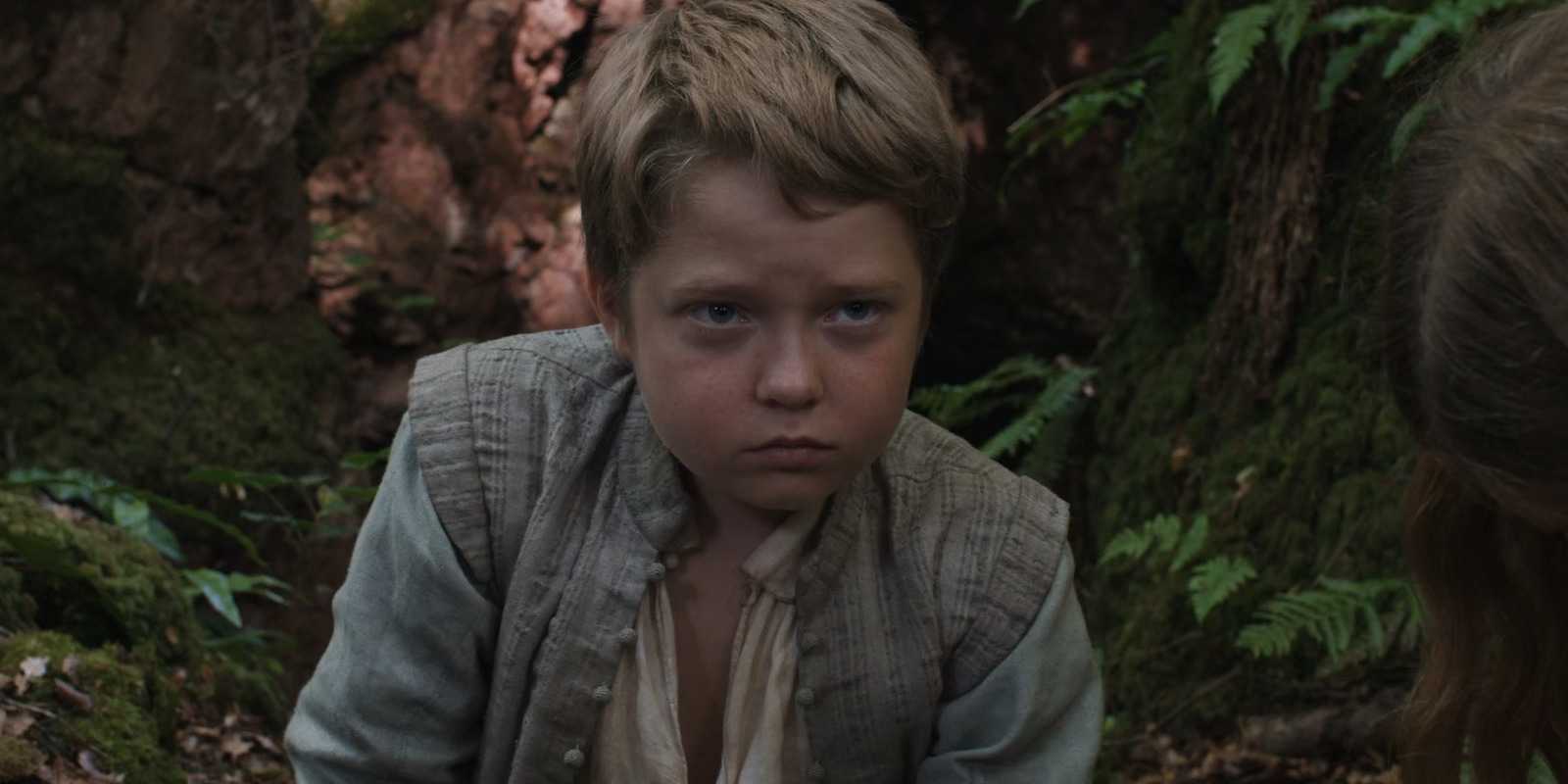
In the play, instead of Hamlet, a clear proxy for Hamnet, his father is the one who dies. To further drive home the point, Will even plays the character of the father’s ghost himself. Thus, when Agnes watches the play, it’s evident to her that her husband is processing his grief through the story unfolding on the stage. He has written Hamlet, in part, to fulfill the fantasy of being able to trade places with his son, giving up his own life so that the other can have a full one. Once Agnes comes to the same conclusions, she begins to see her own son in Hamlet’s character as well. From his painted blonde hair to his clothes and swordsmanship, Hamlet becomes a surrogate for the future that Hamnet could never live through. For the same reason, when the character’s death finally arrives to bookend the stageplay, Agnes finds herself reaching out to the stage actor on instinct, as a mother would for her dying child.
The Play Has a Transformative Effect on Agnes and Her Fellow Theatergoers
‘The Tragedie of Hamlet’ is one of the most poignant works of art of all time. In real life, the story has retained cultural currency and significance across decades and centuries. Therefore, it’s no surprise that when ‘Hamnet’ tackles the first performance of the historic play in its storyline, it underlines the profound impact of the story on the audience. Within the confines of the narrative, the climax of the play marks an important milestone in Agnes and Will’s narrative by offering a cathartic outlet for their grief over their son’s passing. Nonetheless, Agnes and Will aren’t the only two people affected by the tragedy of Hamlet.

The play resonates with the audience on a profound level, leaving a mark on each member in the Globe Theater. Perhaps some of the audience, much like the protagonists, were grieving the deaths of their family. However, the others may have their own completely different reasons. Either way, the emotional impact of the play remains so strong that it moves the large audience so deeply that they follow in Agnes’ footsteps and reach out to Hamlet in the moment of his on-stage death. The instance showcases the universe’s brilliance in the play, but also highlights how Will has managed to immortalize his son’s legacy through his art. In that moment, Agnes mourns the death of her child in the company of a hundred other mourners, who will forever remember her son, Hamnet, through Hamlet in one way or another.
The Film’s Ending Was Originally Unscripted
The ending sequence in ‘Hamnet’, when the audience reaches out to the actor portraying the role of Hamlet on stage, is one of the most moving and crucial moments in the film. Therefore, it’s all the more surprising that the scene, as it unravels in the climax, wasn’t originally scripted as such during the film’s development. Instead, the specifics of the scene were all discovered and devised during filming as a creative collaboration between the film’s screenwriter/director, Chloé Zhao, and the rest of the cast and crew. The idea for it came to lead actress Jessie Buckley during a car drive when she was listening to ‘On the Nature of Daylight’ by Max Richter.
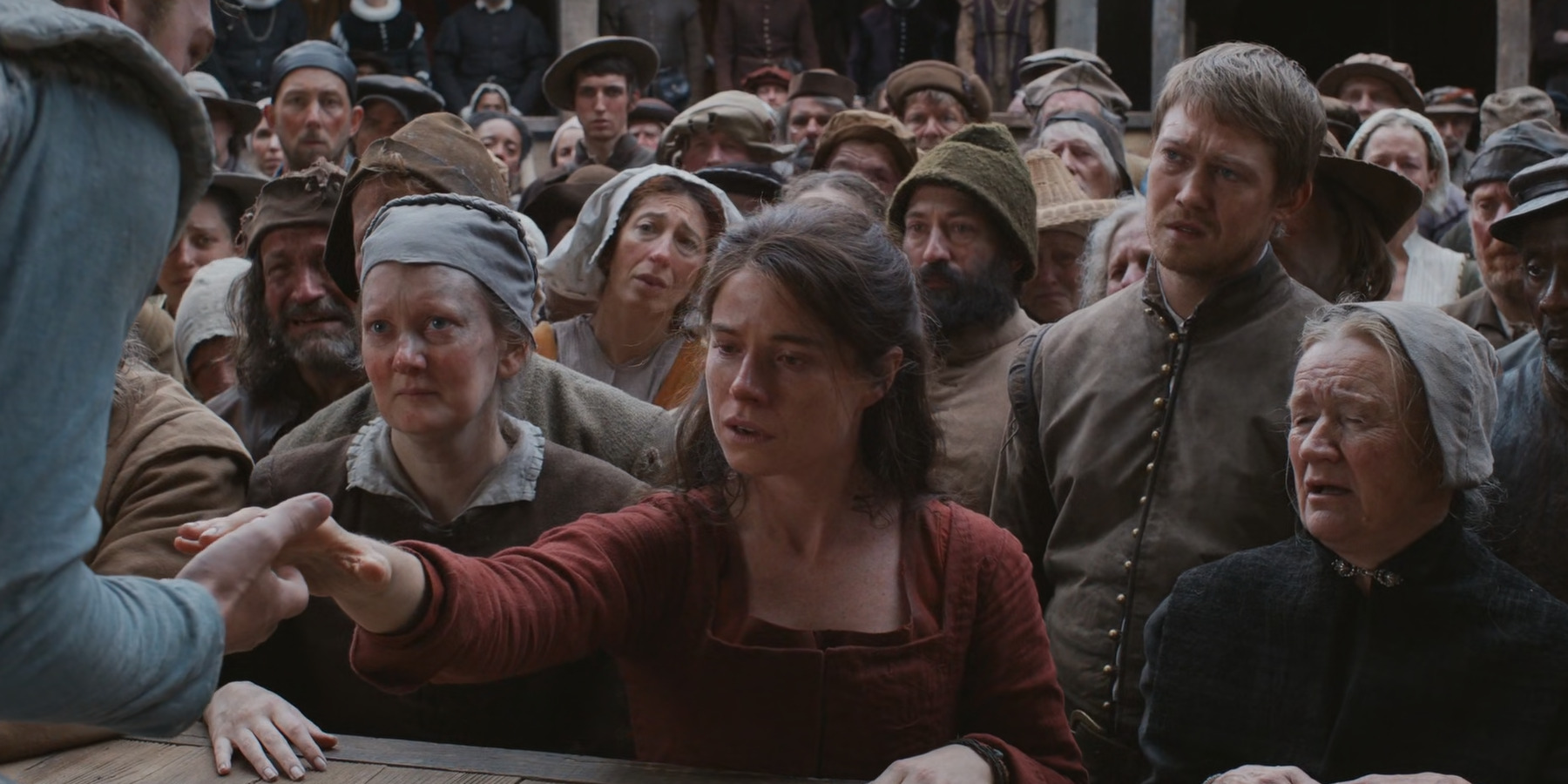
Buckley realized that the ending would benefit from extending the weight of the grief past Agnes and to the rest of the nameless, background characters surrounding her. In a conversation with The Hollywood Reporter, the actress spoke about the same and said, “I recognized that Agnes is trying to hold this pain on her own, and it’s impossible. There’s this weird thing on sets sometimes, where actors and extras must be kept separate. And I thought, I need to surrender to the 300 people that are around me in the scene.” Thus, after she shared her thoughts with Zhao, the two worked together to rework the ending. In the end, various improvements had to be made in the script as well as the logistics on the set. Fortunately, the collaborative and cathartic ending ultimately pays off.
Read More: Hamnet: Why Does Agnes Laugh at the End of the Play? Why Does She Say ‘Look at me’?


You must be logged in to post a comment.