
 Aahana Swrup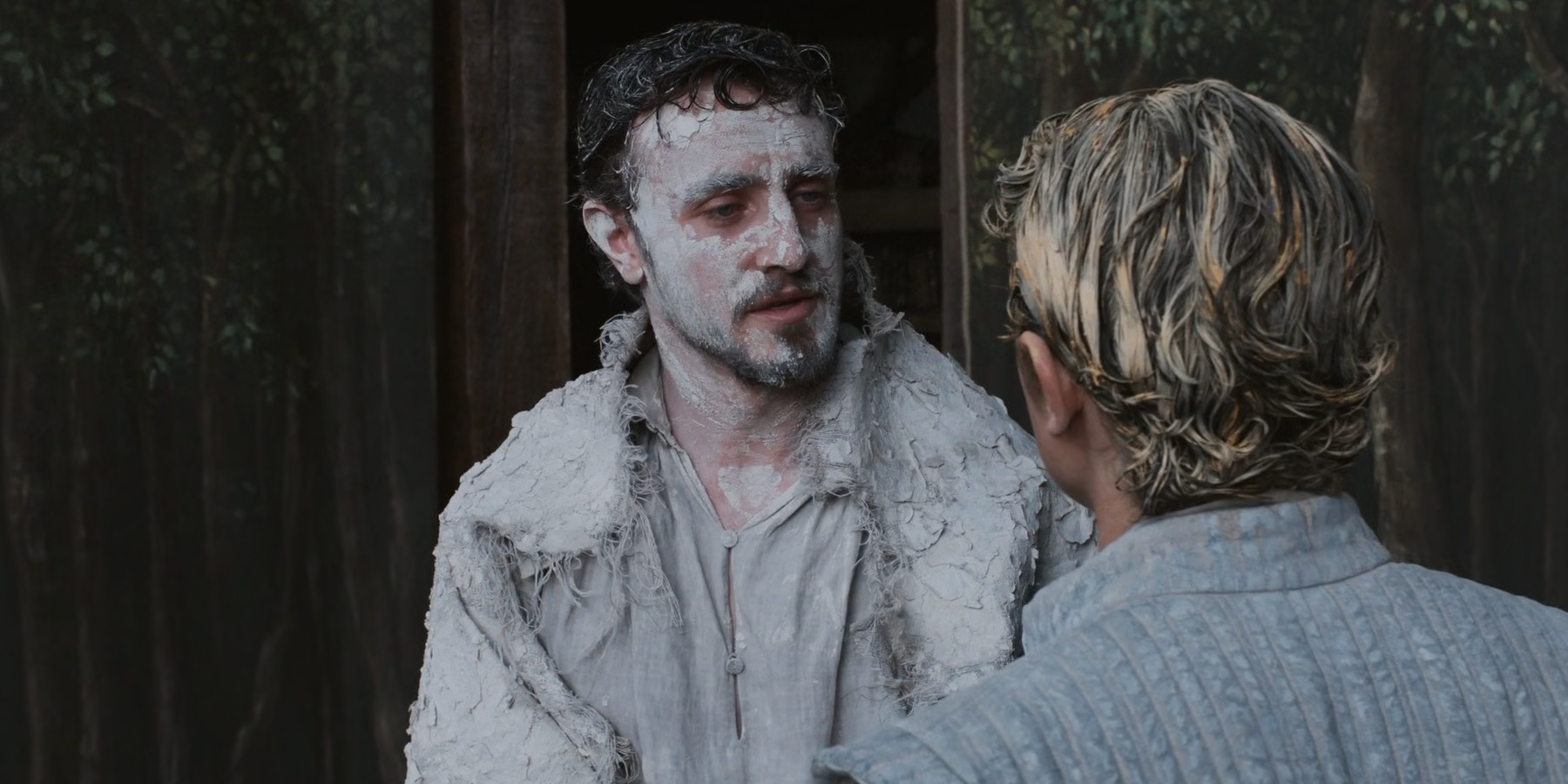
Chloé Zhao’s ‘Hamnet‘ presents a unique tragic story circling around the great English playwright and poet, William Shakespeare. The film follows the narrative of Agnes Shakespeare, a healer with deep roots in nature, who goes on to marry an ambitious and gifted storyteller. However, while he chases after his artistry in London, his wife stays behind in their home near Stratford, raising three loving children, Susanna, Hamnet, and Judith. Tragedy strikes when the plague takes Hamnet, the only son, away from the family, leaving them to suffer in their grief. In the aftermath, Agnes grows distant and resentful of her husband while the latter throws himself into his work. Years later, he pens his play, ‘The Tragedie of Hamlet,’ wherein the poet himself steps into the role of the Ghost, the protagonist’s dead father. Since ‘Hamnet’ is a mix of fact and fictionalization, the concept of William Shakespeare portraying a role in one of his most beloved plays is bound to attract some intrigue.
Shakespeare is Believed to Have Played the Role of the Ghost During Hamlet’s Earliest Runs
In ‘Hamnet,’ when Agnes first learns about her husband’s play, ‘The Tragedie of Hamlet,’ her initial reaction is one of anger and indignation. She already blames Will for being absent during their son’s death, as an unhealthy way to isolate herself and cope with the devastating loss. Therefore, the play, about which she only learns in the eleventh hour, seems like a betrayal to the grieving mother at first. Notably, she gets angry about the swapping of the names from Hamnet to Hamlet, which were frequently used interchangeably at the time.

However, a perspective shift happens for her when her husband steps on the stage as the Ghost of Hamlet’s father, haunting the narrative and the protagonist. Agnes interprets this to mean Will has written the play in memory of his son, creating a world where he gets to swap places with him, giving up his own life so that Hamnet can live on. It’s an act of grieving and immortalizing his son’s memory on the stage. In real life, the possible biographical inspiration(s) behind William Shakespeare’s ‘Hamlet’ remain a point of debate. The playwright lost his only son, Hamnet, in 1596, and the play itself was written somewhere between 1599 and 1601.
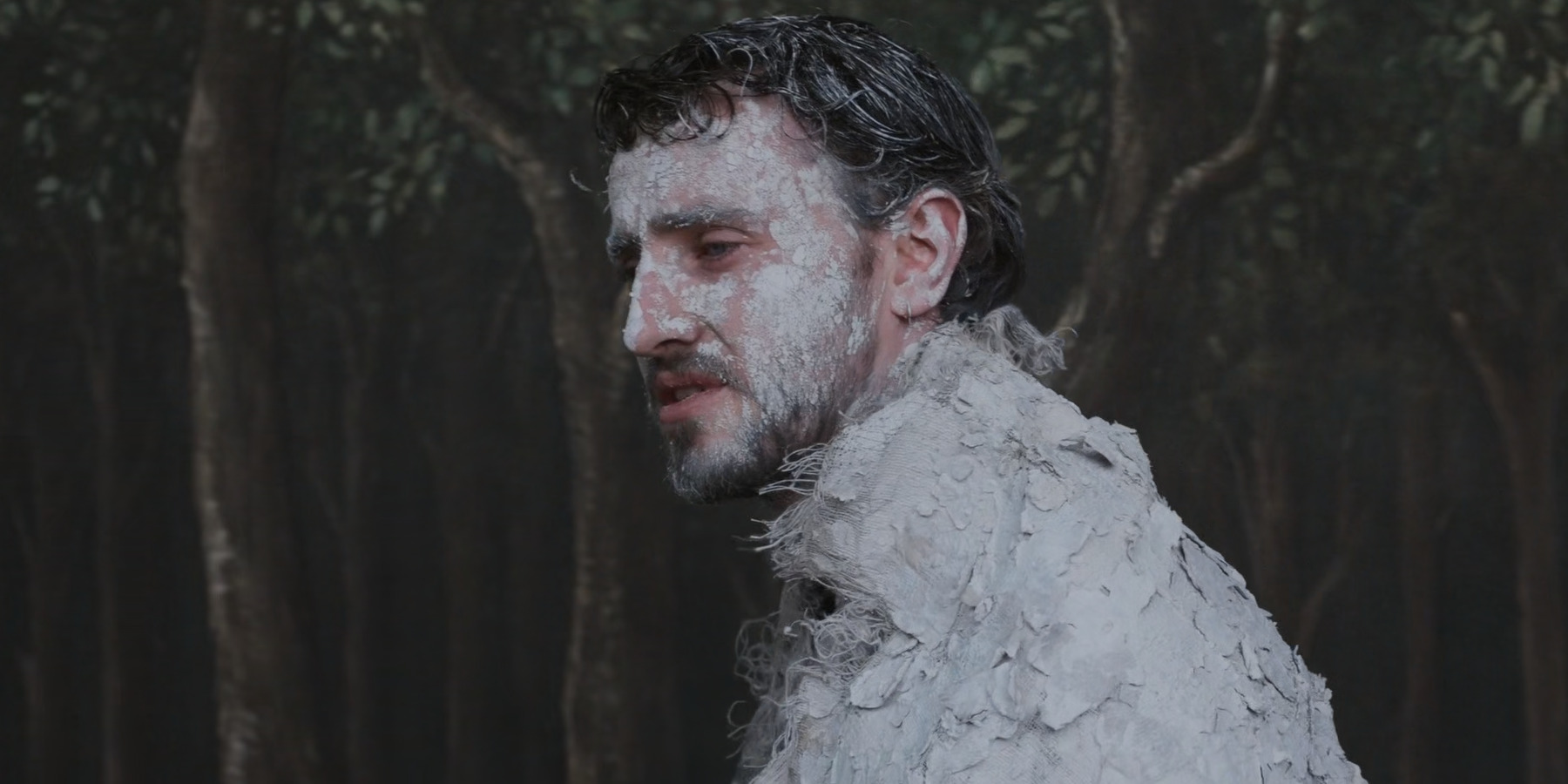
Therefore, many believe it is possible that the beloved play was at least partially influenced by Shakespeare’s experience with grief and loss as a father. In 1709, in his book ‘Some Account of the Life of Mr. William Shakespear,’ author Nicholas Rowe briefly wrote about the playwright performing the role of the Ghost in his play ‘Hamlet.’ As such, it is widely believed that Shakespeare did indeed play the role of the Ghost of Hamlet’s father, at least when the play first debuted on the stage. Whether or not this was a self-referential way of finding catharsis for his son’s death remains unknowable and a point of perpetual speculation. Regardless, ‘Hamnet’ employs this same piece of lore from the canon of the Bard’s life and uses it as an instrumental device for storytelling and characterization.
Read More: Hamnet: How Does Agnes’ Hawk Die? Was it a Ghost?


You must be logged in to post a comment.