
 Abhiroop Das
Helmed by Maciej Pieprzyca, Netflix’s ‘Lead Children,’ also called ‘Olowiane Dzieci,’ tells the story of the industrial district of Szopienice, which slowly descends into a state of chaos due to consistent lead contamination. When Dr. Jolanta Wadowska-Król, a local pediatrician, begins noticing symptoms consistent with saturnism in children, she is quick to realize the urgency of the matter. However, convincing the state to help rescue the children proves to be a tall order. Enter Hubert Niedziela, a former mine worker turned security agent, who perhaps best understands the danger lead possesses. However, instead of helping Jolanta, his task is to suppress her voice by any means necessary. As the two characters engage in a cruel tug of war in this Polish drama series, Hubert is forced to question his own values, as well as those of the system he represents. SPOILERS AHEAD.
Hubert Niedziela is an Invented Character Highlighting the Reality of Szopienice’s Crisis
Hubert Niedziela is a fictional character created specifically for ‘Lead Children’ by writer Jakub Korolczuk. While the show is based on Michal Jedryka’s book of the same name, Hubert is not related to any real-life figure mentioned in it. On the other hand, it does not appear that he is designed to strictly be a composite of smelter authorities either, given the complex nature of his arc. Instead, Hubert’s inspiration comes from Korolczuk’s interest in drawing out a character that doesn’t readily fit into villainous archetypes.

In an interview with Film.org.pl, Korolczuk revealed that Hubert is meant to stand apart from the typical depiction of security agents and police officers as proactive and aggressive entities. Instead, the writer intended Hubert to be a character that the audience figures out along the way. As such, the character embodies the dichotomies of the era, showing both the inner perspectives of an authoritarian regime, and those of a conflicted family man. Korolczuk also explained that the whole point of his character-writing approach is to simulate reality to some extent, so that Hubert can just as well represent a real figure despite his fictional origins. This technique also sets him apart from other notable characters in the series, like Jolanta, Professor Hager-Małecka, and Zdzisław Grudzień, who are direct recreations of real people.
Actor Michał Żurawski kept in mind the inner contradictions of Hubert when essaying the role. In a conversation with Olga Palka, he described his character as an openly dishonest figure, whose work, while in the interest of the state, reflects a much deeper reality. Additionally, the actor also explained Hubert as a gateway to the real history of Poland in all of its complexities. This is not the first time Żurawski has embodied a fictional mold to narrate a real-life event, as he does something similar in the Polish series ‘Heweliusz’ through the character of Piotr Binter. Where Piotr serves as the narrative’s agent of truth, Hubert, in ‘Lead Children,’ embodies the opposite role, reimagining how the truth may have been obscured in real life.
Hubert’s Connection to the Regime Serves as the Basis For His Character Arc
Although Hubert’s character arc is invented in nature, several details help shine more light on the historical context behind his existence. In the 1970s, the smelter industry in Poland’s Katowice city led to a direct contamination of several neighborhoods, with soil metal concentration research often showing readings more than 100 times the safety limit. While Dr. Jolanta Wadowska-Król was among the first to raise the alarm about this health crisis, she was met with stiff resistance from smelter authorities, and Hubert’s character represents the extent of these suppressive measures. In real life, authorities reportedly put several hurdles along Jolanta’s way, even going as far as to block her from defending her doctoral thesis, and erasing all copies of it.
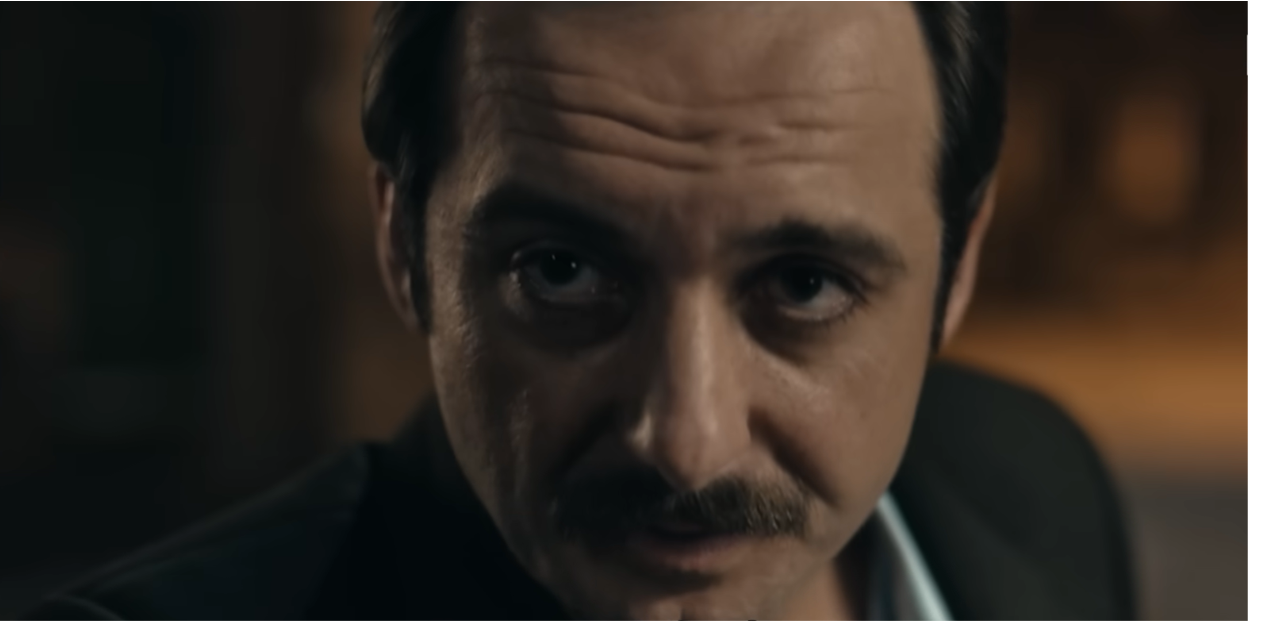
One standout detail about Hubert’s fictional backstory is the fact that he is originally a factory worker himself and climbs up the ladder to become a reputed security official. While real-life records do not highlight any real-life government official with a similar profile, it is still possible that Hubert’s journey is referenced from the social realities of 1970s Poland. In the show, some of his most heinous actions are motivated by his desire to be associated with the political pulse of the country. This lines up with how the real-life Szopienice Nonferrous Metals Smelter was nationalized in the years before 1974, and was perceived as an extension of the state. However, given the heavy dramatization of the narrative, Hubert’s arc is only loosely reflective of reality and largely exists in the realm of fiction.
Read More: Is Lead Children Based on a True Story?


You must be logged in to post a comment.