
 Kriti Mehrotra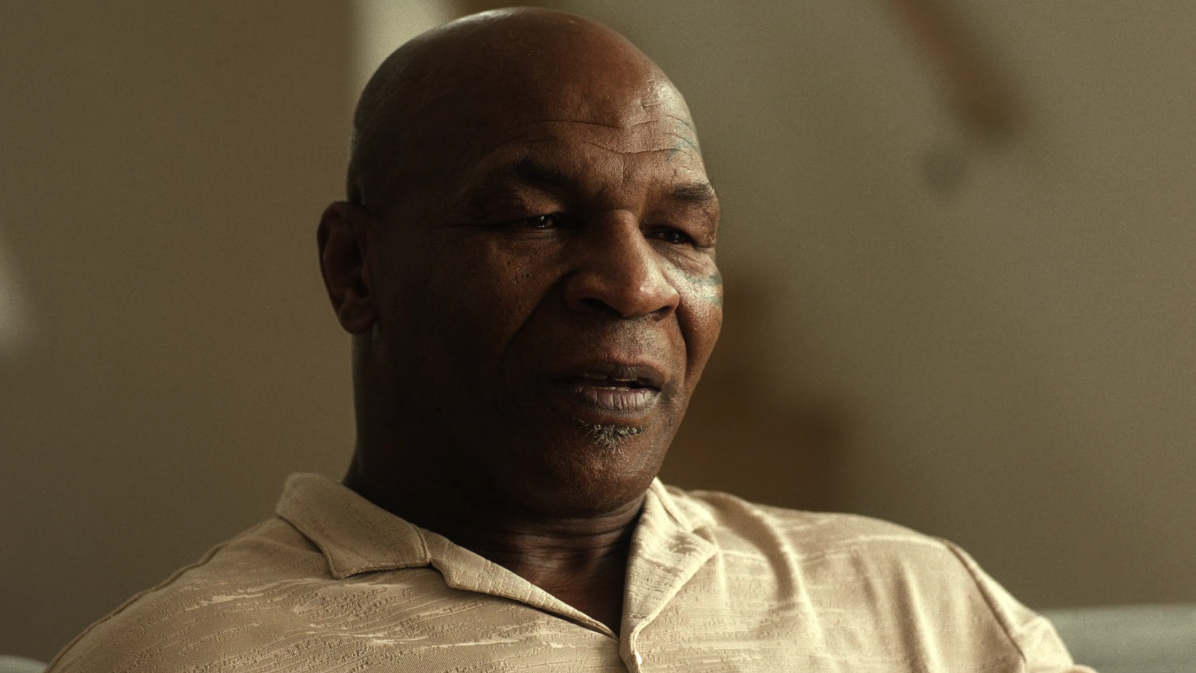
If there’s one thing absolutely no sports fan can deny, it’s that Mike Tyson is one of the greatest heavyweight boxers of all time based on his power, skills, and tenacity alone. There was a reason he was referred to as “Kid Dynamite when he started his career, Iron Mike throughout his peak, and the Baddest Man on the Planet once he had truly established a reputation. All this has been carefully chronicled in Netflix’s ‘Tyson’ to really underscore his professional trajectory, long-term loyalties, internal struggles, and accumulation of wealth.
How Did Mike Tyson Earn His Money?
When Mike Tyson was just a young boy growing up in Brooklyn, New York, he admittedly believed he was destined for a life of crime and trouble because of his environment. In fact, he was merely 12 years old the first time he was sent to a juvenile center for petty crimes, only to continue down the path until he’d been locked up 38 times before he even turned 14. It was then that he was sent to the Tryon School for Boys in hopes of better rehabilitation, which turned his world upside down as he learned about boxing and fell in love with it.
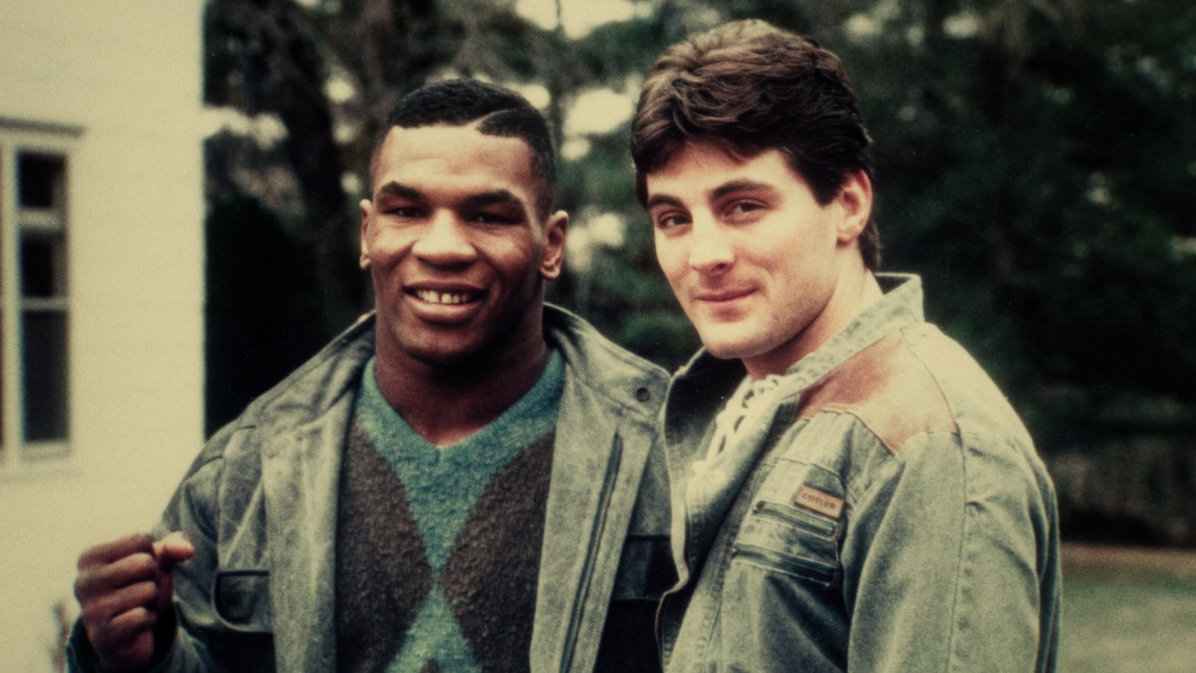
Mike was essentially discovered by counselor, former boxer, and trainer Bobby Stewart, who soon introduced him to the man who would become his greatest mentor, Cus D’Amato. They both saw the teenager’s potential, driving the latter to expand all efforts through his Catskill Boxing Club to develop him into the next great icon in their field after Muhammad Ali. What followed was the youngster dropping out of high school, realizing his own power, understanding a better future was available to him, and winning gold at the 1981 as well as 1982 Junior Olympic Games. He subsequently took on many more challenges as an amateur to gain as much ring experience as possible before turning pro, which he did at age 18 with a record of 24 wins and 3 losses.
Mike had already cemented a reputation by the time he moved forward in 1985, having not only thrived at the Junior Olympics but also earned gold at the 1984 National Golden Gloves and the Summer Olympics. He actually managed to continue building on it when he made his professional debut against Hector Mercedes on March 6, 1985, as he defeated him in a first-round Total Knockout (TKO). He then beat Trent Singleton in a first-round TKO on April 10, Don Halpin in a fourth-round Knockout (KO) on May 23, and Ricardo Spain in a first-round TKO on June 20, 1985. Then came his similar, resounding victories against John Alderson on July 11, Larry Sims on July 19, Lorenzo Canady on August 15, Michael Johnson on September 5, and Donnie Long on October 9.
Mike was undefeated at every step of the way – he conquered Robert Colay on October 25, Sterling Benjamin on November 1, Eddie Richardson on November 13, and Conroy Nelson on November 22. He also succeeded against Sammy Scaff on December 6, Mark Young on December 7, David Jaco on January 11, 1986, Mike Jameson on January 24, and Jesse Ferguson on February 16. His seemingly impregnable reign continued as he displayed a higher level of skill with each match, including wins over Steve Zouski on March 10 and James Tillis on May 3, to have a pro record of 20-0. The young boxer then beat Mitch Green on May 20, Reggie Gross on June 13, William Hosea on June 28, Lorenzo Boyd on July 11, Marvis Frazier on July 26, José Ribalta on August 17, and Alfonso Ratliff on September 6.
It was after 27 unquestionably consecutive wins in less than 2 years that Mike got a shot at the WBC Heavyweight Title, for which he fought Trevor Berbick on November 22, 1986. While many assumed it would be a hard, nail-biting match because both boxers were great athletes, it was over before it really began as the defendant was TKO’d in the second round in a total of 2:35 minutes. He subsequently earned the WBA Heavyweight Title and the Heavyweight Unification Series on March 7, 1987, when he defeated James Smith by the judges’ Unanimous Decision (UD) after 12 rounds. Then came his victory over Pinklon Thomas on March 30 and Tony Tucker on August 1, the latter of which marked his 31st uninterrupted win since the start of his professional career while also giving him the IBF Heavyweight Title.
Mike kept his momentum in the ensuing matches, defeating Tyrell Biggs on October 16, Larry Holmes on January 22, 1988, Tony Tubbs on March 21, and Michael Spinks on June 27. His bout with Michael had the Ring Heavyweight Title on the line, so he proudly secured that too before finding himself entangled in some personal controversies with his first wife. He managed to shut out the outside noise during his matches against Frank Bruno on February 25, 1989, and Carl Williams on July 21, but Buster Douglas soon handed him his first pro defeat. It was February 11, 1990, when the 23-year-old lost all his heavyweight titles, yet he paid due respect to his opponent and has since always admitted that his loss wasn’t a fluke – he truly got beat. However, what the Iron athlete didn’t expect was further trouble.
While Mike managed to get back on track by conquering Henry Tillman on June 16, 1990, Alex Stewart on December 8, and Donovan Ruddock twice in 1991, things quickly changed. He was arrested in July 1991 for the rape of an 18-year-old pageant girl named Desiree Washington at the Canterbury Hotel in Indianapolis, Indiana, leading to a publicly polarizing trial. He was convicted less than a year later, for which he was sentenced to 6 years in prison; however, he only served 3 before being granted parole and spent most of it training for his comeback. The Baddest Man on the Planet won his comeback bouts against Peter McNeeley on August 19, 1995, and Buster Mathis Jr. on December 16, rather easily, both of which were televised across the nation. Then came his chance to fight for the titles once again.
Mike secured the WBC Heavyweight Title by defeating Frank Bruno on March 16, 1996, and the WBA Heavyweight Title by beating Bruce Seldon on September 7, only to lose the latter within 2 months. His rivalry with Evander Holyfield began when he was handed his second career defeat on November 9, and the rematch on June 28, 1997, caused further chaos as he bit his opponent’s ear. He was thus disqualified from the match, following which the Athletic Commission revoked his boxing license in a unanimous vote, fined him $3 million, and ordered him to pay all legal costs. It was around a year later that he was able to convince the Commission he was genuinely remorseful, as a result of which his license was reinstated, and he was allowed to train, fight, and make a living from boxing all over again.
Mike’s 49th professional match was against Francois Botha on January 16, 1999, which he won in a fifth-round KO, making many believe he was ready to compete as if he were back in his prime. What followed was a series of complex ups and downs for the boxer, including 10 more matches (4 wins, 4 losses, 2 no-contests), a 2005 retirement, and a 2025 partial comeback. His most recent bout in the ring was at the age of 58 against Jake Paul on November 15, 2025, which he lost by the judges’ Unanimous Decision (UD) after 8 rounds. In the 2 decades he wasn’t boxing, he held several exhibition bouts across the globe to make a living, evolved into an actor/voice actor for films, shows, and video games alike, and spread his wings to become an entrepreneur. Therefore, he is known to be rather multifaceted, yet his proudest professional accomplishment remains his boxing record of 59 fights, 50 wins, 7 losses, and 2 no-contests.
Mike Tyson’s Net Worth
While Mike Tyson has understandably kept the details of his finances private throughout his decades-long career owing to privacy concerns, we do know he has accumulated significant wealth. In fact, it has been widely reported that the boxer’s purse was in the range of $30 to $40 million per fight by the late 1990s, so he bagged at least that sum a few times every year. Even the match where he bit Evander Holyfield’s ear in 1997 made him close to $30 million – we say “close to” because he was fined $3 million and ordered to pay the legal costs of the hearings. From what we can tell, he bagged between $400 million and $430 million during his prime through the sport alone (approximately $700 million when adjusted for inflation in 2026), but he also lost it all soon after. He actually filed for bankruptcy in 2003.
It was August 2003 when Mike filed for bankruptcy, with reports indicating he was roughly $23 million in debt after years of impulsive spending and bad management. He once had several cars, lavish homes, an affinity for private jet travel, and more, but he couldn’t afford to indulge in anything anymore, all the while also struggling with addiction. Yet, the 1998 WrestleMania XIV guest star – for which he was paid $3 million – has since managed to get back on his feet again, with his exhibition bouts being the primary contributors to his current wealth.
His July 30, 2004 match against Danny Williams, his June 11, 2005, fight with Kevin McBride, and his November 15, 2024 match against Jake Paul have earned him millions, even though he lost all 3. As if that’s not enough, he hosted a podcast called ‘Hotboxin’ with Mike Tyson,’ has a cannabis brand named Tyson 2.0, is a motivational speaker, owns an apparel plus clothing brand, and has done a lot of entertainment/media work. He has a total of 15 pay-per-view boxing bouts, 17 film credits, 5 television credits, 12 video game credits, and 1 music video credit for Eminem’s 2020 single, “Godzilla.” Taking all these aspects into account, we estimate Mike Tyson’s net worth to be close to $30 million as of writing.
Read More: Tyson Fury’s Net Worth: How Rich is the Professional Boxer?


You must be logged in to post a comment.