
 Abhiroop Das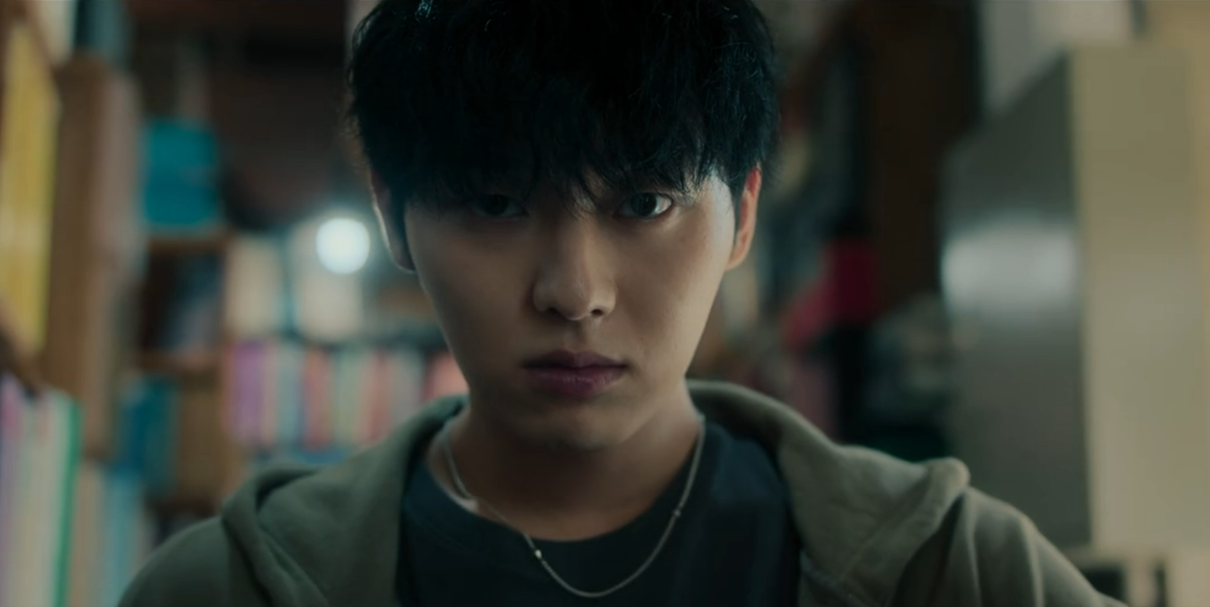
Helmed by Kim Gyu-tae, Netflix’s ‘Notes from the Last Row‘ or ‘Maen Kkeutjul Sonyeon’ presents a tale that blurs the layers of reality, fiction, and fiction within fiction. Heo Mun-oh, a professor many consider a failed novelist, is disgruntled with life and his inability to write another masterpiece. However, the tides begin to change when he comes across a real page-turner of a story assignment, penned by one of his own students. As one chapter turns into many, Mun-oh slowly but surely gets reeled into the daily life and shenanigans of Lee Kang, at once a coming-of-age narrative and the chronicle of a rather complicated family.
Before long, the once grumpy professor goes from becoming a mere reader to an active participant in the meaning-making process, which is why he’s shocked to learn that in reality, this story might be more connected to him than he realizes. By the end of this Korean psychological drama series, based on the Spanish play ‘El chico de la última fila,’ Mun-oh finds himself lost in Kang’s world, unsure of how much it is a reflection of the real and how much is created from scratch. SPOILERS AHEAD.
Notes from the Last Row Plot Recap
‘Notes from the Last Row’ begins with Heo Mun-oh, a one-time novelist who spends his days teaching literature and writing at Yeonseo University. Dissatisfied with life, in no small part due to his inability to write even a sentence without losing confidence, Mun-oh is often strict with his students, until he comes across an assignment by Lee Kang. Kang is typically the backbencher of the class, but his minimal interactions veil the fact that he is an exceptional student of literature. Perhaps more impressive seems to be his written work, which comprises dramatized retellings of his daily life, specifically, his obsession with his friend’s family life. As Mun-oh gets obsessed with these assignments, he offers Kang weekly private lessons in return for learning more about the family that is being written about.
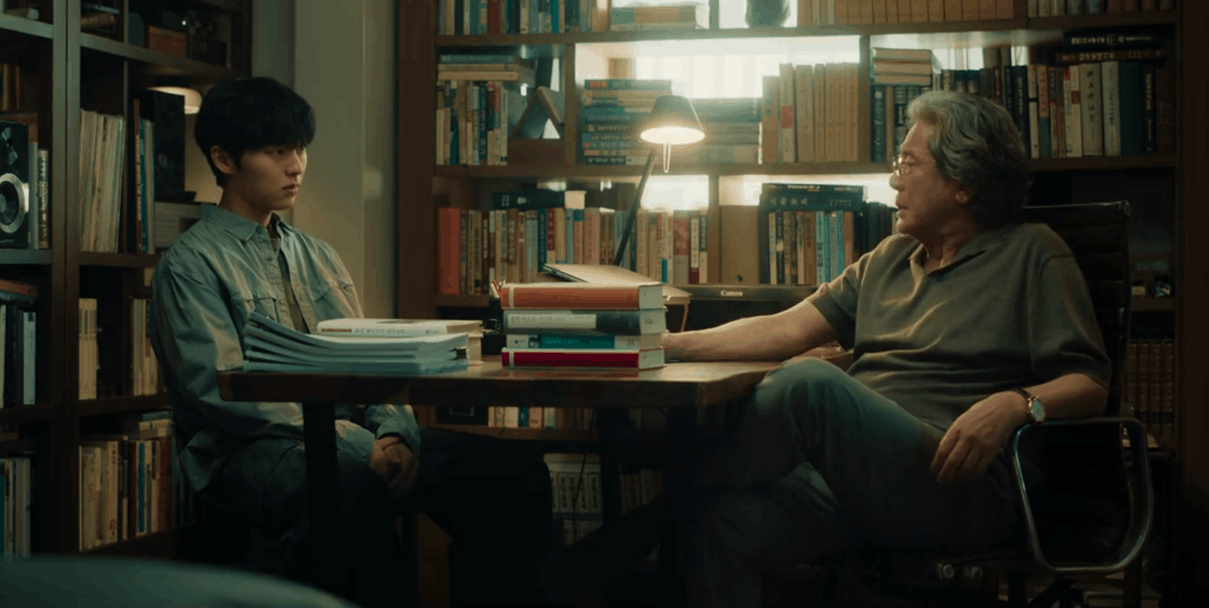
As it turns out, Kang befriended his classmate, Kim Se-yoon, strategically to get closer to his family, particularly his mother. Over several conversations, he presents them with a saddening backstory that may or may not be true, and the family responds by getting him to move in with them. Soon, however, Kang suspects that Kim Se-yoon’s father is having an affair with the housemaid, Min-hui. When Kang calls Mun-oh over to a hotel to prove his findings, Min-hui gets hit by a car in front of their eyes, and Mun-oh discovers that the father in question is none other than author Kim Su-hun, his college classmate and literary superior. More importantly, this means that the mother, Su-hun’s wife, is actually Ahn Eun-joo, who is secretly the love of Mun-oh’s life.
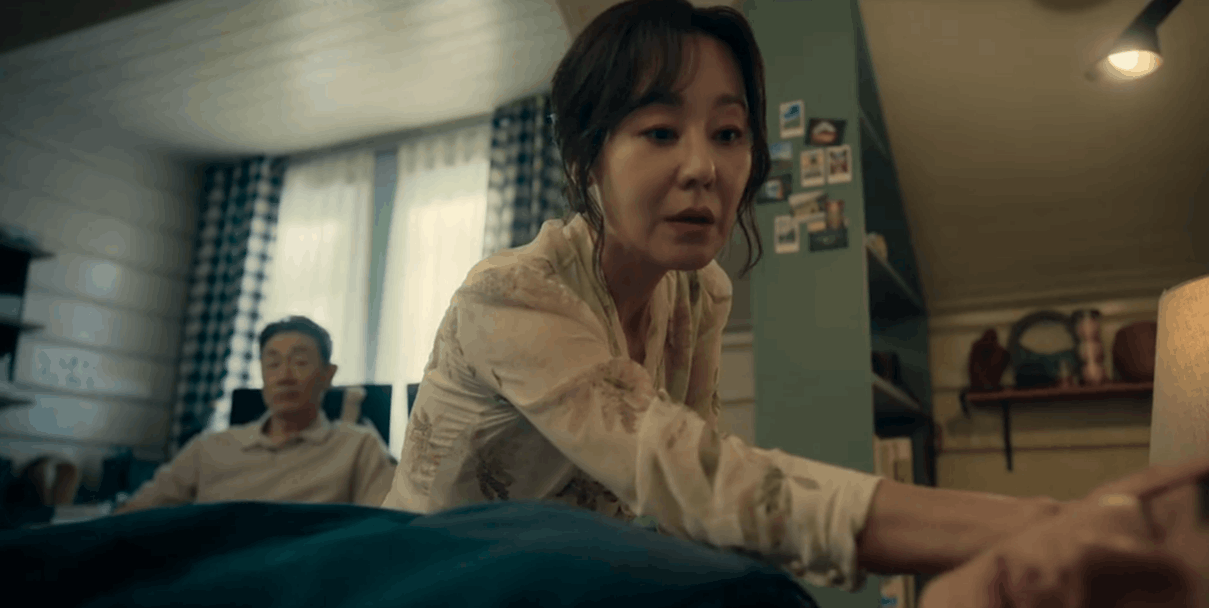
While Mun-oh is married to Jo Hyun-suk, their relationship is too dysfunctional to be called healthy. Instead, Mun-oh spends his time obsessing over Eun-joo, awaiting Kang’s weekly assignments to know what is up in her life. However, through these writings, he learns that Min-hui later died in the hospital, and since then, the atmosphere at home has been eerie. Kang suspects that Su-hun killed her to keep their affair a secret, and to make matters more complicated, Se-yoon seems to know the truth as well. As if things cannot get twisted enough, Kang later learns that Eun-joo herself knew about the truth, but kept silent to keep the family together. However, now that she wants to exit the marriage, Su-hun isn’t likely to react normally. Mun-oh’s worst fears come true when Kang tells him that Su-hun is attempting to kill his family, but when Mun-oh reaches the site, the reality of things turns out to be something else entirely.
Notes from the Last Row Ending: Is Lee Kang’s Story Real or Fictional?
The ending of ‘Notes from the Last Row’ reveals that everything Lee Kang has narrated to Mun-oh so far is either a fictional or semi-fictional construct, meant to trap him in a web of lies. More specifically, this entire chain of events was designed by Kang for a singular reader, with all the real elements being twisted and dramatized to create the perfect story. In a way, Kang never exactly lies to Mun-oh, as he’s always established that the narrative beats and characters partly come from his own mind. And yet it’s the introduction of Min-hui, a completely made-up character, that pushes this story over the edge. Mun-oh is led to believe that there is truly a family conspiracy unfolding in Eun-joo’s life, and though he attempts to fulfill the savior protagonist archetype, that rug is pulled from right under his feet by Kang himself.
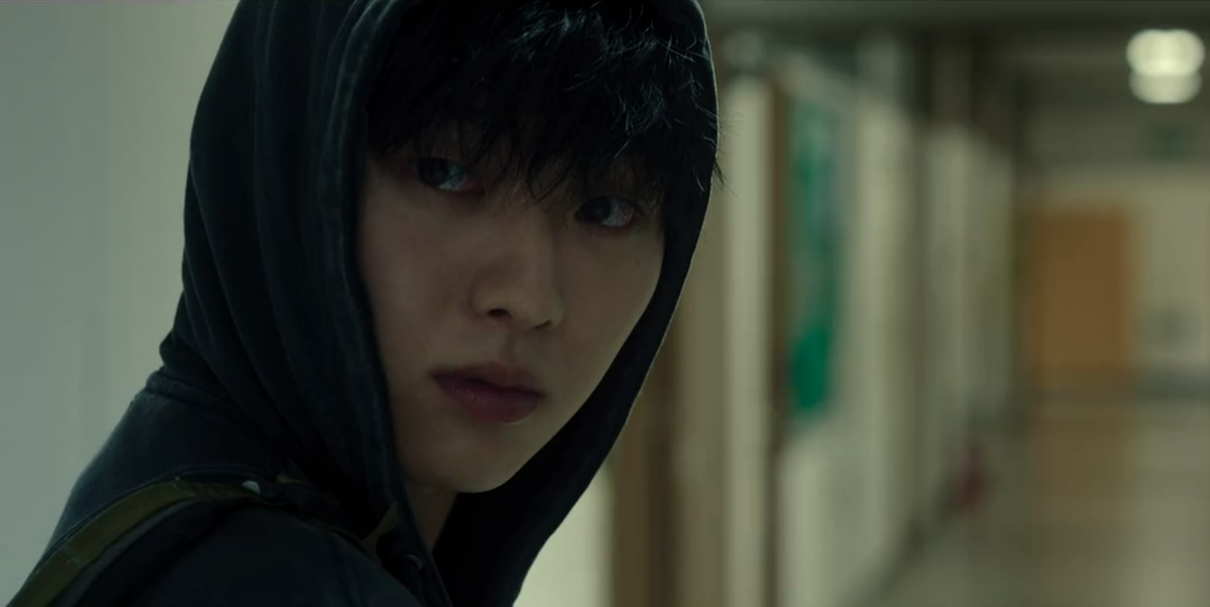
Mun-oh’s rude awakening to the fictionality of this entire tale comes when he rushes to Eun-joo’s house, convinced that she’s about to die at the hands of her husband. In reality, however, no such thing ever happens, and neither does the supposed murder cover-up that Kang fills Mun-oh’s ears with. The reality of the situation is that Eun-joo and Su-hun have a relatively perfect life, and Mun-oh can only look at it from the outside in. Kang, however, nestles himself into the very fabric of their lives, and while we don’t even know for sure if he ever really moved in with them, he still manages to craft a world with an internal logic so solid that it manages to fool the audiences and Mun-oh alike.
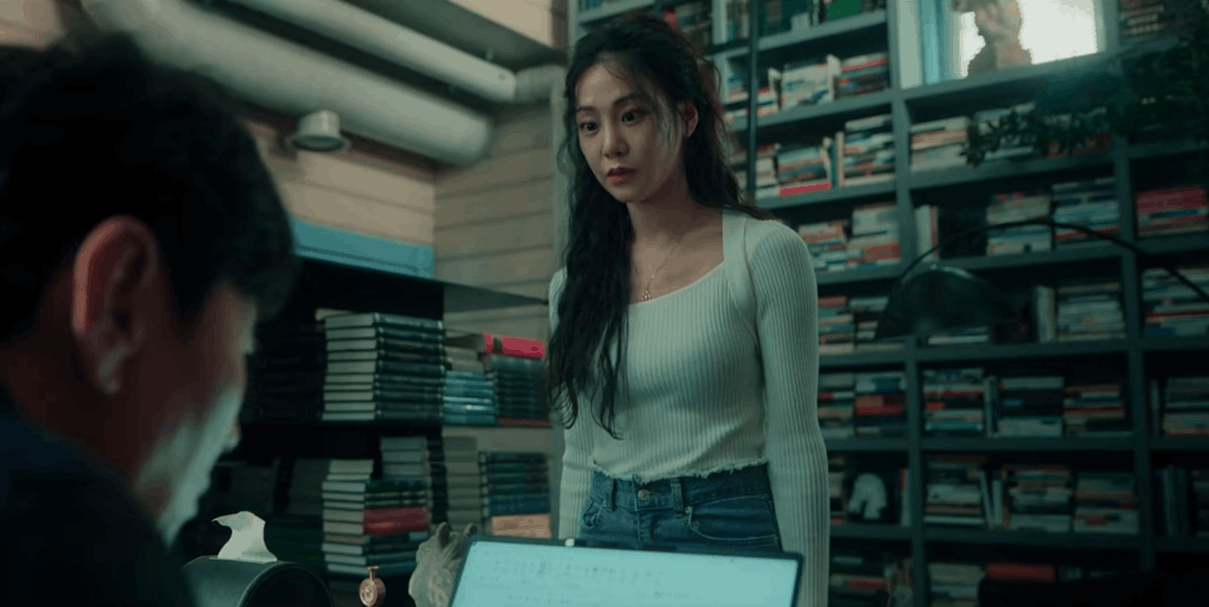
Kang achieves this narrative effect by carefully withholding information and leaving loose ends, only to fill them in later from a different, invented perspective. One of the examples of this is when he writes that Su-hun and Min-hui were having sex in the car. Later, Kang makes up a fake version of Eun-joo, who then recounts an even more invented memory of Min-hui claiming that she was almost choked to death. By creating so many layers of narratives, Kang manages to trick Mun-oh into believing that all of this is authentic. Perhaps the most devious narrative of them all, however, lies in Kang’s ability to make it look like a story filled with Mun-oh’s biases, where the latter’s love for Eun-joo manifests in his envy of Su-hun. In the end, Kang pseudo-relinquishes the authorship of this tale to Mun-oh, and ironically, it is a story that everyone buys.
Why Did Lee Kang Lie to Mun-oh?
From the beginning of the show to its very end, Mun-oh, ever the fan of Lee Kang’s writing, is never quite able to figure out why he writes the way he does. Su-hun once claimed that Mun-oh’s writings are not imbued with purpose, which is likely why he is unable to parse meaning in what he reads. Ironically enough, Lee Kang knows this better than anyone, and this is why he creates a literary project designed to educate, or rather re-educate Mun-oh, about the power of fiction. It all started more than a decade ago, when Hyun-suk came to a rural school as a guest teacher and brought along a grumpy Mun-oh. That is where he first meets Kang, 8 years old and still sitting in the back row of the class. Out of the entire class, Kang alone catches Mun-oh’s attention, precisely because of how disengaged he is.
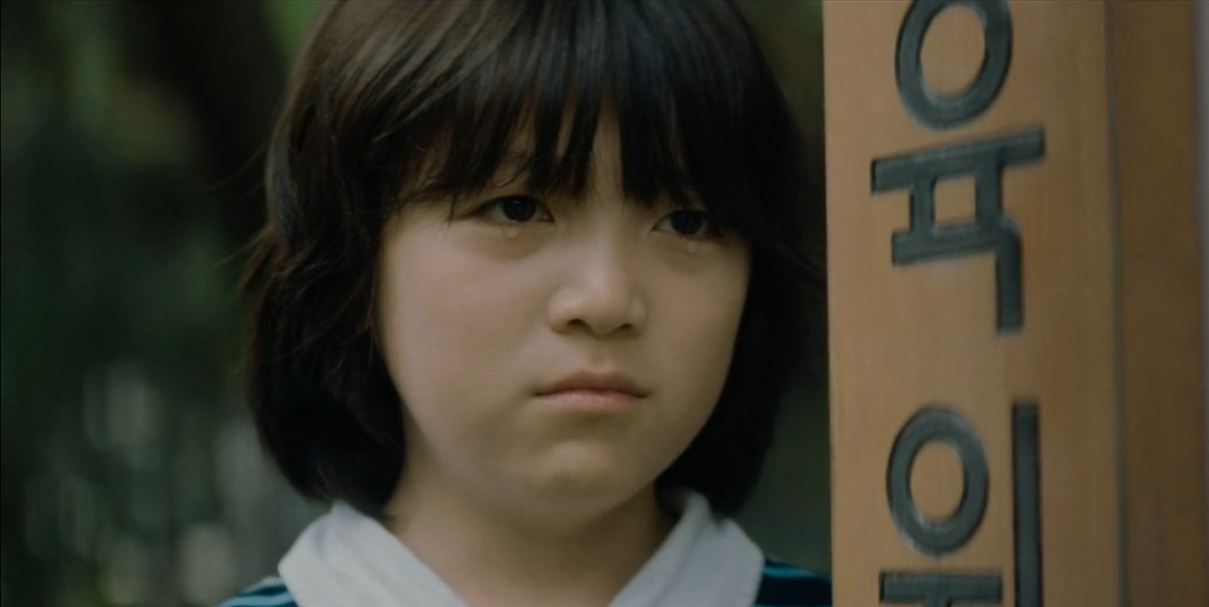
Hoping to know more about the kid’s life, Mun-oh approaches him by a pond and learns that Kang believes that memories are precious and shouldn’t be shared for that reason. In response, Mun-oh offers him an alternative method, that is, to pretend that the family of ducks in front of them is analogous to his own, and then tell his story as if it were theirs. In simple terms, Mun-oh introduces Kang to the art of telling fictional stories, and the kid takes it to heart. However, all of his hopes are dashed just as quickly when he overhears Mun-oh disparaging him to Hyun-suk, claiming that he only stuck around with the little boy to collect experiences for his own literary pursuits. This depersonalization of the real in favor of the fictional, or dramatized, is Mun-oh’s fatal flaw, and Kang decides to flip it on its head to teach him a lesson.
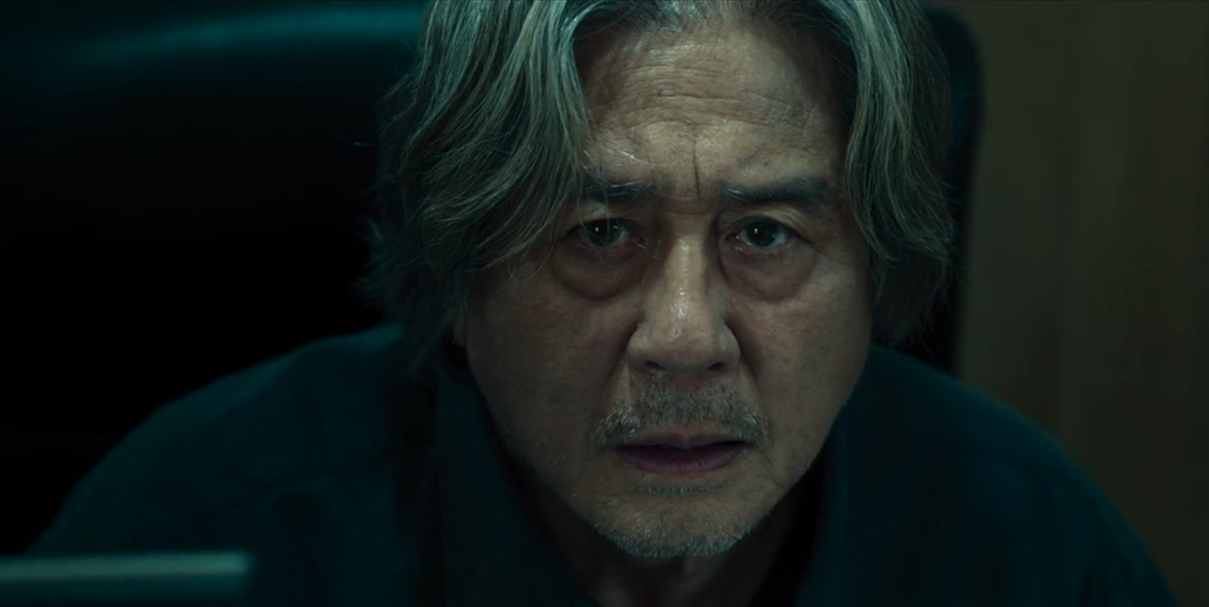
In the end, Kang’s story can be interpreted as a reiteration of the tale of the duck family, except this time, it’s not his own memories that he is externalizing. A life with Eun-joo is not exactly one that he craves the most, but it is certainly one that Mun-oh desperately, hopelessly yearns to have. Thus, when he reads Kang’s riveting retellings of Eun-joo’s family life, he is creating a framework that Mun-oh can insert himself into, one where he can live out his fantasies, at least up to a point. In this version, the duck is Mun-oh, attempting to vent out his own frustrations, both existential and literary, via the life and writings of his student. However, this is precisely what makes the reveal so powerful, as Mun-oh, in his inability to write his second novel, inadvertently becomes a character himself.
Will Mun-oh Publish Lee Kang’s Book? What is in it?
After Lee Kang convinces everyone that Mun-oh forced him to write a scandalous story about Su-hun and his family, the university naturally cracks down on the professor for his unethical behavior. Mun-oh is fired from his job, cast out of the literary world, and enters a slump for months, until being hired as a librarian. The plus side in all of this is that he finds the spirit to write again, even if it’s between jobs. However, things take a turn yet again when Kang mysteriously reappears in his life, holding a copy of Goethe’s ‘Faust’ that he wants to issue. The imagery here is no coincidence, as this is a book about a scholar who makes a pact with the devil, giving up his soul in exchange. In the case of ‘Notes from the Last Row,’ though, Mun-oh is the one making the Faustian bargain, with none other than Kang.
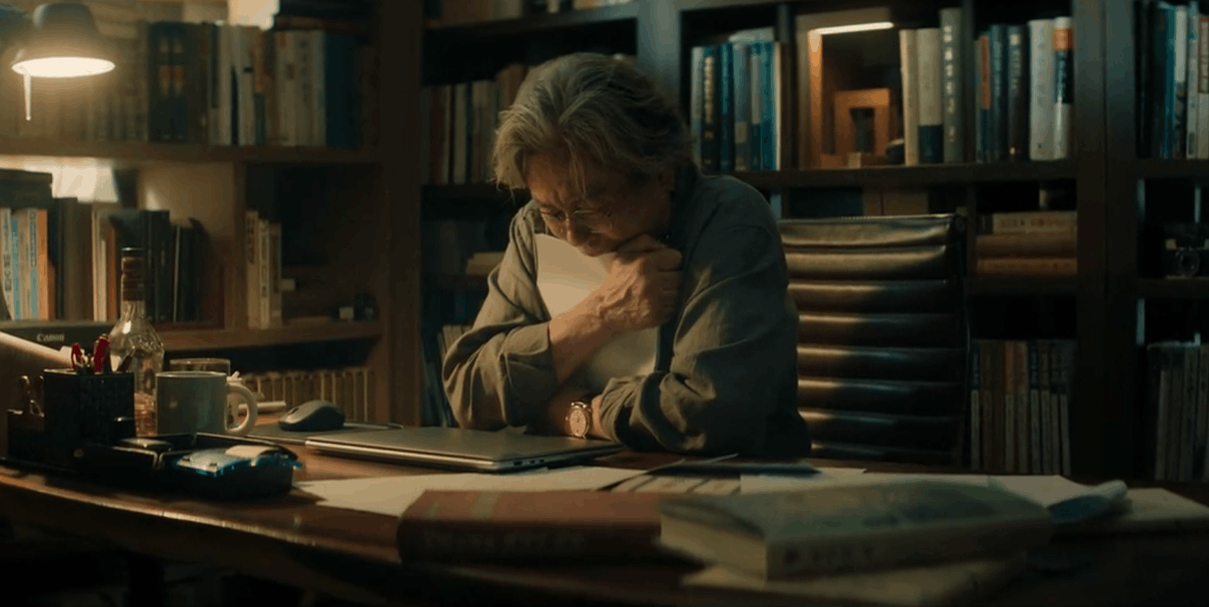
As it turns out, Kang isn’t here to brag about how he played Mun-oh like a fiddle, as that story has now concluded. Instead, Kang has a new story penned down, and to get it published, he needs Mun-oh’s help. Even here, Kang keeps us in the dark, never revealing if the story is something that exists in print or a contortion of reality that is waiting to be orchestrated. However, Mun-oh doesn’t wait for a clarification as he agrees to pitch on, despite knowing exactly who he is dealing with. The reason for this curious decision is rather simple: Mun-oh is addicted to the works of Lee Kang. Reading those assignments and actively participating in Kang’s exploits are perhaps the most alive he has ever felt, and though he might be played for a fool yet again, some part of Mun-oh determines that the thrill of participating in this new story is worth the risk.
Why Did Hyun-suk Leave? Did She Have Sex With Lee Kang?
While the show reveals most of its secrets by the season finale, one thing that is never cleared up is whether Hyun-suk had a sexual relationship with Lee Kang. Before she leaves Mun-oh, we see that she had a meal with someone else, and Mun-oh very quickly comes to the conclusion that it was Kang. That, coupled with the messy bed, leads him to further believe that Kang had sex with Hyun-suk, exploiting their dysfunctional marriage. While Hyun-suk doesn’t outright deny these accusations, she notes that Mun-oh is often too quick to let his imagination run wild. This can be interpreted as a rejection of his accusation, and while it doesn’t explain the visual cues present in the scene, it’s still unlikely that Hyun-suk cheated on Mun-oh.
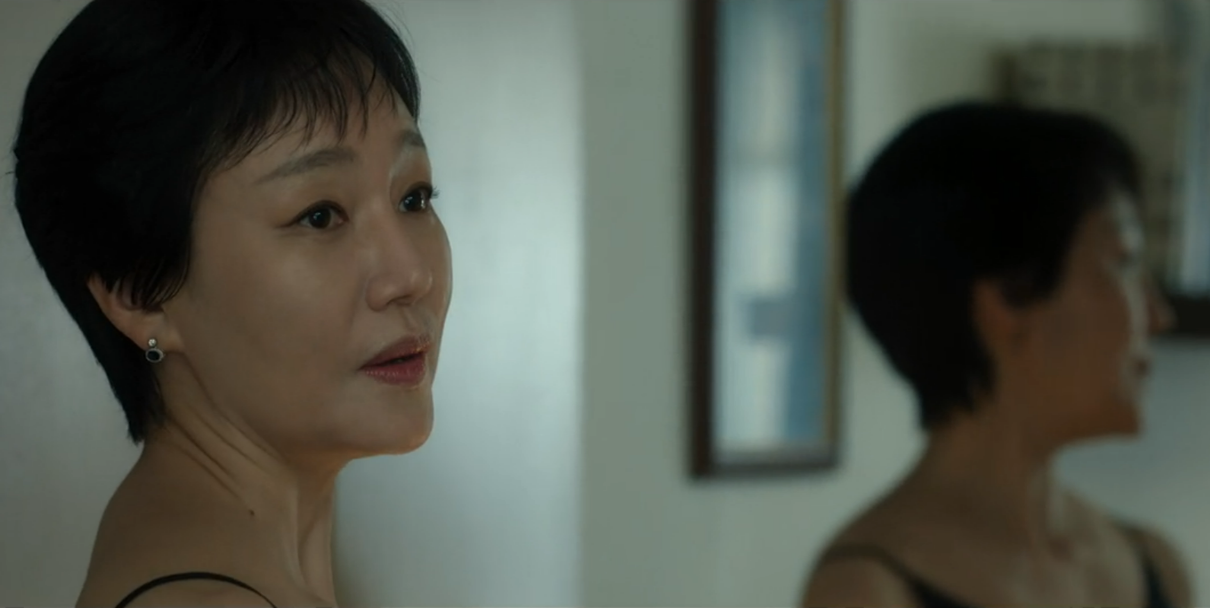
In reality, Hyun-suk’s decision to leave has everything to do with Mun-oh’s complete failure as a partner, both on a practical and emotional level. This comes out the clearest when Eun-joo reenters the equation, and a part of Kang’s plan is to make Hyun-suk privy to that truth. He starts this by off-handedly mentioning that the woman in Mun-oh’s debut novel is not modeled after Hyun-suk, but rather Mun-oh’s first love. Later, he hands Hyun-suk the name of this person on a silver platter, telling her in secret about how Mun-oh is still obsessed with her. It’s entirely possible that he also tells Hyun-suk that he’s being pressured to write the assignments a certain way, but we don’t have a direct look into their conversations, as ultimately our perspective on reality is caged by that of Mun-oh’s.
What Really Happens to Eun-joo and Su-hun?
Though Mun-oh is led to believe that Eun-joo and her son are on the cusp of being killed and burnt by Su-hun, the reality cannot be further apart. Eun-joo almost seems to have a picture-perfect family, and more importantly, she is clearly in love with her partner. One reason why Mun-oh believes Lee Kang’s story so uncritically is that some part of his mind refuses to believe that Eun-joo can be happy with anyone but him. Kang capitalizes on this by presenting a twisted story suited to Mun-oh’s hateful gaze, which is what makes the final twist that much more compelling.
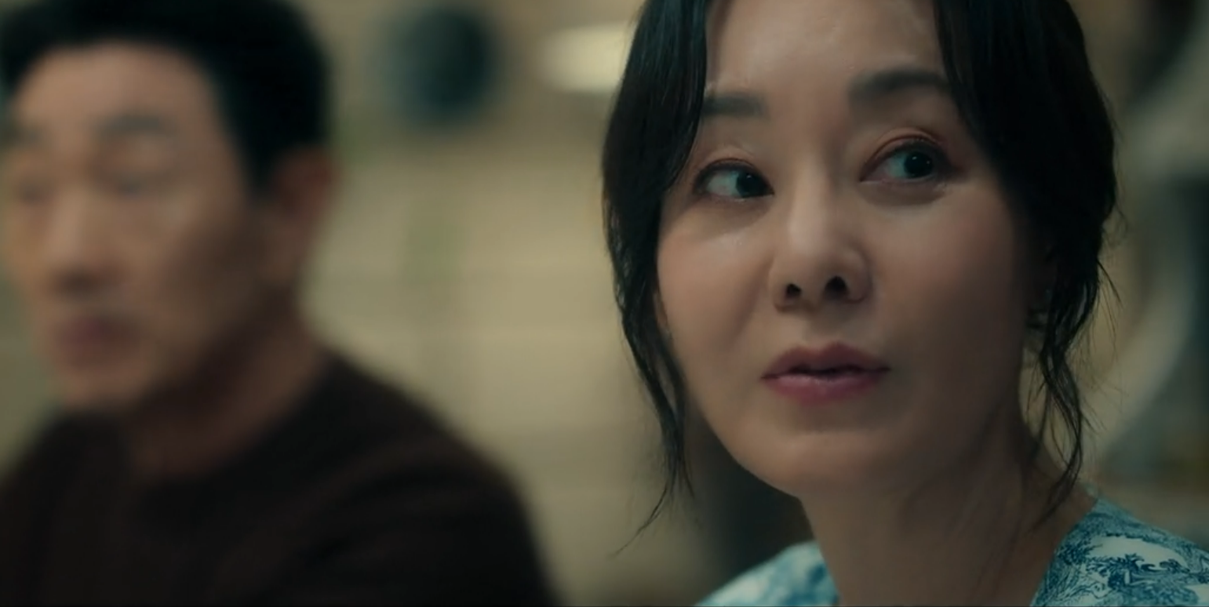
Compared to Mun-oh’s imagination, Su-hun’s family turns out to be surprisingly ordinary, and that is perhaps the fact that hurts Mun-oh the most. We see that in how violent he imagines the family massacre to be, and while it’s possible that he’s simply basing his visualization on Kang’s writings, it’s still eerily reminiscent of how he, early on, imagines Kang to commit the murders with a hammer. In reality, all of these images are simply a manifestation of Mun-oh’s own hateful side, and all Kang really does is bring it to the surface by, ironically, veiling it in layers of fiction.
Read More: Notes from the Last Row: Are Heo Mun-oh and Kim Su-hun Based on Real Novelists?


You must be logged in to post a comment.