
 Abhiroop Das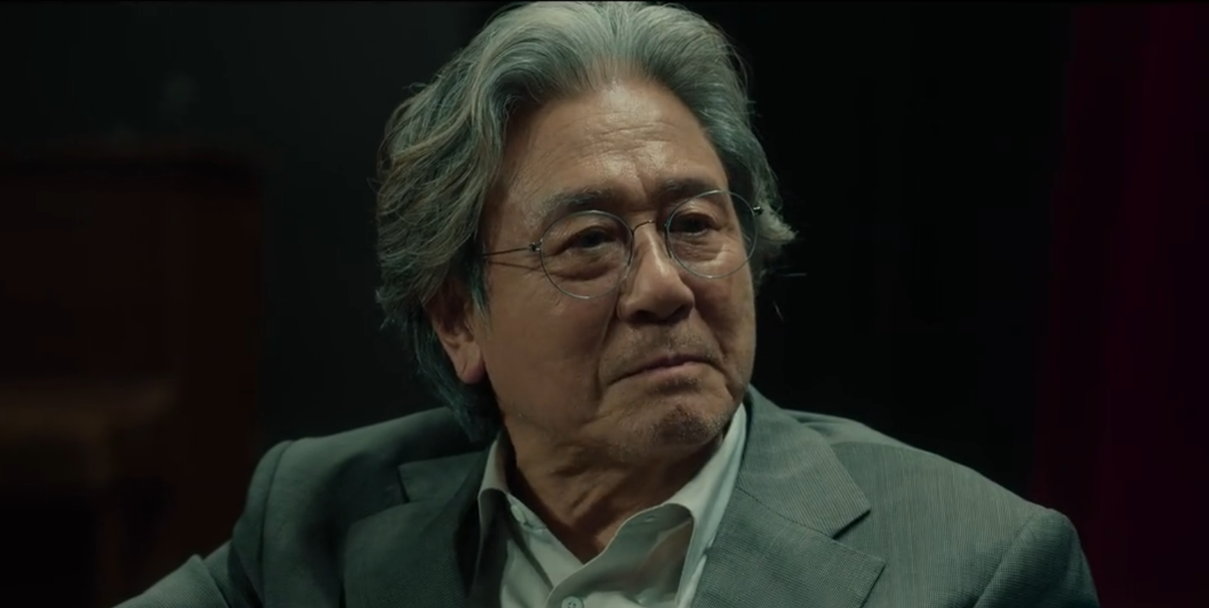
Helmed by Kim Gyu-tae, Netflix’s ‘Notes from the Last Row,’ also known as ‘Maen Kkeutjul Sonyeon,’ is a story expressly about the voyeuristic nature of fiction itself, and how easily it can distort one’s command over reality. Mun-oh, a disillusioned college professor, is known for the one and only novel he published decades ago. By contrast, Kim Su-hun, his classmate from college, has, over the years, emerged as one of the most revered authors of experimental fiction in Korea. Mun-oh cannot help but measure himself against his rival, and that births a toxic inferiority complex that is only overcome by the strangest of interventions.
One day, Mun-oh comes across a student named Kang Lee, who habitually sits at the back of the class, and yet mysteriously produces the most exhilarating literary assignments that Mun-oh has read in ages. Through these texts, a blend of fact and fiction, the old professor gets uncomfortably close to a family that isn’t his, and before long, this complicated dance between a reader and writer hits a bit too close to home. The silent rivalry between Mun-oh and Su-hun runs parallel to this plot, informing this Korean psychological drama series in unexpected ways.
Heo Mun-oh and Kim Su-hun Are Fictional Writers Based on Characters From a Spanish Play
Heo Mun-oh and Kim Su-hun are two fictional authors created by writer Jang Myung-woo specifically for ‘Notes from the Last Row.’ In a story about the art of making fiction, Mun-oh and Su-hun occupy a unique space, almost acting as vessels to mold and direct certain parts of the narrative. Yet, their own origins as characters lie in the Spanish play ‘El chico de la última fila’ by Juan Mayorga, on which the series is loosely based. In the play, we can find the counterparts of both Mun-oh and Su-hun, but with some key differences that make the TV adaptation stand out in its own way.
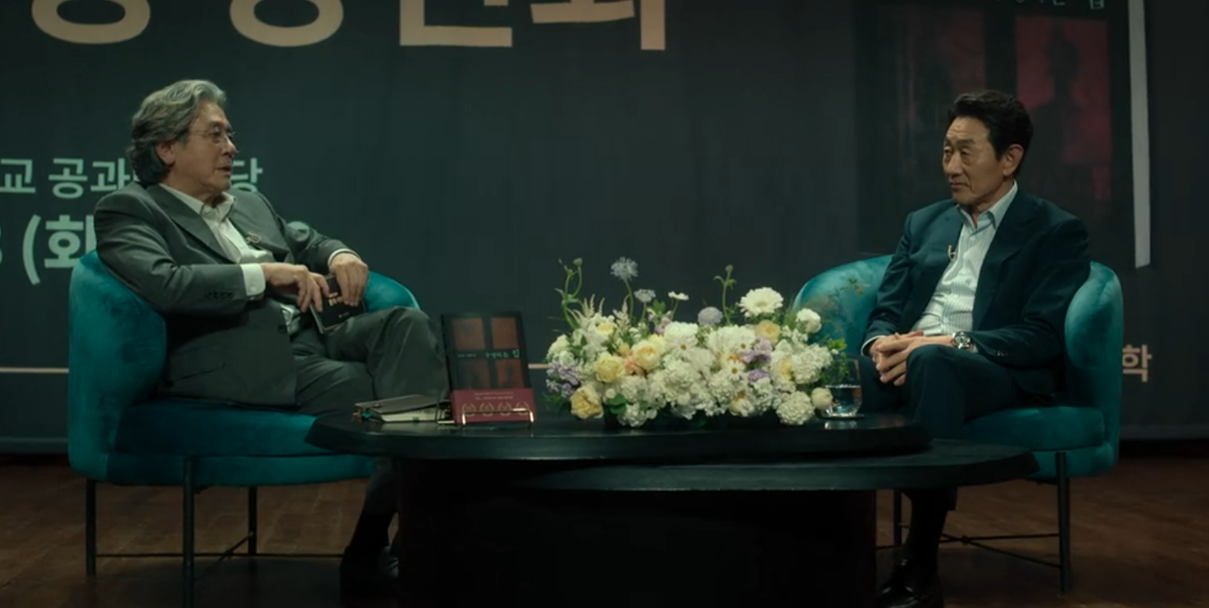
The character of Heo Mun-oh is a reimagination of Germán, who in the Spanish play is a high school teacher disillusioned with life. While the Korean series shifts his profession to that of a university professor, the core thematic beats of the character remain well-aligned. The same cannot be said about Kim Su-hun, though, as the writing team takes a lot of liberties when basing his character on Rafa Sr. from ‘El chico de la última fila’. In the source material, Rafa Sr. is depicted as a businessman, whereas Su-hun is one of Korea’s premier novelists and the object of Mun-oh’s envy throughout the series. While this is a major alteration, it allows Su-hun to be more deeply integrated into the story, touching up on many of the themes initially limited to just Mun-oh.
Heo Mun-oh’s Fictionality Plays Into the Metafictional Conceit of the Series
While both Heo Mun-oh and Kim Su-hun are creative constructs, the details surrounding their lives help add layers of realism. Kim Su-hun, in particular, seems to be modeled in the image of celebrated Korean novelists known for their unusual and often complex writing styles. While acclaimed writers such as Yi In-seong and Kim Young-ha are known for their experimental prose stylization, it’s not likely that they served as reference points for the creation of Kim Su-hun. Instead, it’s more probable that writer Jang Myung-woo and his team took hold of the general idea and aesthetic of a prolific, celebrated novelist and added some gray shades to make a uniquely compelling character.
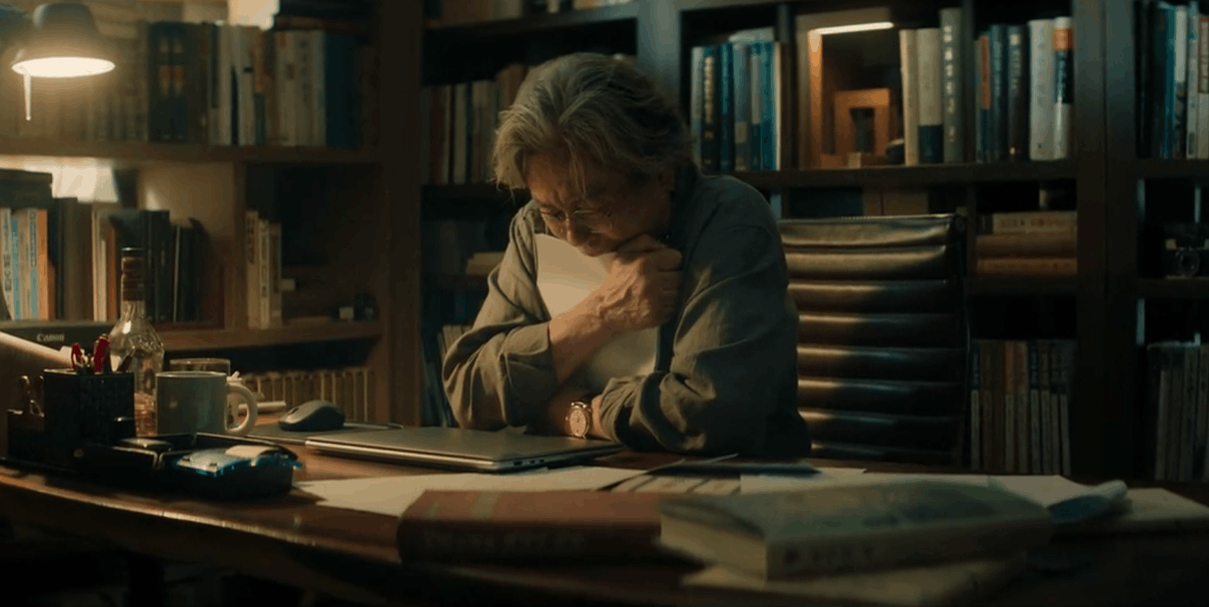
Unlike Su-hun, who can be easily described, Mun-oh appears to be a very unique presence with no clear antecedents in real life. There aren’t many writers in Korean literature who are known for writing only a single, towering novel. Instead, the idea of him being a one-hit wonder is used as a stepping stone for more complex characterization, one that plays on the thin line separating readers, writers, and characters. Both the Korean adaptation and the original play by Juan Mayorga rely heavily on involving the audience in the storytelling process, adding another meta layer to how Mun-oh is brought to life. Ultimately, while he may not be connected to any real-life figure, Mun-oh is the most interactive presence on-screen, which makes him the perfect character for this story.
Read More: Notes from the Last Row Season 2 Plot and Cast Theories


You must be logged in to post a comment.