
 Abhiroop Das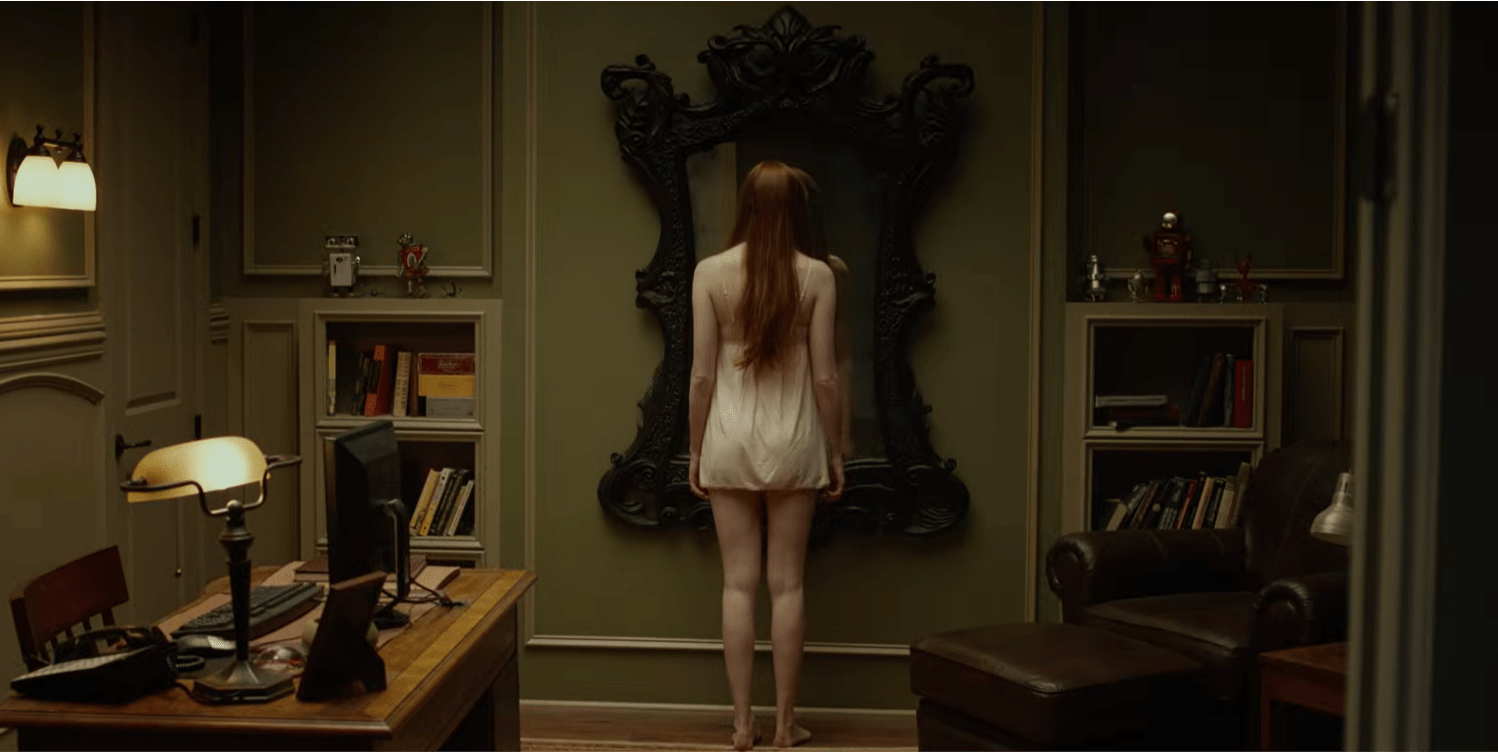
Helmed by Mike Flanagan, ‘Oculus‘ tells the story of two siblings, Kaylie and Tim, whose lives are torn apart after a traumatic incident in their childhood. Eleven years after the incident, Tim is released from a psychiatric facility and reunites with his sister, only to learn from her that the horrors of their past can seemingly be attributed to an actual object, a mirror. The Lasser Glass, as it is called, first came into the picture in the 1700s and has since had its fair share of ownership changes and rumors. Kaylie, however, firmly believes that the mirror is haunted, and in her desperate attempts to prove that fact without a shadow of doubt, she and Tim soon slip deeper into the chaos, with the Lasser Glass at the center of it all.
The Lasser Glass is a Fictional Mirror With No Historical Counterpart
The Lasser Glass is a fictional invention by Mike Flanagan and Jeff Howard to serve as the antagonistic force of the film, and does not trace back to any real-life artifact. The earliest iteration of the mirror actually appears in a short film Flanagan co-wrote with Jeff Seidman, titled ‘Oculus: Chapter 3 – The Man with the Plan.’ Despite technically being a third installment in what was intended to be a nine-chapter saga about the Lasser Glass, the short film was the first to be made due to its ease of filming. Between this and Flanagan’s feature film, the mirror has undergone some significant design changes, with fans also speculating about the Lasser Glass’ appearance in other Flanagan titles, such as ‘The Haunting Of Hill House,’ and ‘Midnight Mass.’ The core of this construct, however, has remained the same.
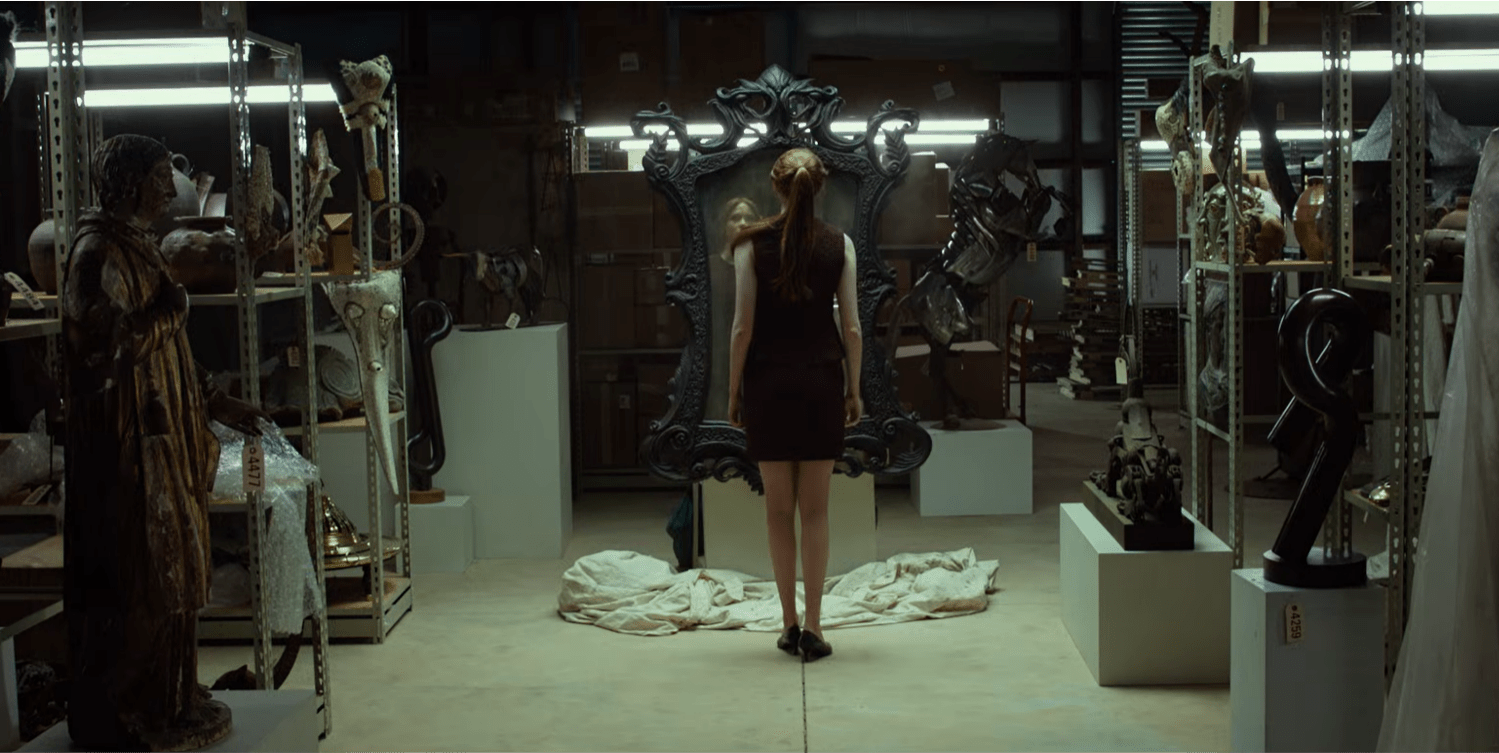
While the Lasser Glass may be fictional, Flanagan has identified several real-life influences behind the invention, be it urban horror legends or real cultural traditions. In an interview with Roger Ebert, he recalled encountering the Jewish custom of covering mirrors in a house of mourning. “When I first saw that as a child,” Flanagan noted, “it made me think about mirrors as portals (…) it was understood that if we didn’t do that, spirits would come through.” Flanagan was really spooked out by the belief at first, but it opened him up to using mirrors as a tool for horror storytelling.
Stephen King’s Works Lay the Foundation for Mike Flanagan’s Haunted Mirror
Mike Flanagan’s keen take on mirrors is also what makes the comparisons to Stephen King’s ‘The Shining‘ so potent, as in his early pitches for ‘Oculus,’ Flanagan referred to the Lasser Glass as “an Overlook Hotel that you can hang in your house.” The connection makes even more sense considering that both the mirror and the hotel are inanimate objects that are nonetheless a staple in not just horror fiction, but urban legends and horror trends. In his conversation with Den of Geek, the director talked about another memory of his, playing games like Bloody Mary, which involves going to a dark room with a mirror to try to summon a spirit. While this may have loosely informed his creation of the Lasser Glass, he also adds a more psychological angle to it.
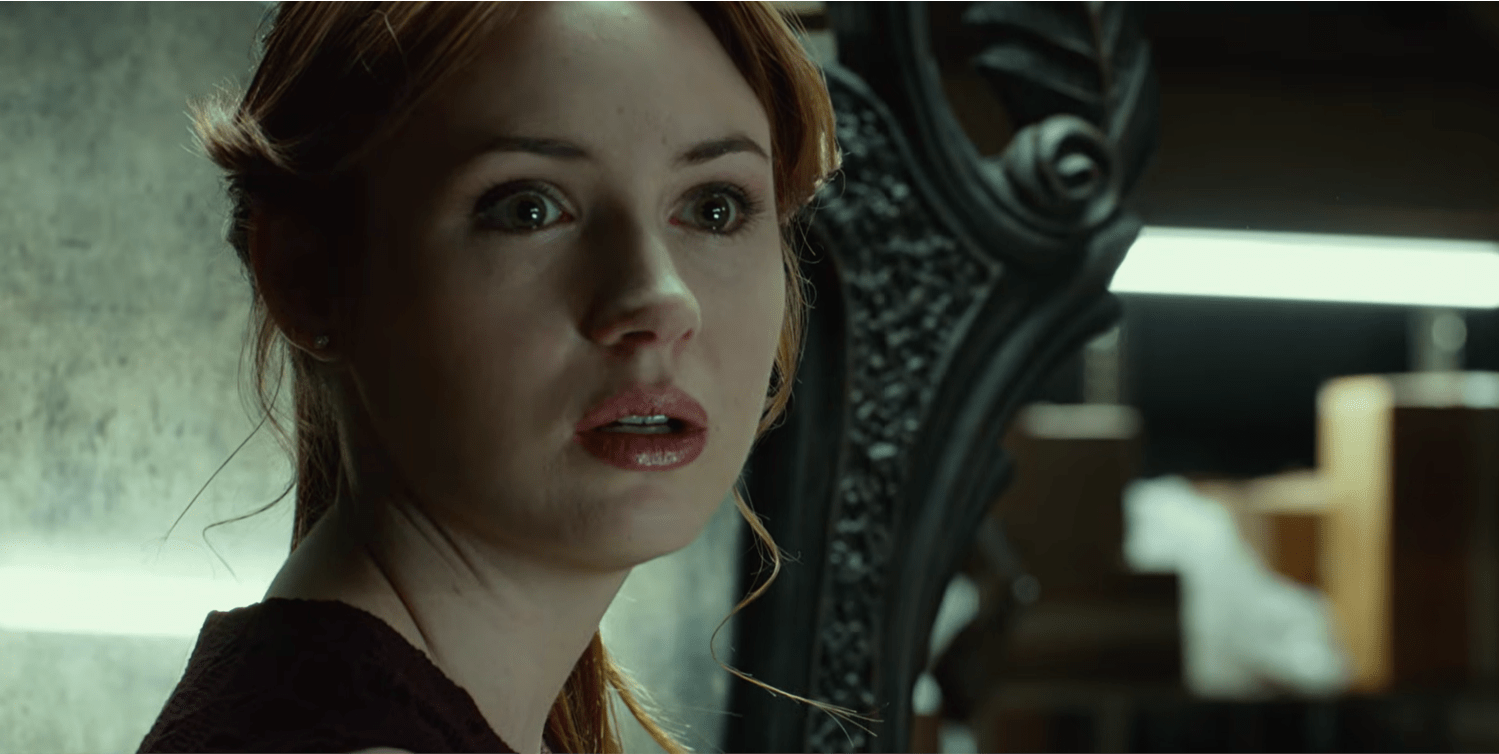
Talking to Horror DNA, Flanagan also cited King’s short story, titled ‘The Reaper’s Image,’ as an early influence, as the premise revolves around a supposedly haunted mirror in which some observers see the Grim Reaper. In particular, he was interested in the possibility that a reflection might contain subtle inconsistencies that the observer cannot explain. As for the decision to leave the Lasser Glass’ origins ambiguous, Flanagan cited author H. P. Lovecraft as an influence, specifically because of how the author’s supernatural entities often defy human logic and work independently of any added explanations.
The Lasser Glass is a Play on the Very Function of Mirrors
The Lasser Glass’ narrative strength doesn’t necessarily come from a backstory, but rather from playing with the very idea of a mirror. In his conversation with Den of Geek, Mike Flanagan brought up his interest in the psychological effects of prolonged staring, which can cause faces to appear distorted or unfamiliar. “The imperfections of the glass presents us with what we assume is reality, but it isn’t. So we took that idea that we take for granted that this is an objective reality but it’s not,” he added. Another thing Flanagan noted was just how ubiquitous a mirror can be in modern, everyday life, or how it’s often one’s “first interaction” of the day. With all this in mind, he and his creative team sought to move away from conventional depictions of scary and malicious entities and instead use the Lasser Glass to add a horror element to something as common as a mirror.
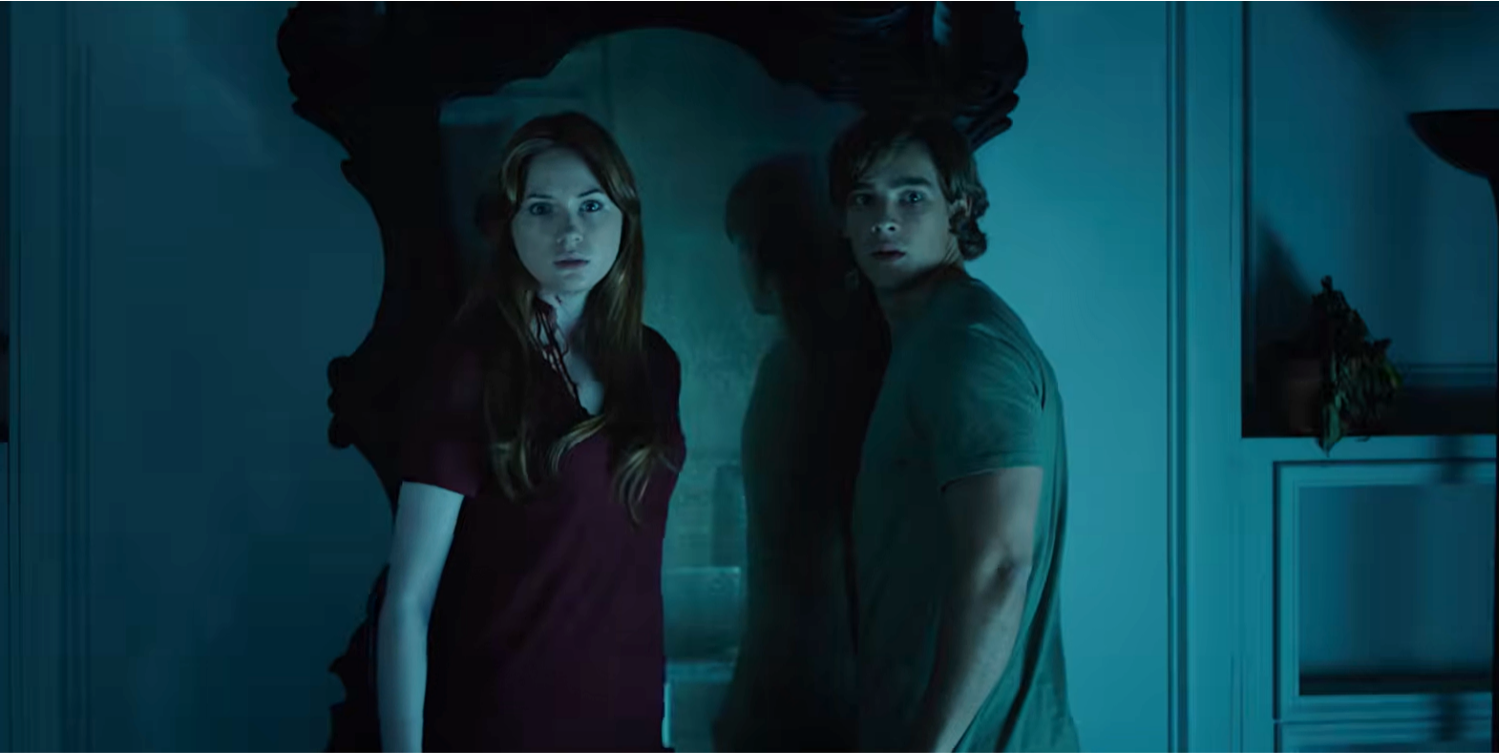
While the Lasser Glass has a history of causing its owners to die in the world of ‘Oculus,’ that entire chain of events consists of fictional characters and places. To that end, the writing team likely drew from anecdotes and myths about certain household objects in history that are believed to have haunted everyone who possessed them. This can refer to items as infamous as the Annabelle doll, or items such as the Basano vase or the Dybbuk box, both of which are associated with curses, bad luck, and nightmares. However, all of these claims have no scientific basis, and while Flanagan and team may have taken inspiration from their popular legacy, it’s unlikely that they serve as direct reference points for the haunted mirror.
Read More: Oculus Ending Explained: Is Kaylie Dead? Does She Become a Ghost?


You must be logged in to post a comment.