
 Abhiroop Das
Developed by Oren Uziel and based on the eponymous Marvel Comics character, Prime Video’s ‘Spider-Noir‘ tells the tale of Ben Reilly, a down-on-his-luck detective who once bore the alter ego of the Spider. Following a dark incident, he put down the mask for good, and today, as the Great Depression reaches its peak and the city crumbles in the face of crime, Ben can hardly claim to be happy. However, that changes the night he steps into The Alcove, a popular nightclub owned by the city’s kingpin, Silvermane.
While Ben is there to solve a case, what catches his eye and ear is the chanteuse known as Cat Hardy, whose melodious voice and powerful words pierce right through Ben’s hardened heart. As the superhero noir series continues, however, Cat becomes an integral part of the narrative, coming to a point where Ben becomes the Spider again to ensure that justice rings through the city he loves.
Cat Hardy is Spider-Noir’s Hollywood-Themed Take on Black Cat
Cat Hardy is a fictional character created by the Oren Uziel-led writing team of ‘Spider-Noir’ and is essentially a reimagining of the Marvel character known as Black Cat. Originally created by Marv Wolfman and Dave Cockrum for the comics, Black Cat’s real name is Felicia Hardy, which makes the parallel to Cat Hardy all the more apparent. In most ‘Spider-Man‘ stories, Felicia appears as both an antagonist and a love interest or tease. In ‘Spider-Noir,’ however, that narrative tradition is set within a much larger framework that also includes the likes of Flint Marco, AKA Sandman, and Lonnie Lincoln, AKA Tombstone. All of these characters get fresh backstories that are unique to the show, and in this case, Cat Hardy is no longer a superhuman burglar but a star singer in New York City.
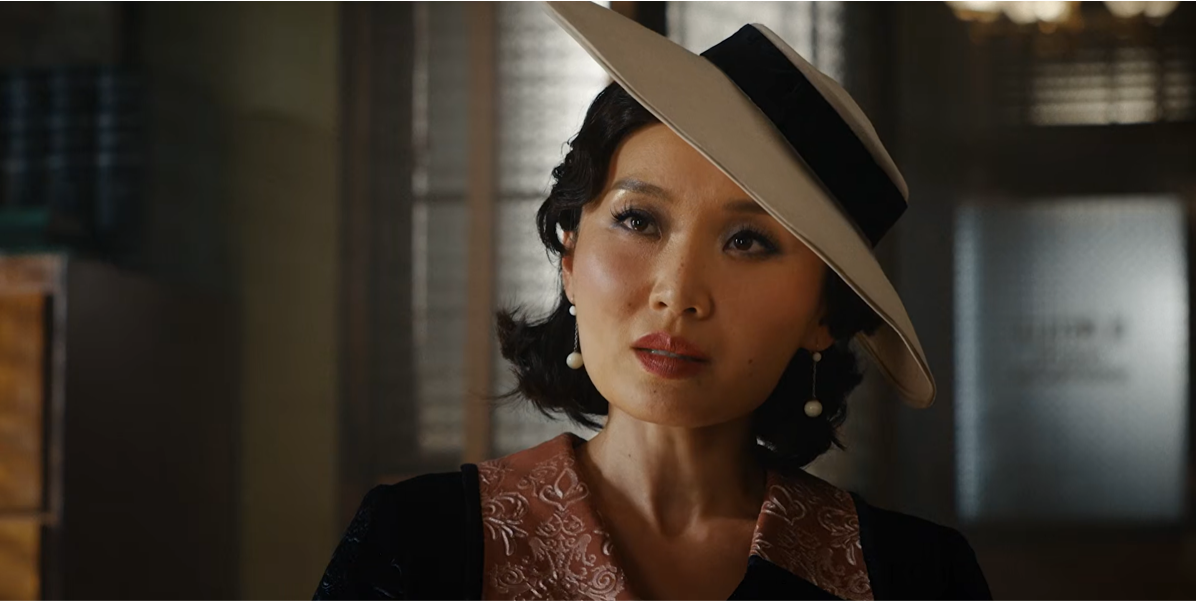
While classic renditions of Felicia Hardy may have served as a rough blueprint for Cat, much of the show’s inspiration comes from Hollywood. In a conversation with Esquire, Uziel revealed that one of the main references for Cat came from Hollywood star Anna May Wong, one of the most celebrated Chinese American actors of all time. Incidentally, actor Li Jun Li, who plays Cat in the show, also essays a fictionalized version of Wong in the film ‘Babylon,’ which makes this parallel all the more layered. In the same interview, Uziel also added that Cat is a composite of Rita Hayworth, Lauren Bacall, and Kim Basinger, mostly when it comes to recreating the charm and aesthetics of that era. That said, the finer details of Cat’s arc are still a show-only feature and a part of what makes her stand out.
The Alcove is a Fictional Setting Referencing Manhattan’s 1930s Nightclub Culture
The Alcove, the theater-nightclub where Cat performs every night, is a fictional location created by Oren Uziel and his writing team specifically for the world of ‘Spider-Noir.’ Given that the show is set in New York in the 1930s, it’s possible the writers referenced real nightclubs and restaurants from that period, which constituted what is known as café society. In particular, the prestigious Stork Club in Manhattan, New York, may have served as a loose reference point, given its historical significance as a magnet for celebrities, writers, politicians, and other influential figures. Between 1929 and 1968, the club hopped locations within Manhattan several times, but still retained its position as a cultural symbol of its time.
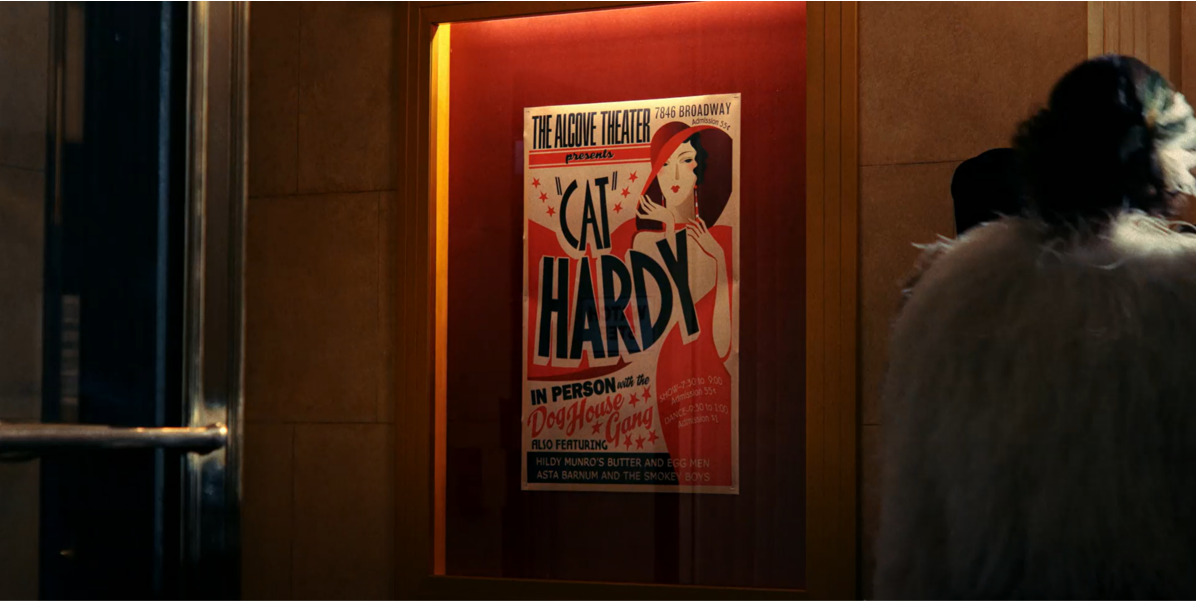
While there are some superficial similarities between the Stork Club and The Alcove, the latter’s role in the story is entirely invented by the writing team. As such, it’s more probable that the intention here is to recreate the feel and look of the 1930s, all the while maintaining a noir aesthetic. What separates The Alcove even more from its real-life counterparts in The Big Apple is the fact that it’s lensed on the complete opposite end of the country, in the city of Los Angeles. It’s likely that the interior scenes of The Alcove were all filmed on specially designed sets, which only serve to highlight how the nightclub is constructed from scratch and connects only broadly to the real-life tradition of old-school clubbing.
Read More: Spider-Noir Ending Explained: Does Ben Become the Spider Again? Does He Give Up His Powers?


You must be logged in to post a comment.