
 Aahana Swrup
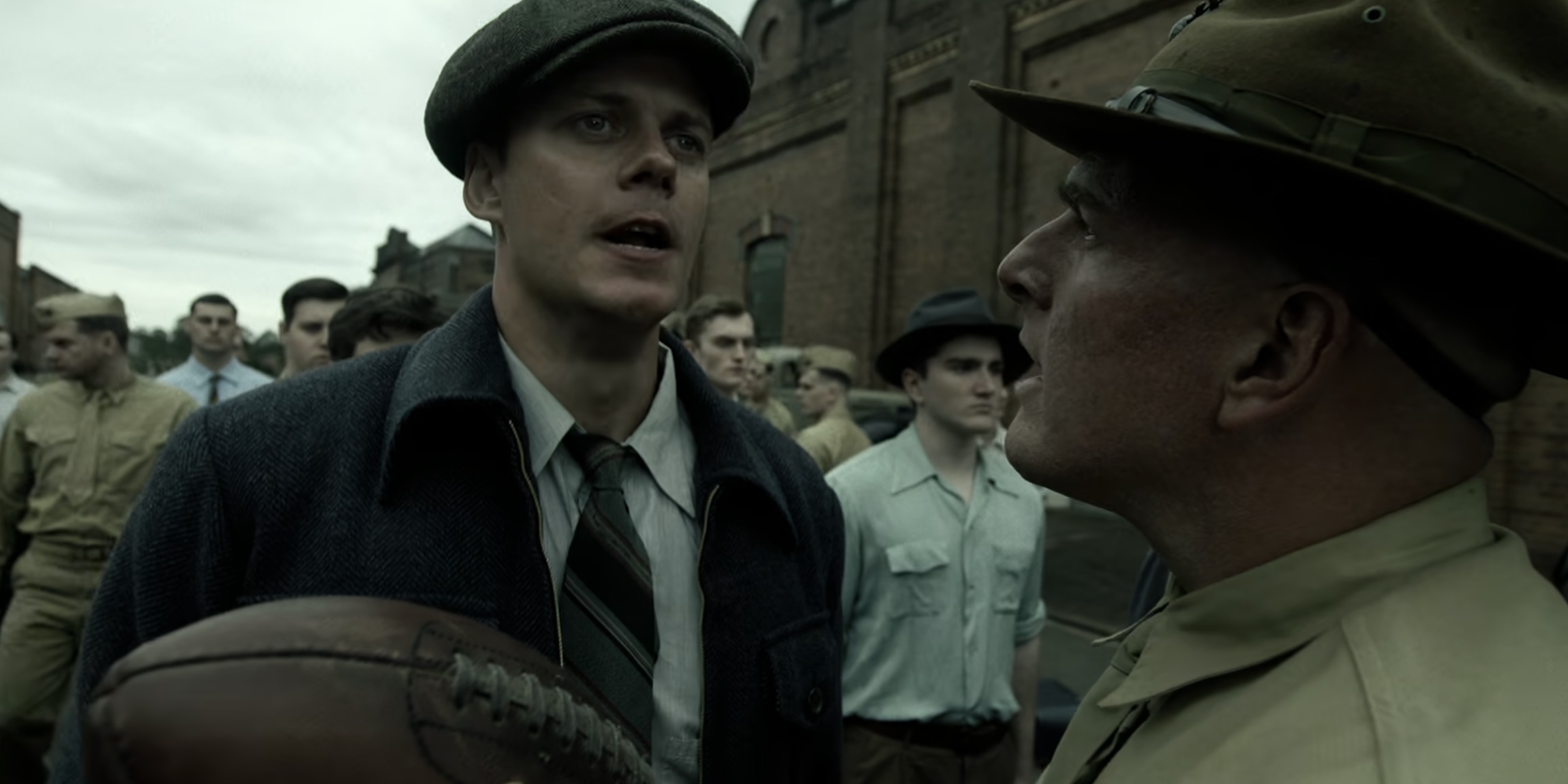
‘The Mosquito Bowl’ follows the stories of four football players whose lives are drastically overturned in the wake of the Pearl Harbor attack. In 1941, John McLaughry, Bob Bauman, Tony Butkovich, and Dave Schreiner all have bright futures ahead of them in the world of professional football. Yet, these young athletes find themselves putting their dreams on hold in service of their country. After joining the Marines, the players-turned-officers are deployed with the 6th Marine Division to join the war unfolding in the Pacific. Within a few years of their service, the idea of a life on the football field almost becomes a far-off dream for John and his fellow compatriots. That is, until a brief reprise on the island of Guadalcanal leads to an official game of football between Regiments. Although the officers don’t know it yet, for many, this would become their last moment of uncomplicated joy. SPOILERS AHEAD.
The Mosquito Bowl Plot Synopsis
On December 6, 1941, two college-level football games unravel, one between Harvard and Brown and the other between Purdue and Wisconsin. Captain John McLaughry of Brown University leads his team to victory, while Wisconsin’s Dave Schreiner loses to Purdue thanks to their rising star, Tony Butkovich. That night, each team’s players go out for a night of drinking and revelry regardless of their victories or losses. John has a celebration of his own inside his apartment with his fiancée, Jane. The next morning, horrifying news awaits these young men. The Empire of Japan has just attacked the naval bases at Pearl Harbor. In the wake of this tragedy, thousands of men sign up to serve their country, including these football players and many others like them.
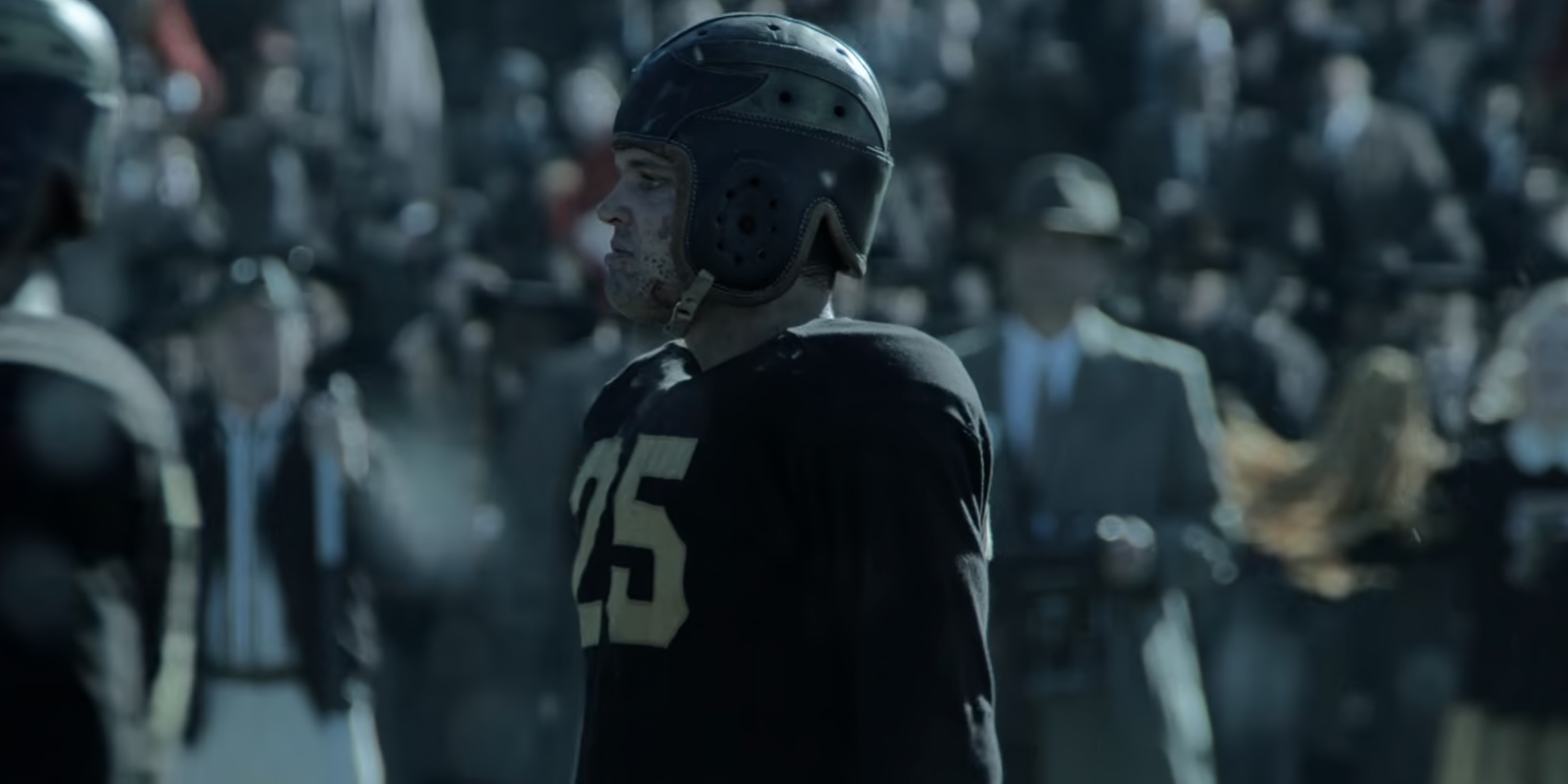
For many of them, like Tony, whom the NFL’s Cleveland Rams have recruited, this means putting a promising future on hold. In 1942, these men arrive on Parris Island, where they undergo the Marine Corps boot camp. By 1943, they’re shipped off to Tarawa on their first assignment. The mission gets off to a disastrous start when the boat John and the others are aboard gets stranded en route to the beaches and becomes an easy target for incoming missiles. As a result, the Marines have to jump ship and hope they make it to shore alive. On the beaches of Tawara, they face a different kind of horror. Enemy Japanese soldiers remain hidden under the sand, allowing them the element of surprise in their attack.
Alternatively, once the Marines gained the upper hand, many Japanese soldiers committed suicide in front of their enemies’ eyes. For many, like John, this was the first time they would witness such violent and horrific deaths. Nonetheless, this proves to be only the beginning of the kind of ruthless violence that begins dominating these Marines’ lives. Many take more pride in this brutality than others. As a result, in 1944, at Guadalcanal, Dave and his friend, Bob Bauman, end up getting into a brawl in the training ground with their fellow officers who had been trying to sell teeth, skulls, and ears of Japanese soldiers. Afterward, they’re brought in for reprimand by the Major General. However, the meeting takes an unexpected turn when the Major General pitches the idea of organizing a football game between the 4th and 29th Regiments as a way to boost morale.
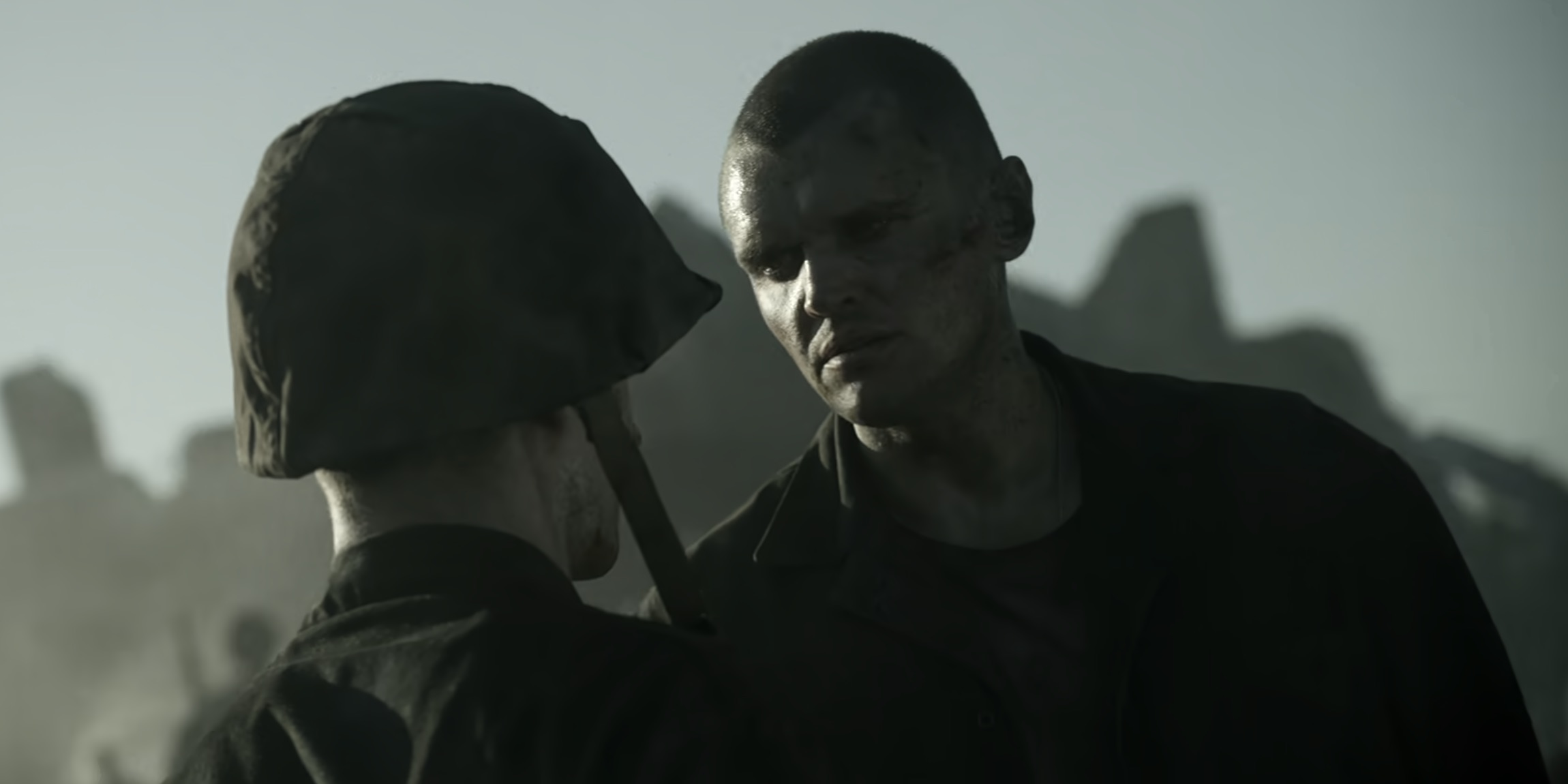
In a matter of days, this game came to life on Guadalcanal, pleasantly out of place in the savagery of the war that surrounded it. Still, the game is only a momentary escape from the horrors of the war. Before long, on June 1, 1945, the same Marines are sent off to another battlefield, this time at Okinawa. This battle proves to be unlike any other that these officers had faced in the past few years. The island’s landforms give the Japanese soldiers an advantage, allowing them to dominate the battlefield. Additionally, the place remains populated with many civilians, including women and children, who seem to have been ordered to choose suicide over capture by the enemy. Inspiring speeches and high spirits prove meaningless in the face of such a violent scene, and survival becomes a matter of luck more than anything.
The Mosquito Bowl Ending: Do John, Bob, Tony, and Dave make it Back Home?
At the start of the Battle of Okinawa, the American troops take heavy fire, overwhelmed by their enemy’s defenses. Ever since their first taste of war, John, Bob, Dave, and Tony had learned one crucial lesson. Unlike their old lives, where each confrontation on a football field was about victory or loss, a battlefield deals only in death and destruction. Regardless of which side wins, there is bound to be a devastating death toll on both sides. Thus, even though each soldier on the front lines is fighting for a cause of their own, for the protection of their nation and people, they all end up becoming little more than cannon fodder in these campaigns.
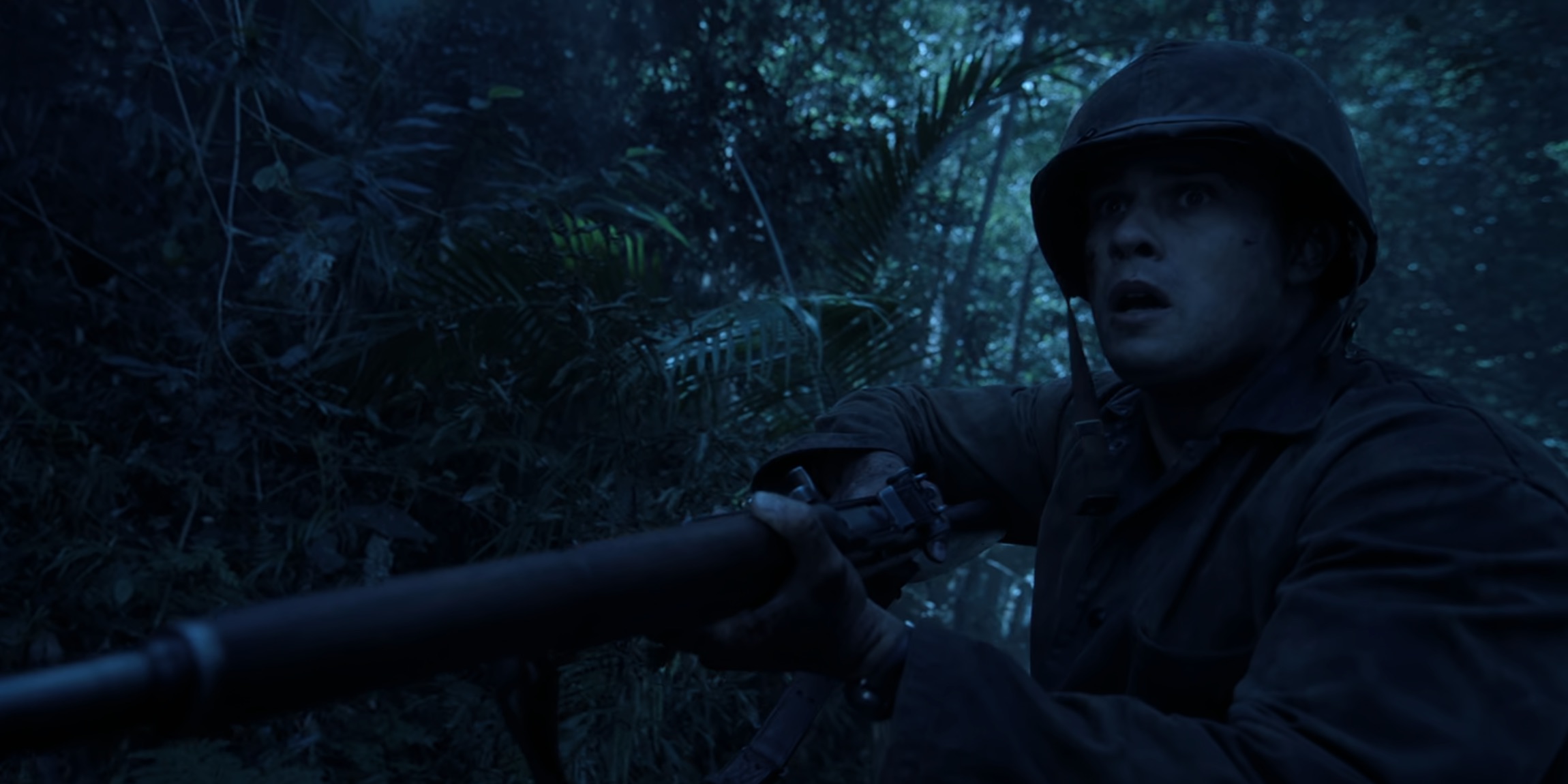
On Okinawa, the same proves to be true. Even the protagonists of the story are reduced to expendables on the vicious and bloodthirsty battleground. One by one, each officer gets picked off by the enemy soldiers. Bob is the first one to go, killed by a few headshots while he’s in the middle of delivering one of his patent invigorating speeches. Dave is the next one to go, kept company in his final minutes by Tony, who gets shot shortly thereafter. In the end, John is among some of the only surviving officers, who continue fighting his enemies. Yet, as his own compatriots continue to fall, his survival begins to seem less and less likely.
That is, until more of the American cavalry arrives on the scene to replenish their numbers on the battlefield. The arrival of more troops, armed with weapons as well as the tactical support of tanks, cements the Americans’ victory in the battle. John emerges as one of the few surviving members of his Division, outliving all three of his closest friends. Like the thousands of lives lost on both sides, Dave, Bob, and Tony end up becoming the collateral damage in a war much bigger than any one of them. Ultimately, even though their side emerged victorious, the battle itself will remain a tragedy due to the thousands of lives it ravaged.
Does John Return to Football?
Of the four central figures we follow throughout the story, John is the only one who returns from the hellish war. Yet, it’s evident that the brutalities of the war have taken something crucial from him. He has faced an overwhelming loss, not only of his friends and comrades, but of his own personal innocence and virtue. The horrors of the war that he has witnessed on the battlefield have as much of an effect on him as the violence that he was compelled to deliver personally. Thus, when he returns to America and reunites with his loving fiancée, Jane, at the train station, their reunion is heavier than a simple celebration. Once back home, the Marine tasks himself with an important job: laying his fallen compatriots to rest in their home.
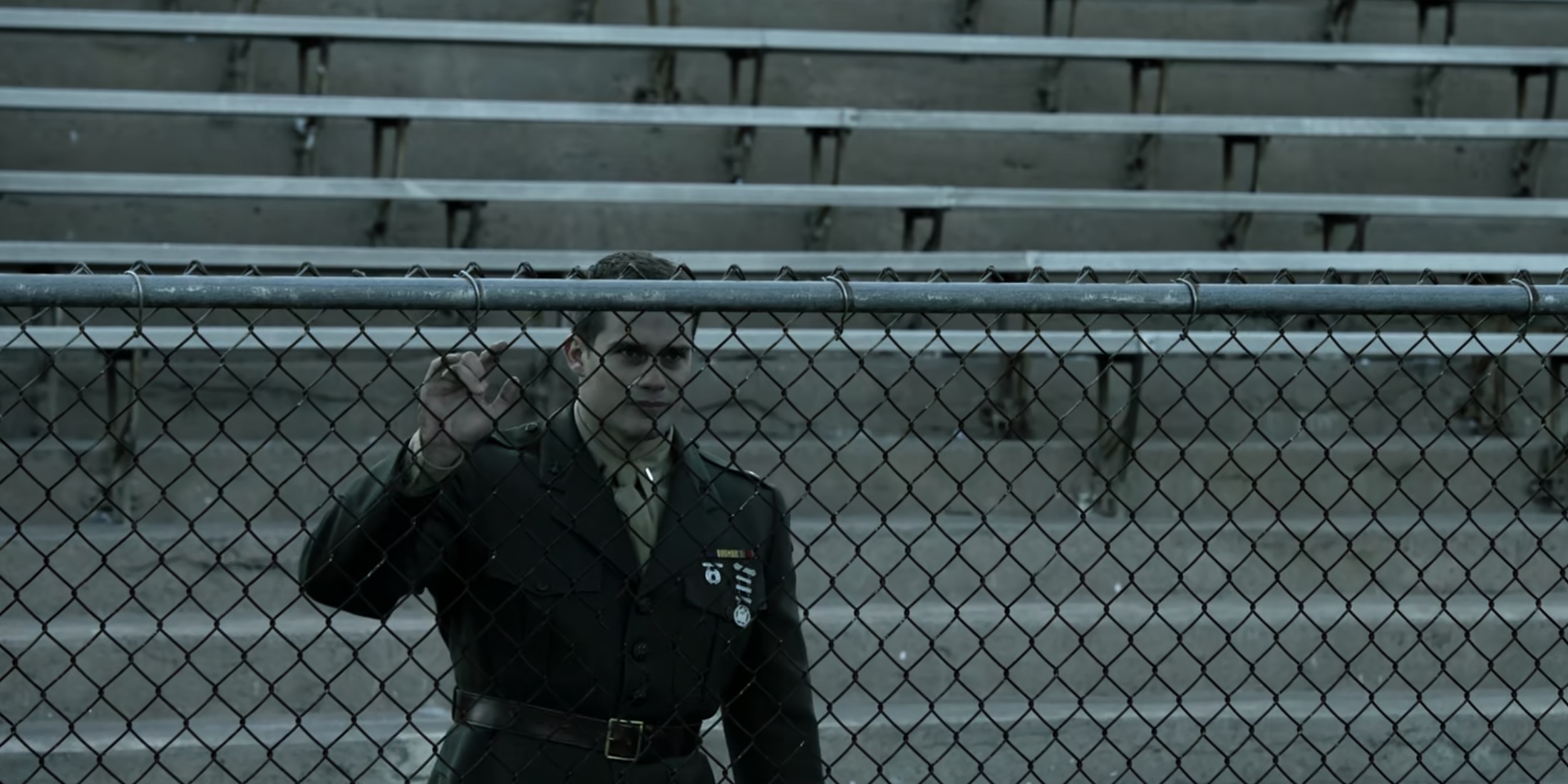
After the war, John returns to the football field where he, Dave, Bob, and Tony shared an entirely different life before their enlistment in the Marines. He buries his friends’ salvaged dog tags in the ground, ensuring that a part of them remains at rest in the last place that housed their youthful joy and innocence. As for the surviving Marine himself, he has a long life ahead of them. That time will be filled with efforts to undo the damage that the war has done and the scars that it has left on him. Somewhere along the line, it also gives way for John to once again rediscover his passion for the game of football that once defined his life. The days of him playing in the field as a player may be long gone, but he can still follow in his father’s footsteps. Thus, the Marine returns to Brown University, this time as the Head Coach.
Why Did They Organize a Football Game in Guadalcanal?
Throughout the story, the protagonists and their fellow Marines are constantly put in hellish situations, surrounded by violence and merciless killing. It’s a sharp contrast to the beginning of the story, which follows a group of men on a different field fighting for a different kind of victory. In many ways, the football field and the battlefield offer a similar kind of context for these characters. However, the latter carries a vastly greater weight with it. The Marines are traumatized on a daily basis, forced to put their own lives on the line and surviving only at the cost of brutalizing another fellow human. Even though the stakes of the war have compelled them to villainize the Japanese soldiers, once they actually come face-to-face with their so-called enemies in battle, the full depth of the other group’s humanity becomes evident. Much like the Marines themselves, the Japanese soldiers are also doing the bidding of their government and its ideologies.
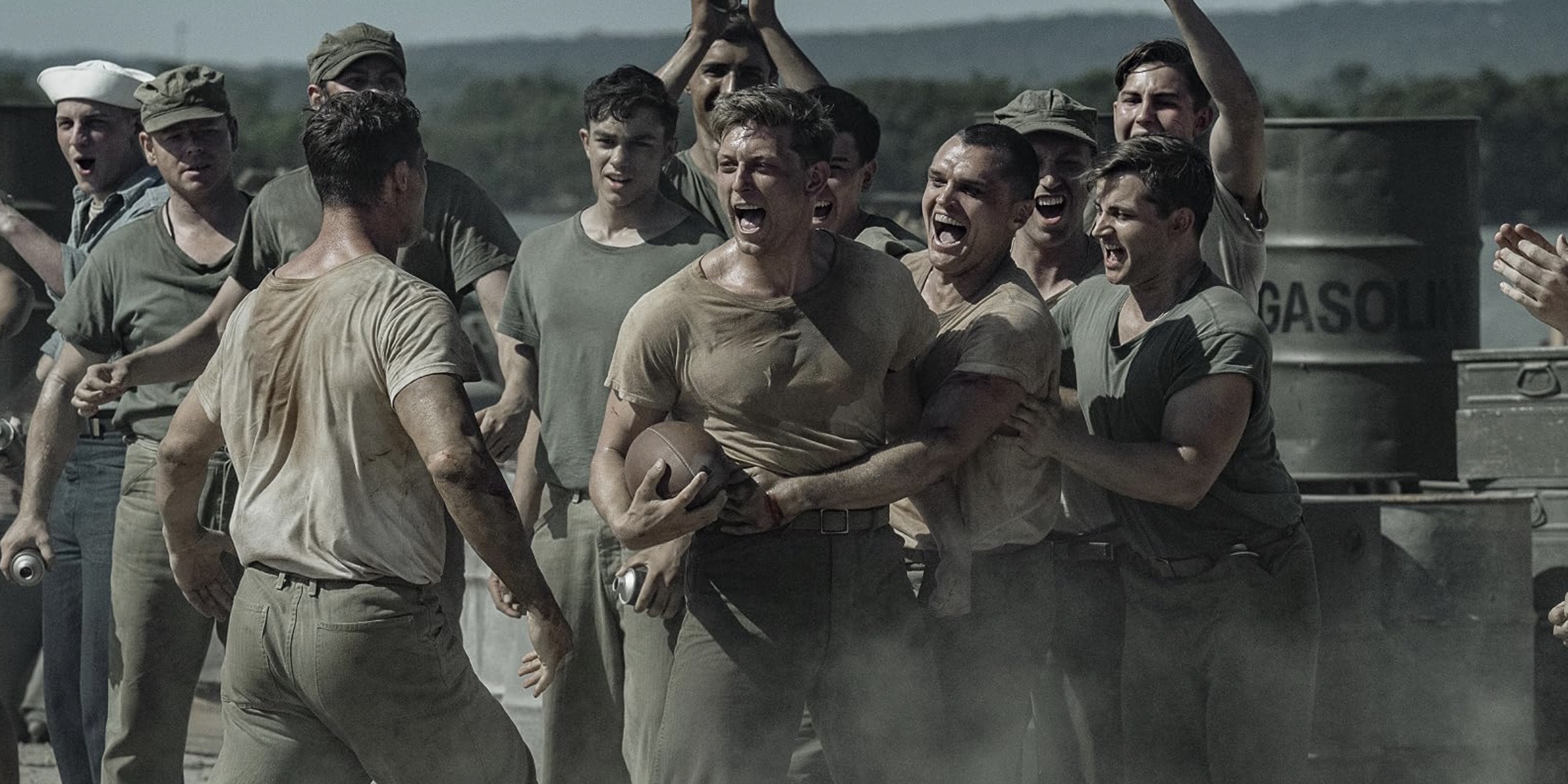
They’re all victims in a war that was started by men who will never truly set foot on a battlefield. Therefore, even the act of taking the lives of their enemies has a toll on the conscience and humanity of the Marines. Additionally, alongside the Japanese soldiers, John and the others are also slaughtering a part of themselves that they’ll never truly get back. They have all traded their personal dreams and aspirations for the future of the country. Even though they don’t regret this decision, the weight of paying such a price stays with them for a long time. Therefore, by the time the 4th and the 29th Regiments arrive in Guadalcanal, a grim atmosphere has settled over them. The Marine Corps’ official attempts at boosting morale and uplifting the quickly dwindling spirits of their officers aren’t working.
No amount of entertainment in the form of singers and stand-up comics seems to be able to suffice. Thus, the idea of the football game, dubbed the Mosquito Bowl, emerges. At this point in time, a major motivating force for the troops is the camaraderie they have formed amongst themselves. While they do continue to fight for the nation, they’re also fighting for their fellow brothers-in-arms. Thus, a football game offers a chance for these officers to build upon this existing bond and remind themselves of their brotherhood. More importantly, it transports them to a time in their lives when the violence of war didn’t dominate their waking hours. The football game allows the soldiers to enjoy a brief moment in which the idea of victory doesn’t have to come at the cost of a body count. More than that, it allows them to return to a simpler, happier time.
Read More: The Mosquito Bowl: Is Wilson Based on a Real Marine?


You must be logged in to post a comment.