
 Aahana Swrup
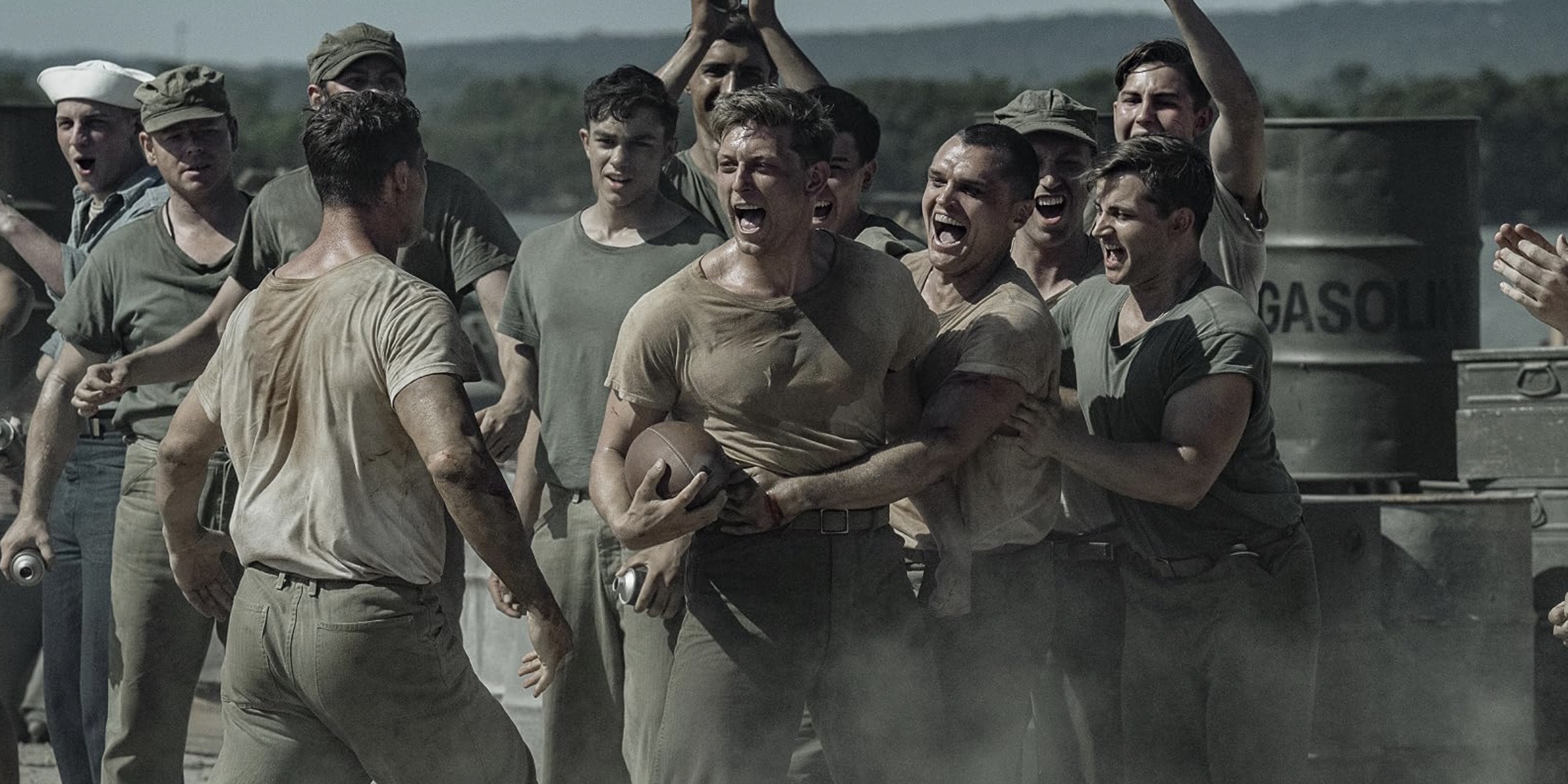
Directed by Peter Berg, ‘The Mosquito Bowl’ presents an extraordinary story about a moment of joy and respite found in the midst of a vicious war. The film takes place in the aftermath of the 1941 attack on Pearl Harbor, which changed the trajectory of the United States and World War II as a whole. At the center of the narrative are four college football stars, John McLaughry, Bob Bauman, Tony Butkovich, and Dave Schreiner. Even though these players have a promising future ahead of them, they choose to serve their country and ship out to the front lines of the Pacific War.
On the battlefields of Tarawa, these men, along with their fellow Marines of the 6th Division, face the horrors of the war firsthand. However, something unusual happens during a moment of stillness on the island of Guadalcanal. Their division hosts a historic game of football, allowing the Marines to momentarily escape the atrocities of their current reality and return to a simpler time. The film remains rooted in a real group of Marines who fought in World War II and participated in a unique football game known as the Mosquito Bowl.
The Mosquito Bowl Was a Real Football Game That Took Place During World War II
In 1942, Guadalcanal, the largest of the Solomon Islands, oversaw a major offensive campaign by the United States against the Empire of Japan. By 1943, the battle had ended, and the area became a training ground for the Marines. In late 1944, the 6th Marine Division trained on the island, preparing for the upcoming invasion of Okinawa, Japan. During this long period of inactivity, a good-natured argument broke out between the 4th and 29th Regiments. Both groups housed Marines who were former college football players and believed they could take on the other regiment in a game and win.
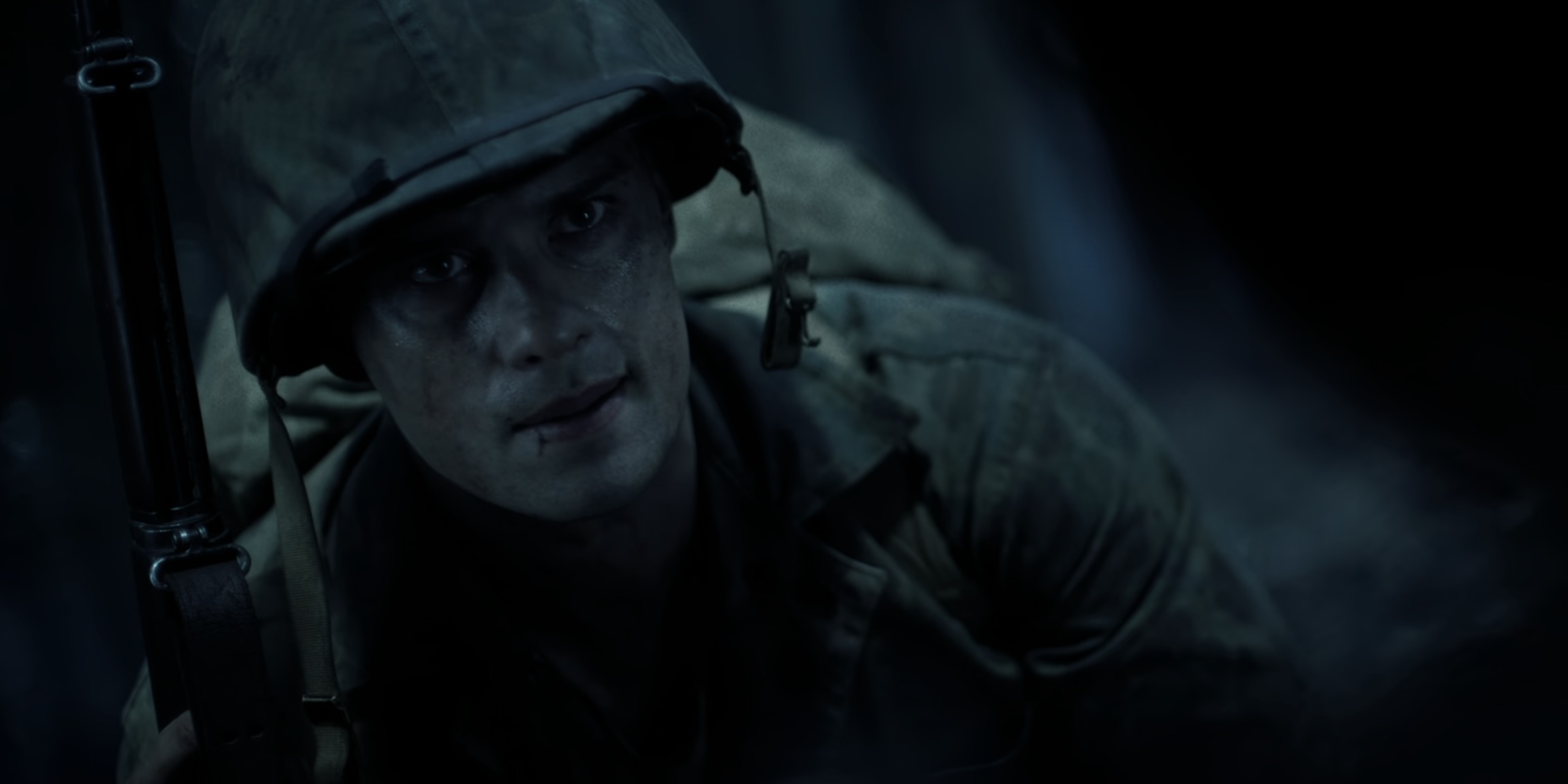
Consequently, the division’s Major General Lemuel Shepherd ended up approving a game of football between the 4th and the 29th to take place on December 24, 1944. Between the two teams, the game had 3 All-American players, 7 former college captains, and other former high school players. In the lead-up to the Christmas Eve game, programs were printed, and goalposts were built. On the day of the game, players were even given numbered T-shirts, and the game was announced over the radio for thousands of people across the Pacific to tune in to. Although it started off as a game of touch football, it soon evolved into a full-contact affair. The game, dubbed the Mosquito Bowl, ended with a 0-0 score.
Peter Berg, director of the film directly based on this historic event, spoke to Netflix about the nature of this unusual game. He shared, “It wasn’t a big grand moment. It was a moment where they were able to not just reconnect with their identity but also experience joy for one last moment, which is something that the game provided not just for them but for all the Marines who were watching or listening.” In ‘The Mosquito Bowl,’ the filmmaker sets out to highlight the extraordinary singularity of this brief moment of joy that real-life soldiers got to experience even in the middle of a horrifying war. Three months after the Bowl, the 6th Division was sent to Okinawa for Operation Iceberg. Of the 65 players who participated in the game on Christmas Eve, 15 lost their lives in the ensuing battle.
The Mosquito Bowl is Based on Buzz Bissinger’s Eponymous Book
Peter Berg’s film delves into the historical football game played by the 6th Marine Division in 1944, during the Pacific War in World War II. In order to do so with authenticity and accuracy, the film finds a direct basis in Buzz Bissinger’s 2022 book ‘The Mosquito Bowl: A Game of Life and Death in World War II ― A WWII Story Set in the Pacific Theater.’ The non-fiction writer stumbled across the story of the real Mosquito Bowl entirely by accident. As the tale goes, he was researching for another project when he discovered a program for the Marines football game that had survived the decades. To his surprise, Bissinger realized that his father, a Marine who fought in the Battle of Okinawa, served in one of the 6th Division Regiments that participated in the game.
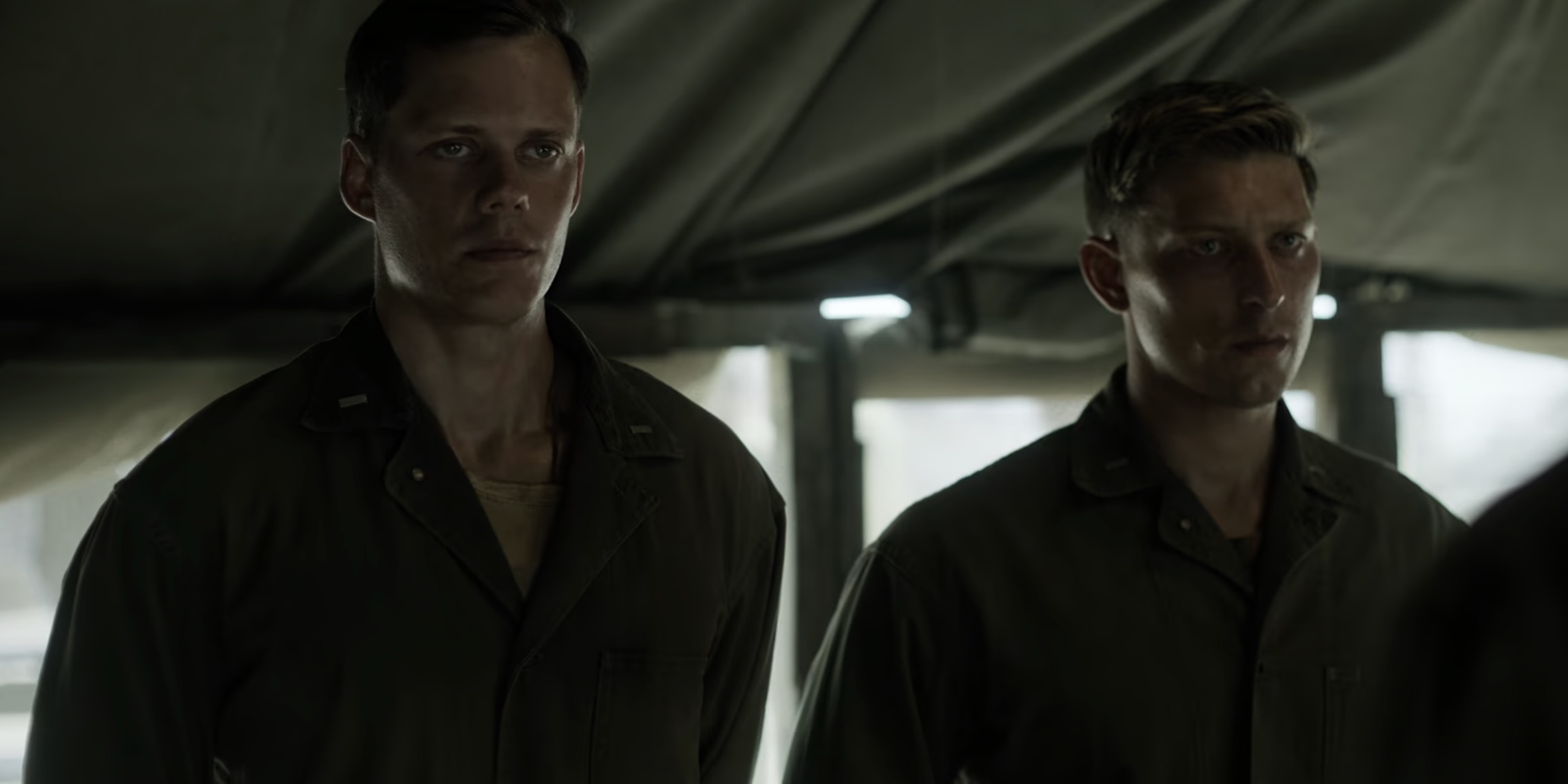
Although the author’s father, a member of the 4th Regiment, wasn’t a player himself, he likely would have witnessed the game and even known many of the players from the two teams. Soon afterward, Bissinger began researching the Mosquito Bowl with the intention of writing a book on the topic. Tragically, most of the people who could provide first-hand accounts of the game had already passed away by then. Even so, the author continued chipping away at the story. He looked into military records, family archives of the Marines’ descendants, and any other reliable source he could find. Eventually, through preserved letters, photographs, and other records, Bissinger was able to retain enough material to piece things together. Four Marines in particular emerged as the heart of the author’s work.
Butkovich, the son of a Croatian immigrant family, was from central Illinois. He took to football in his young years and was sent to Purdue University, where he led his team to numerous victories. However, before the season ended, he received his orders for shipment from the Marines. Before his deployment, he was selected by the Cleveland Rams as a first-round pick. David Schreiner played for the University of Wisconsin, where he was named an All-American twice and was drafted by the Detroit Lions. He was friends with Robert Bauman, a star tackle picked by the Chicago Bears. The two enlisted in the Marines within months of each other. Lastly, there was John McLaughry, son of a respected football coach for Brown University.
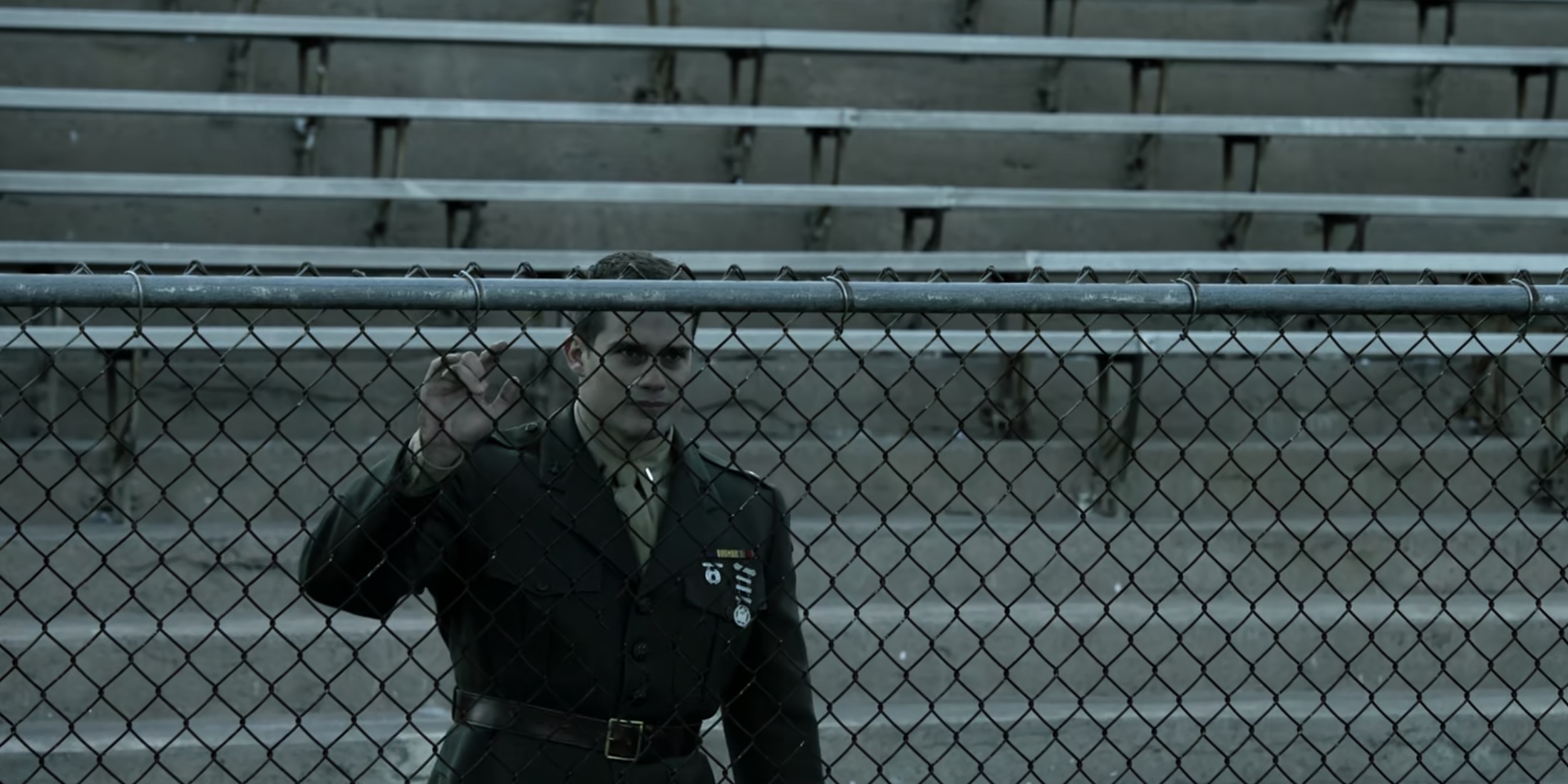
McLaughry, who was a painter as well as an athlete, was a college captain at the same university and played for the New York Giants for a whole season. He, Schreiner, and Bauman became officers in the 4th Regiment while Butkovich served with the 29th. All four of them participated in the Mosquito Bowl before joining the invasion of Okinawa in April 1945. McLaughry was the only one of the four who made it back home. Schreiner, Bauman, and Butkovich all lost their lives in the battle. The battle took many more lives, with the official count standing in the thousands. According to estimates, 12,000 Americans were dead or went missing, while around 94,000 to 140,000 civilians from Okinawa died.
The Mosquito Bowl Showcases the Real Horrors of War While Implementing Some Creative Liberties in its Storytelling
Although Peter Berg’s ‘The Mosquito Bowl’ remains rooted in history as well as Buzz Bissinger’s nonfiction book, the film dramatizes certain events and details for the sake of the overarching narrative. For instance, all four of the central Marines, John, Dave, Bob, and Tony, serve in the same Regiment even though that wasn’t the case in real life. Additionally, a rivalry between Tony and Dave is fictionalized for the film and didn’t exist in real life. Notably, the deaths of these characters also diverge from the reality suggested by historical accounts. Consequently, certain changes were made to the reality of John McLaughry, Dave Schreiner, Bob Bauman, and Tony Butkovich. In a conversation with Time Magazine, Buzz Bissinger, who advised Berd and his co-writer, Mark L. Smith, on the script, spoke about these changes.
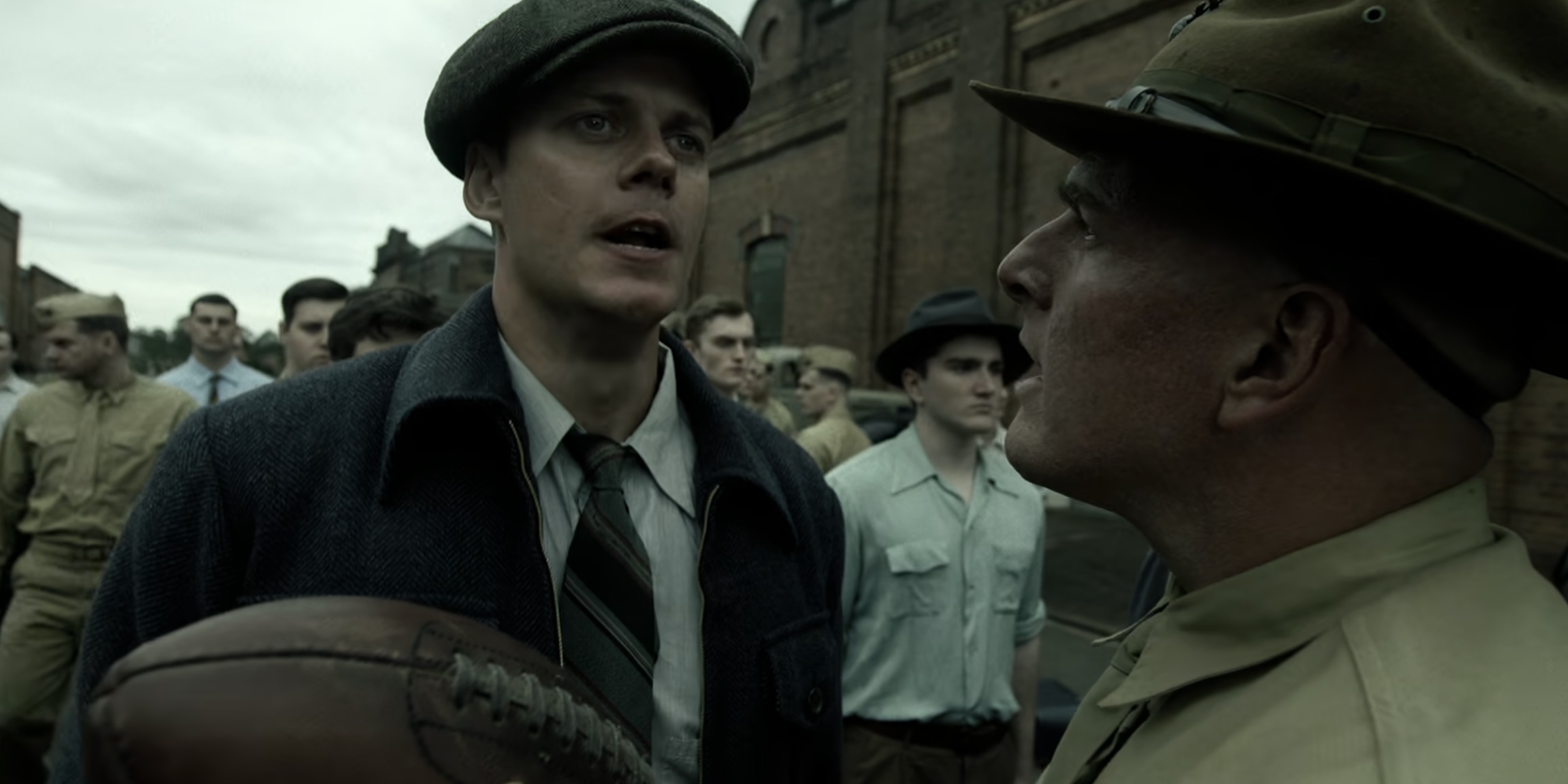
According to the author, Berg had to create some of his own narrative that veered from the book and subsequently known historical fact. Nonetheless, despite any changes, the filmmaker held on to the essence of the story. While discussing the film with Netflix, Berg said, “This is a film about young men who were sports heroes at home and became war heroes on the shores of the Pacific. They were athletes, sons, teammates, and rivals; brothers, friends, and husbands who laughed together, competed together, and dreamed together about a future that war interrupted. I wanted to tell their story through that lens, so the audience could stand where they stood: unprepared, unknowing, and asked to face it anyway.”


You must be logged in to post a comment.