
 Abhiroop Das
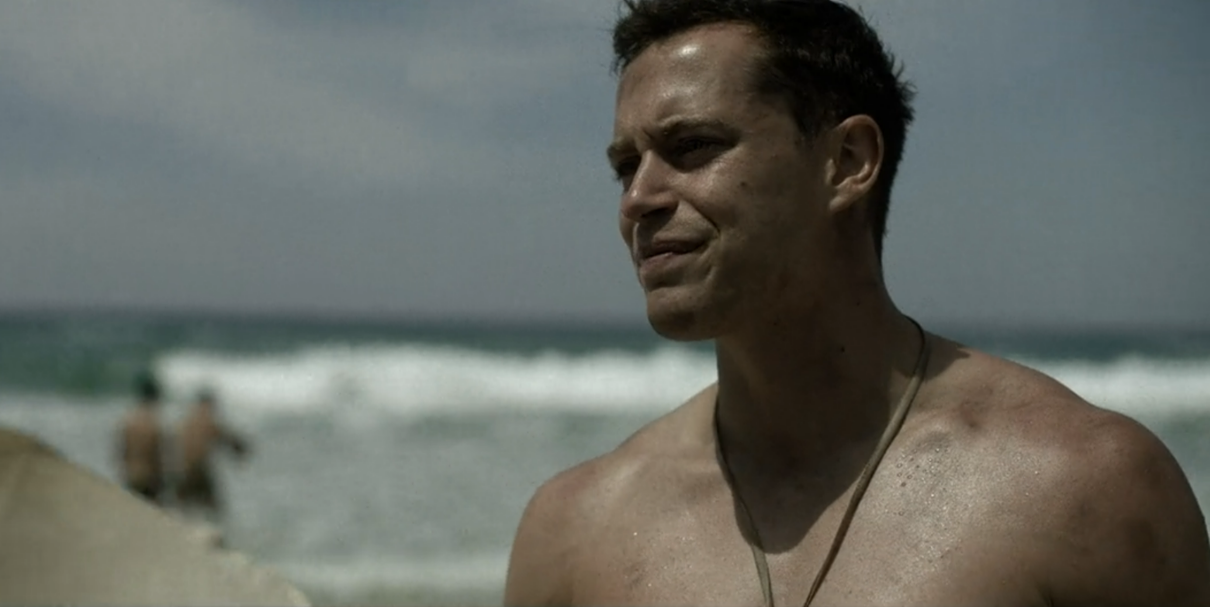
Helmed by Peter Berg, Netflix’s ‘The Mosquito Bowl’ is a World War II drama centered around four college football stars, John McLaughry, Tony Butkovich, Bob Bauman, and Dave Schreiner, who enlist in the United States Marine Corps during the war. Inspired by Harry Gerard “Buzz” Bissinger eponymous novel, the story lets the characters’ athletic rivalries find their way into the realities of military life. Nowhere is this blend felt more concretely than in the football game played by Marines on Guadalcanal on Christmas Eve 1944, which the film also dramatizes. While the four leads become our primary eyes and ears into the game, there is also one key player who emerges as their equal, George Murphy. A Notre Dame football standout, Murphy embarks on a journey of his own as the battle progresses, and his story proves to be as inspiring as any.
George Murphy Was a Football Star Who Served in the Marines During World War II
George Edward Murphy was a real-life Marine and college football player whose life is reimagined in the film ‘The Mosquito Bowl.’ While the film is inspired by the nonfiction book of the same name by Buzz Bissinger, it takes many creative liberties, as seen in Murphy’s on-screen arc. Many of the broader details, however, remain true to life, including the fact that he served in the 29th Marine Regiment and participated in the real-life 1944 Mosquito Bowl. Born on November 26, 1920, in Indiana, Murphy attended St. Joseph’s grammar school before enrolling at South Bend Central High School, where he established himself as a recognizable name in the world of football, playing right end.
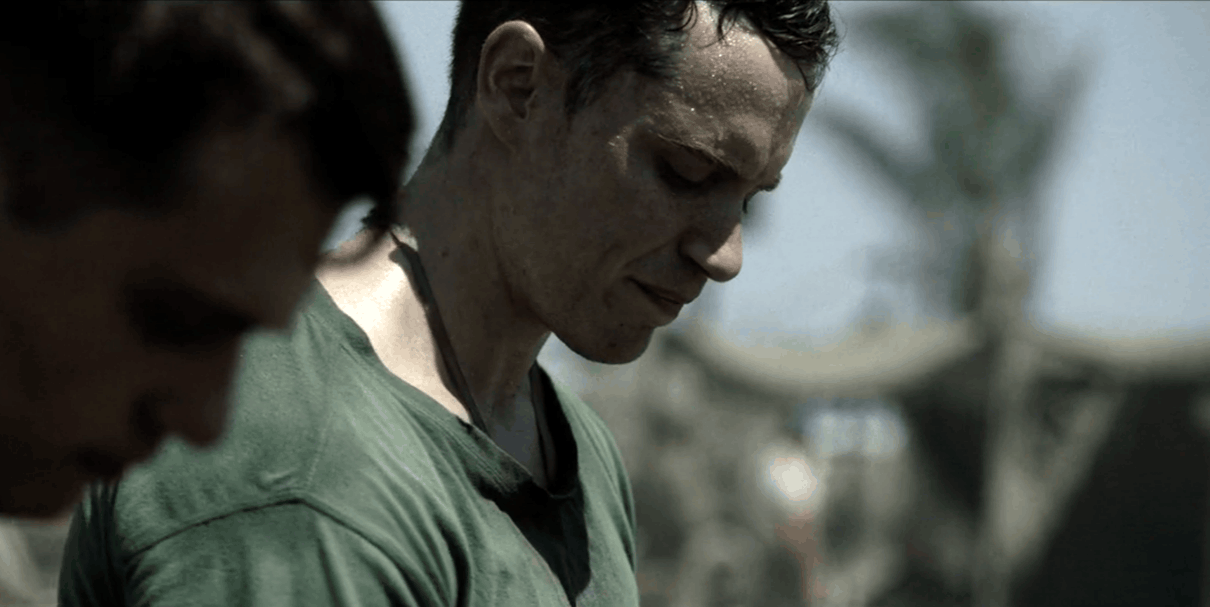
During his senior year at Central High School, Murphy also spent some time working at Notre Dame’s N.D. Huddle, a campus shop. The experience further informed his decision to enroll in the University of Notre Dame, where he earned a place on the varsity football squad and the name “Irish George.” During the 1941 season, he famously caught 13 passes from quarterback Angelo Bertelli for 130 yards and scored a touchdown against Georgia Tech, which he later recalled as his greatest football memory. His teammates elected him captain for the 1942 season, making him the first South Bend native in 33 years to receive the distinction, according to records. On December 20, 1942, Murphy graduated with a Bachelor of Science degree in Physical Education and had hoped to pursue a career in coaching.
George Murphy Played in the Mosquito Bowl With the 29th Regiment
Following the Japanese attack on Pearl Harbor on December 7, 1941, the United States formally declared war on Japan the following day, marking its entry into World War II. Although George Murphy had already enlisted in the United States Marine Corps while attending Notre Dame, he was not called into active service until after graduation. He received his commission at Parris Island, South Carolina, in June 1943, and served as an instructor there until July 1944, before deploying overseas on July 29 of the same year. Reportedly, his daughter, Mary Grace, had been born in South Bend the previous day. Murphy eventually joined Company D of the 2nd Battalion, 29th Marine Regiment, serving with the 6th Marine Division.
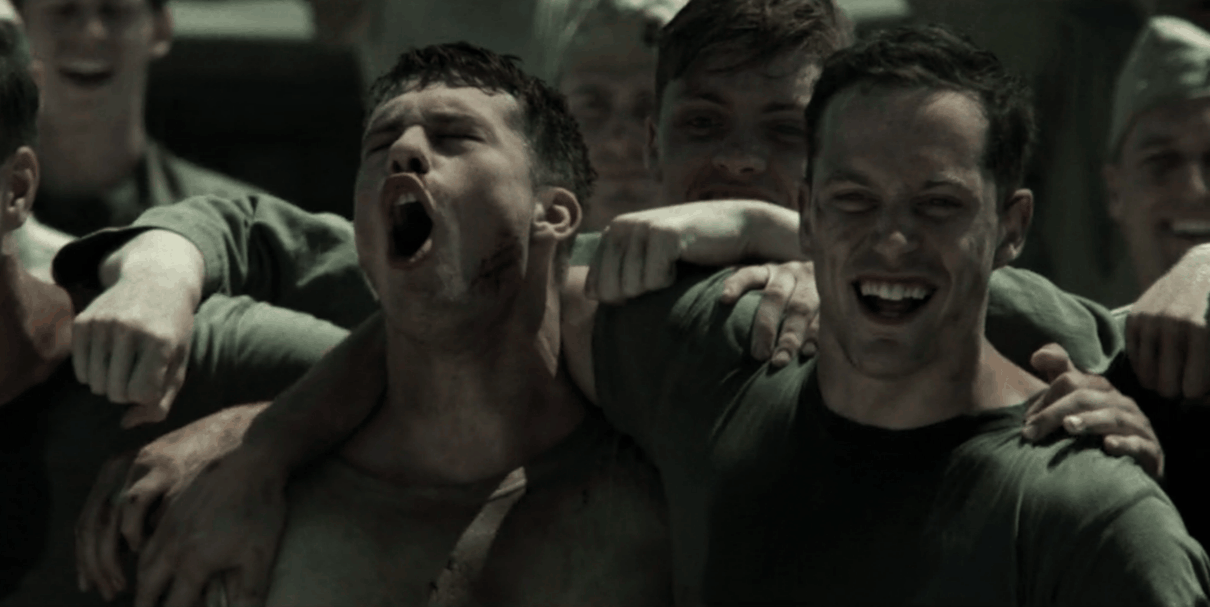
The famous football game known as the Mosquito Bowl, in which Murphy participated, took place on Christmas Eve 1944, when the Marines were stationed on Guadalcanal Island. The game, played on the makeshift Pritchard Field parade deck, brought together former college and professional football players from both the 29th and the 4th regiments. While the former were heavily favored for the win, neither side managed to score, and the game ended in a 0-0 tie after 60 minutes. Existing records of the game’s roster list Murphy as a probable starting end, which is most likely the position he actually played. After the Christmas Eve match, Murphy and his fellow Marines continued training on Guadalcanal before embarking on their next battle.
George Murphy Died During the Battle of Okinawa at the Age of 24
On April 1, 1945, the 6th Marine Division landed on Okinawa, Japan, and George Murphy’s regiment subsequently took part in the extensive fighting along the island’s southern stretch. By May, he was leading a platoon during the assault on Sugar Loaf Hill, one of the campaign’s most fiercely contested positions. According to the 6th Marine Division’s official history, Murphy’s men managed to reach the crest but soon exhausted their grenades amid fierce battle. He then asked his company commander for permission to withdraw, but was ordered to hold. Murphy eventually ordered his platoon to retreat on his own initiative. As he covered their withdrawal, he stopped to help a wounded Marine but was hit by a shell fragment and soon passed away. As per the records, only 11 of the platoon’s original 60 men remained by the time it withdrew from Sugar Loaf Hill.
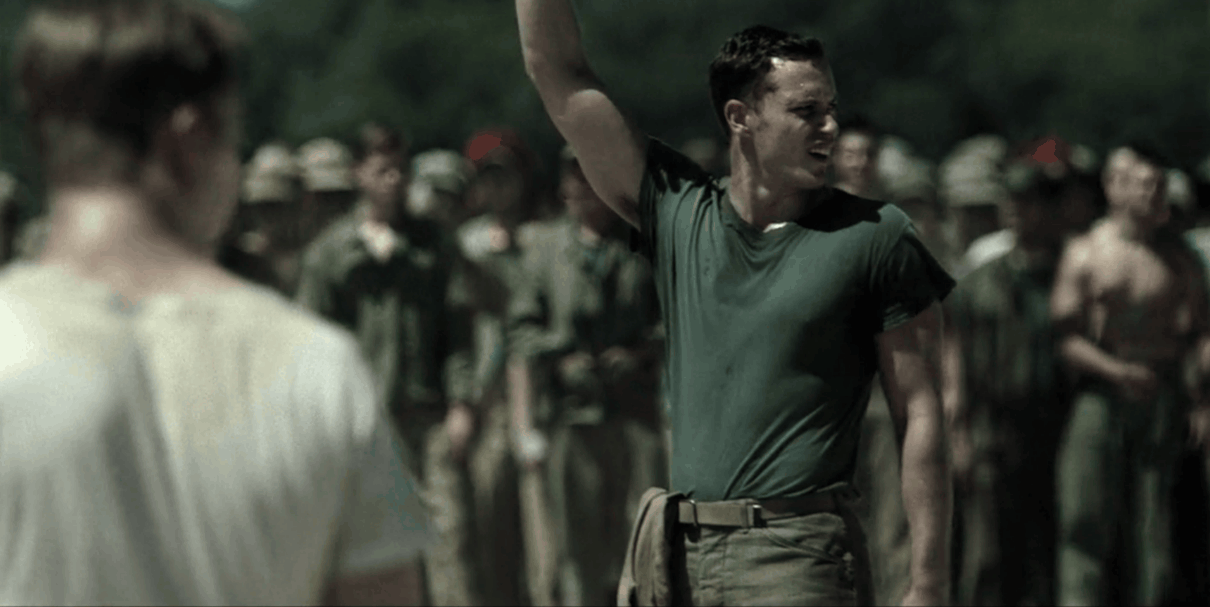
Murphy was 24 years old when he died on May 15, 1945, at which time he was survived by his wife, Mary, their daughter, Mary Grace, his parents, a sister, and his brother, John. His remains were initially buried in the 6th Marine Division Cemetery on Okinawa before being returned to South Bend, Indiana, where he was laid to rest at Riverview Cemetery. ‘The Mosquito Bowl,’ co-written by Peter Berg and Mark L. Smith, presents a dramatized version of these events while still approaching Murphy’s life with a degree of sensitivity. Given that the movie was shot chronologically, filming Murphy’s death was actor Brent Comer’s final day on set. In a conversation with Tudum, Comer noted that “What I love about the character, and what’s true of the person, is that he put others before himself, both in real life and in the story,” which speaks to his enduring legacy.
Read More: Where Was The Mosquito Bowl Filmed?


You must be logged in to post a comment.