
 Kriti Mehrotra
When psychologist and professor Philip Zimbardo chose to examine human behavior in 1971 by placing 24 healthy male college students into a mock jail, it was pure chaos. The planned 14-day study had to be abandoned after just 6 days due to the escalating cruelty by individuals assigned as guards and the emotional distress of the so-called inmates. The entire ordeal was deemed the Stanford Prison Experiment because the facility was built in the basement of Stanford University’s psychology building, and it was a failure.
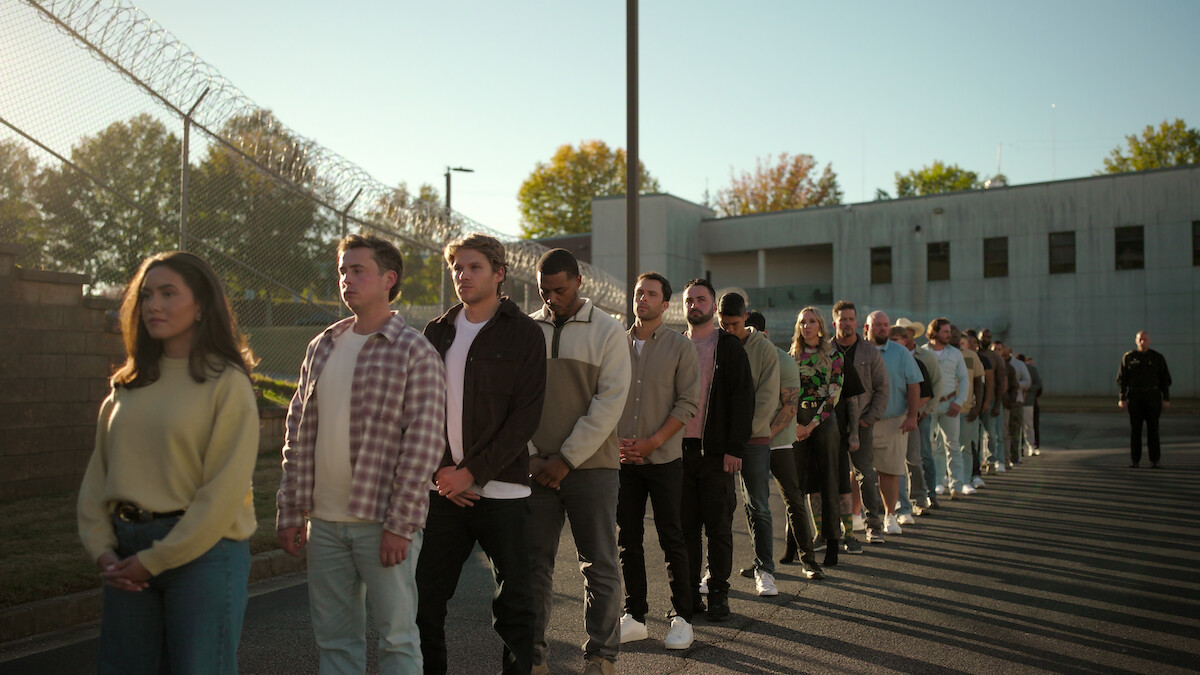
Therefore, more than 50 years after the study became one of psychology’s most notorious cautionary tales, Netflix has pushed the envelope and re-imagined the questions it posed. There are thus 3 experts in ‘The New Stanford Prison Experiment,’ who observe 30 people from all walks of life step into a real prison for 2 weeks to see what they’re capable of. It really does answer whether power can corrupt and community can outlast anger, leading many to wonder if the series was indeed unscripted or if manipulation was involved.
The New Stanford Prison Experiment Was as Authentic as Possible
From the moment ‘The New Stanford Prison Experiment’ was first announced by the global streaming giant, it has decisively been billed as an unscripted reality television show. So, no situation or sentiment that appears on our screens is concocted from the ground up or faked in any manner, and it seems even the cast is urged to be who they really are. That’s not to say professionals don’t go over everything with a fine-tooth comb to ensure entertainment value, but there was likely minimal interference during the actual filming.
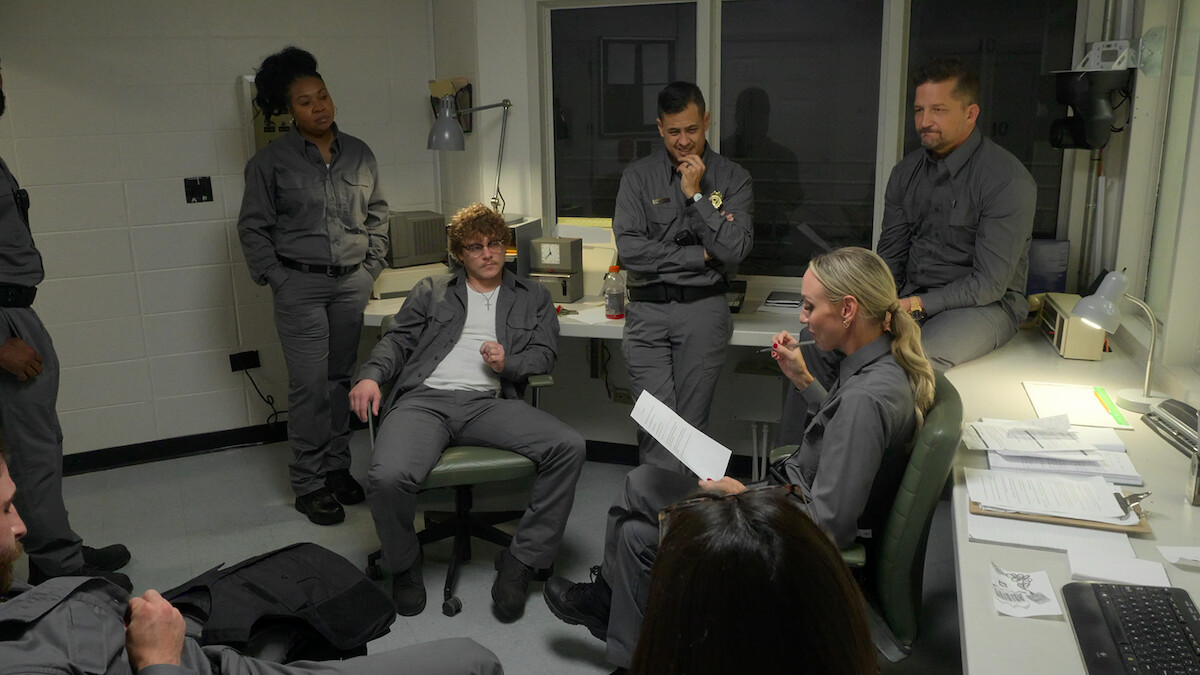
What we mean is that there is significant planning by the series creators and executive producers to ensure the study can even proceed, let alone yield proper results. They coordinate the reimagining of the original experiment, design 4 phases spaced at appropriate intervals, secure a prison to facilitate the real sense of being locked up, and then film without interference. They then categorize everything into subsections before tackling it with the help of experts, all the while looking for participants who reflect the world of today – that’s how females are included this time around.
Executive producer Jane Lipsitz has since revealed that they did some things differently compared to the original study to make sure none of the infamous mistakes were repeated. That’s why it took them a year to develop the show – they were careful about outside influence, determined the most ethical way to carry on, and gave the participants control over their journey with safewords. Moreover, to keep production interaction to a minimum when filming began, robocams were used inside the prison, and even confessionals were conducted in a way that no one outside could be seen.
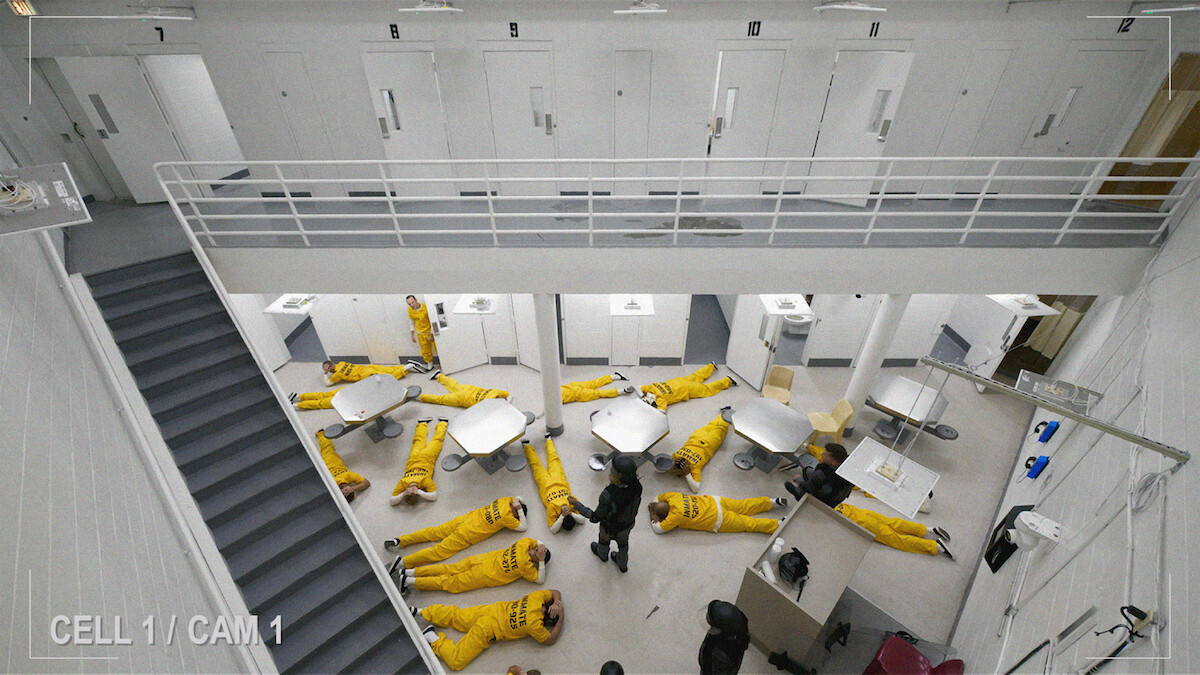
The robocams in the prison cells, dining space, recreation area, and guard rooms ran 24 hours a day throughout the experiment, capturing both compelling and uncomfortable moments. According to Jane in an interview with Netflix’s Tadum, people are now so used to cameras just being around that the participants “actually started talking” directly into the lens without any encouragement from producers. The one time producers may have affected the show was after rebellious inmate Brendan Hardey chose to leave, as they let him talk to his mother and re-think his actions for a while, resulting in him returning as a Guard.
Jane candidly also told the platform, “Unscripted felt like the only way to explore this (re-imagination) — and in some ways, the Stanford Prison Experiment was the forebear of the social experiments that unscripted television is based on. Place real people into a complicated and constructed environment, and document what happens.” However, we should mention that there is a lot of external influence/involvement in the editing phase, but it’s unavoidable because it is the sole means by which professionals can bring a flow to all the different scenes and create a good story. In other words, what happens during filming in ‘The New Stanford Prison Experiment’ is as authentic and natural as possible, but there is some potential manipulation or modification in the pre- and post-production processes. Still, we would suggest you consume everything with a grain of salt.
The New Stanford Prison Experiment Likely Paid the Participants a Fair Sum
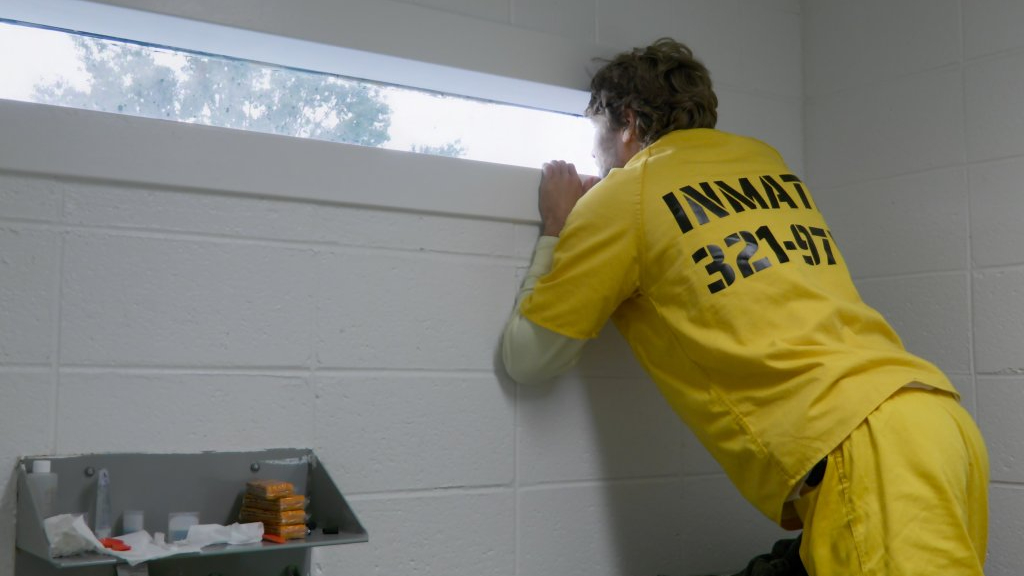
While neither the producers nor the participants have disclosed any financial details about the contracts to appear in ‘The New Stanford Prison Experiment,’ the 30 cast members were paid. In the original 1971 academic study, the 24 male college students were paid $15 per day to be locked up (approximately $125 per day after adjusting for inflation in 2026), but it was abandoned after just 6 days. This time around, the contestants themselves chose to leave the experiment after a total of 11 long days upon realizing they had gotten everything they could from it, bringing it to a united close.
The few who wanted to stay the full 14 days anyway before ultimately conceding to the majority were reportedly not motivated by money in any way because it was allegedly not a large sum. The only thing producers have revealed is that they deliberately avoided making the remuneration large so that no one would participate or stay in the experiment longer than they were comfortable with purely for the money. However, from what we can tell, they were paid a fair daily rate – likely a few hundred dollars per day – in addition to transportation costs, hotel rooms for the “Guards” when not on duty, hotel rooms for everyone before and after the actual filming process, and food costs.
Read More: Is Big Brother Real or Scripted?


You must be logged in to post a comment.