
 Abhiroop Das
Directed by Paul Greengrass, ‘The Uprising‘ tells the revolutionary story of how thousands of commoners in 14th-century England came together to rebel against the oligarchic forces lording over their lives. Set in the years after the Black Death, the period drama film follows a peasant known only as the Ploughman, whose anger inspires many across villages to take up arms and march to the king with their grievances. Among these is a young nun named Alyce, who once had a tumultuous relationship with the church. Having emerged from that traumatic past stronger and more fearless than ever, she fights alongside the popular leaders, cementing herself as one of the icons of the revolt.
Alyce is a Stand-in For the Women Who Took Part in the Peasants’ Revolt
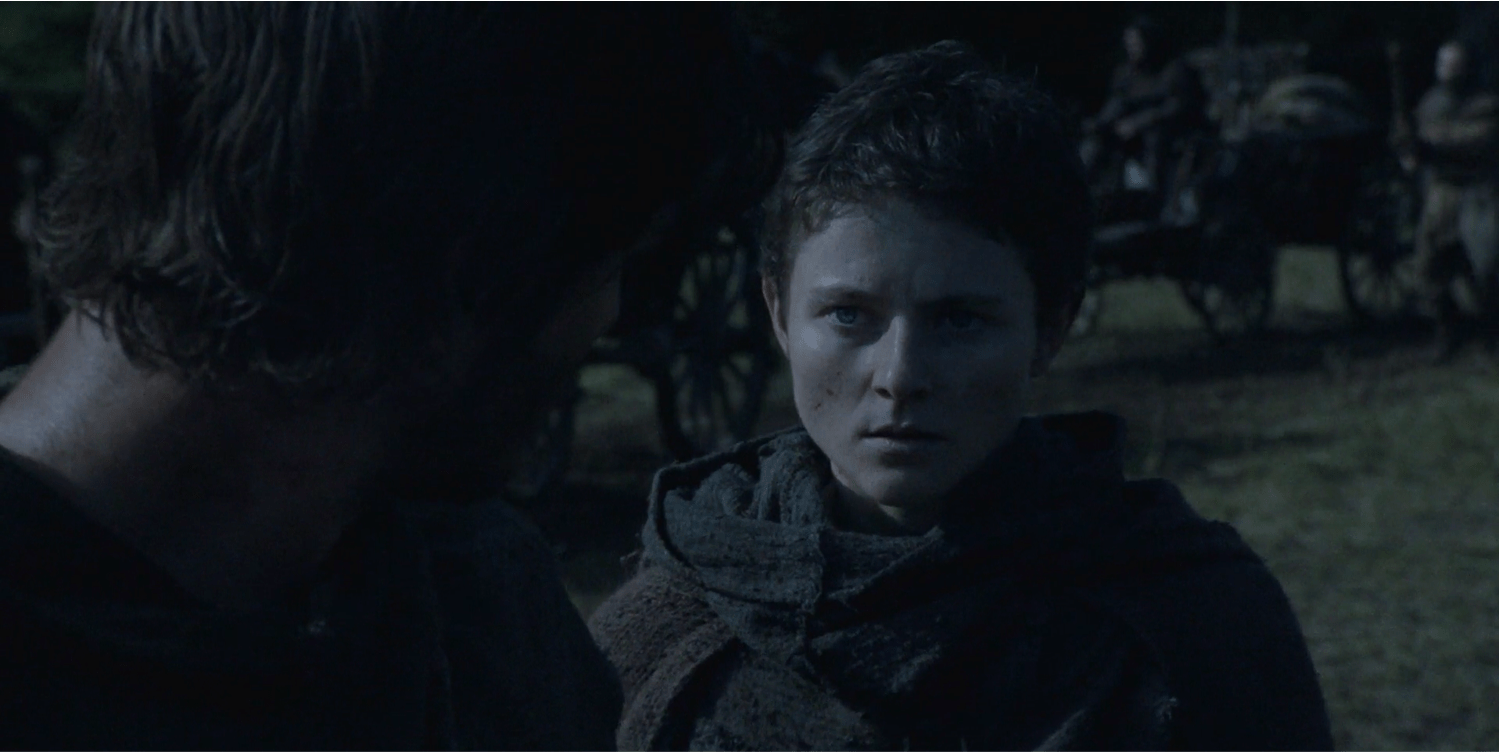
Alyce is a fictional character created by writer-director Paul Greengrass for the world of ‘The Uprising.’ Much like the character of the Ploughman, she isn’t based on any specific person who participated in the English Peasants’ Revolt of 1381; instead, she serves as a composite of women who participated in the rebellion. Greengrass acknowledged this in an interview with Focus Features, noting that he envisioned her as a follower of John Ball. In real life, John Ball was an English priest who gained popularity among the masses as a roving preacher and later became one of the leaders of the revolt. His opinions were known to bring him into conflict with the Archbishop of Canterbury, Simon of Sudbury, and the film maintains that detail, both with reference to Ball and his followers, in this case, Alyce.

“In my story, I wanted her to be a nun,” Greengrass recalled, adding that she is a “much more radical figure” by the time we meet her in the story. Setting up her backstory, as well as her dynamic with the Ploughman, allowed Greengrass and his writing team to chart much broader themes of rage, suffering, and resentment against the ruling elites. In a way, Alyce serves as the dramatized voice of many who participated in the revolt, be they nuns, peasants, or people from other occupations, who were affected by the Black Death and, concurrently, by the harsh system put in place by the royal authorities. However, no surviving historical records point towards a nun emerging as a leader during the revolt.
During a press conference for ‘The Uprising,’ historian Dan Jones, who was consulted for the film, observed that “men touch the records of history more than women in this period,” referring to the Peasants’ Revolt of 1381. At the same time, though, he cautioned that the relative scarcity of women’s names in medieval sources should not be interpreted as an absence of female participation. He added, “There’ve been lots of instances of (…) women having critical roles at various moments, whether that’s from the aristocracy and the court right down to the rebellion itself.” The movie takes these historical sources and situates them in a dramatized context, thereby casting Alyce as a representative figure while maintaining a degree of fictionality.
In real life, there were indeed women associated with leadership during the rebellion, one of them being Johanna Ferrour, also called Joanna Ferrour. Historical records place her as a woman from Rochester, Kent, and a King’s Bench indictment that still survives to this day describes her as a chief perpetrator and leader of a group of rebels who burned John of Gaunt’s Savoy Palace and subsequently attacked the Tower of London. The same records also state that she targeted both Archbishop Simon Sudbury and royal treasurer Robert Hales before they were both publicly beheaded.
Although these records place Johanna as a central figure during the rebellion, it should be noted that there are no instances of her being described as a nun, which makes it unlikely that she served as a direct inspiration for Alyce’s character. Johanna is not the only woman popularly associated with the revolt, either, as various accounts also mention names such as Margery Starre and Katherine Gamen. Margery was reportedly associated with the destruction of clerical records in Cambridge, while Katherine was accused of interfering with the escape of Chief Justice John Cavendish in Suffolk. It is likely that Alyce’s story draws loose inspiration from these real-life accounts, connecting them to the movie’s larger creative vision.
Read More: The Uprising: Is the Ploughman Based on Robin Hood? Was He a Real Rebel?


You must be logged in to post a comment.