
 Abhiroop Das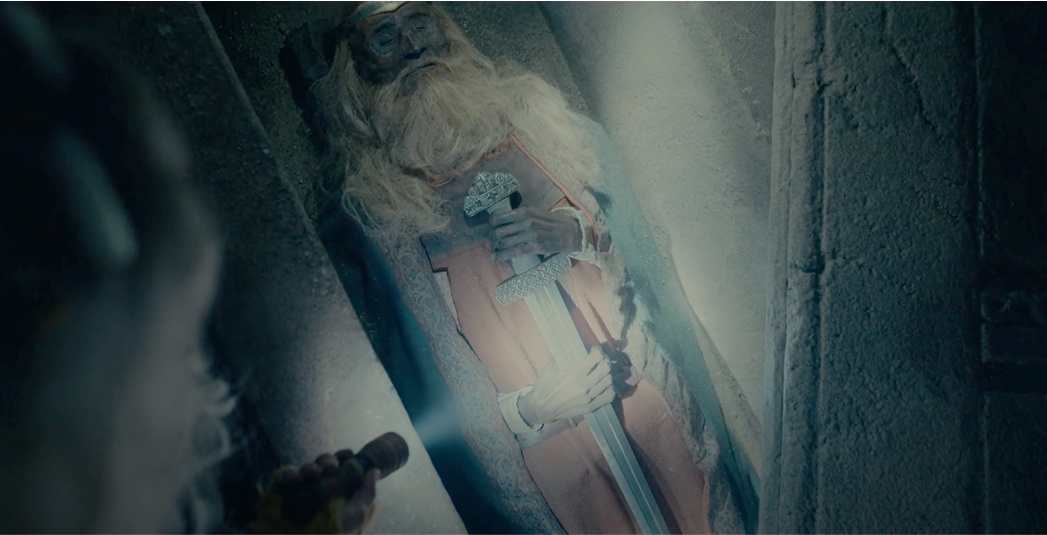
Helmed by Roar Uthaug, Netflix’s ‘Troll 2‘ returns to a world where humans live alongside mysterious giants known as trolls. It has been a few years since the events of Troll, and Nora Tidemann now leads the life of a recluse scientist, desperate to unearth more information about trolls, dead or alive. When Andreas, her former ally, invites her on a trip to a government facility, Nora learns that humanity has located yet another troll. However, things go awry in no time, and this entity, named Megatroll, manages to make his escape. With entire cities lying on his path, Nora and her team run against the clock to figure out where he is headed and why. Their search ultimately leads them to the city of Trondheim, which is deeply connected to the trolls’ past history with the Church. Thus, both parties make their way to the famed Nidaros Cathedral, where the truth about Saint Olaf is waiting to unfold.
The Tomb of Saint Olaf is Troll 2’s Fictional Answer to a Real-Life Mystery
The secret tomb of Saint Olaf, as depicted in ‘Troll 2,’ is a wholly fictional construct created by writers Espen Aukan and Roar Uthaug. While Saint Olaf was a real person in history and ruled over Norway from 1015 to 1028, his real tomb is situated in an unknown location somewhere in or around the Nidaros Cathedral in the Norwegian city of Trondheim. As such, it is likely that the writers used the mystery surrounding his physical remains as a base for their fictitious version of events, wherein the grave is located in a hidden chamber inside the cathedral. In a conversation with Tudum, director Uthaug revealed that he devised this plot twist in light of a lifelong fascination with hidden-tomb narratives. He explained, “I always think it’s cool to follow characters when they’re doing an investigation, and of course, discovering lost tombs is something I have a fondness for.” Uthaug went on to say that he was also partially inspired by ‘Indiana Jones’ movies, which popularized these genre twists.
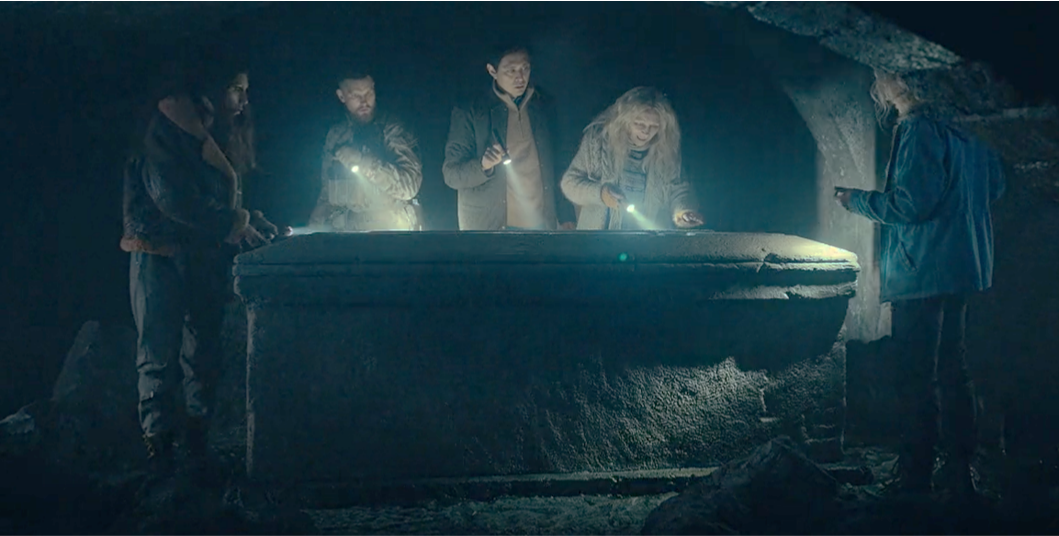
While Uthaug’s tomb sequences are the result of his niche storytelling interests, the legend he draws from is rooted in real life. Saint Olaf is believed to have died in the Battle of Stiklestad on July 29, 1030, following which, he was canonized in Trondheim, which was then known as Nidaros. According to the Norwegian Institute for Cultural Heritage Research, Saint Olaf’s body was initially buried in the city’s ground, but was unearthed roughly a year later, allegedly still in pristine condition. With legends about the remains’ magical abilities spreading all over the city, Saint Olaf was buried in numerous locations all over Nidaros, before the Nidaros Cathedral was built over his final resting place. However, despite this, the exact coordinates of his tomb have never been discovered. In the fictionalized version of ‘Troll 2,’ the famed Olaf Altar turns out to be a gigantic key that opens the doors to the former king’s grave.
The Crew of Troll 2 Likely Created Elaborate Sets for the Tomb Sequence
While Nidaros Cathedral was constructed around 1070, its high altar structure predates it, in reality belonging to the wooden church that stood on that location originally. Saint Olaf’s shrine is believed to lie behind this altar, which is most famous for its richly illustrated altar frontal. All of these details were reimagined for the movie, following which the writing team added their own spin to the myth. In a climactic sequence, a similar altar painting, depicting Saint Olaf, turns out to be a lock with three key-holes. When three torches are placed in the correct order, the altar frontal unlocks, revealing a hidden chamber where Saint Olaf’s remains are kept alongside holy water. Given the story’s fictional nature and fantasy leanings, it is apparent that this entire turn of events originated from the writers’ minds and bears no real resemblance to real life. Although the altar is connected to Saint Olaf’s mortal remains, there is no evidence to suggest it served as a lock of any kind, which reinforces the movie’s invented nature.
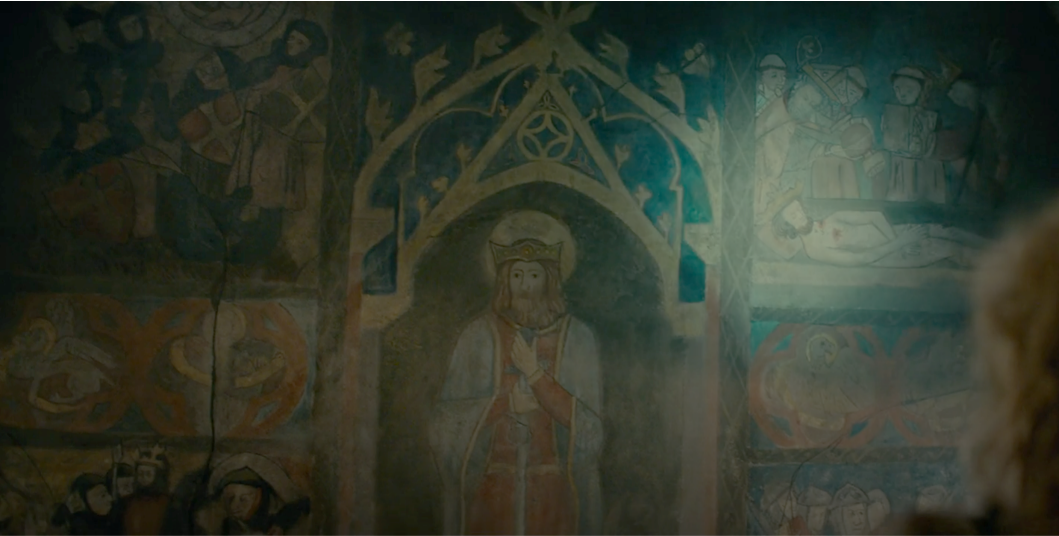
Reportedly, most of the Nidaros Cathedral sequences in ‘Troll 2’ were filmed on-site. It is likely that artificial sets and green screens were used to tape the fictionalized underground sequences, which feature Saint Olaf’s hidden tomb as depicted in the movie. This aligns with the director telling AOL that the crew kept green screen usage to a minimum and instead relied on natural elements for authentic storytelling. As the scenes surrounding Saint Olaf’s tomb are entirely original in nature, it is unlikely that the crew had a real-life equivalent location that they could use for filming. Furthermore, it is likely that an artificial model of a tomb was used for filming, adding to the movie’s immersive factor. Thus, a blend of mythology, folklore, and historical locations partially inspired the creative beats of the movie. In real life, the exact location of Saint Olaf’s physical remains continues to be one of the enduring mysteries of Norwegian history, capturing imaginations worldwide.
Read More: Troll 3 Plot and Cast Theories


You must be logged in to post a comment.