
 Abhiroop Das
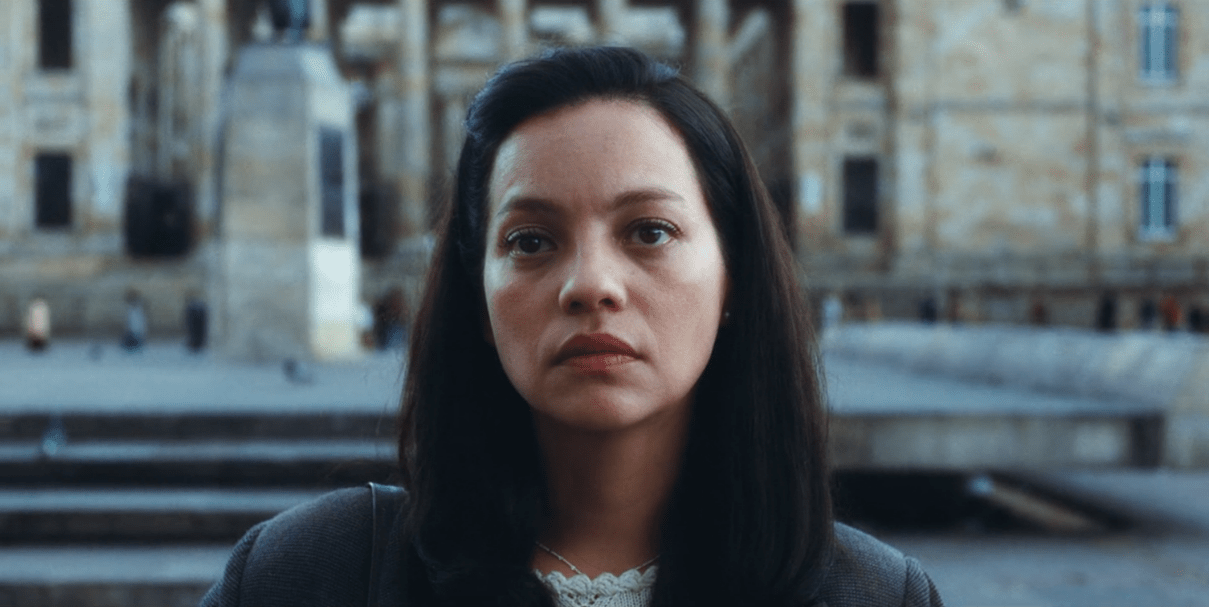
Co-directed by Edgar Nito, Jayro Bustamante, and Samir Oliveros, ‘Under Siege’ is a Colombian historical thriller series that revisits and reimagines one of the most consequential episodes in the country’s history. In this fictional take on the 1985 siege of the Palace of Justice, we follow numerous perspectives, some belonging to the M-19 group and others to those who wield all the power. However, between these two ends lie the voices of the survivors, some of whom face an even worse fate upon being rescued. When the families of those who disappeared eventually come together and demand answers from the government, many of the truths forcibly buried in the past begin to reemerge, guiding the way to the full truth. SPOILERS AHEAD.
Under Siege Plot Synopsis
‘Under Siege’ begins with an ordinary day at Bogotá’s Palace of Justice, the headquarters of Colombia’s judicial branch, where we are introduced to the cafeteria workers, judges, and guests alike. What’s different about two guests, Mona and Memo, however, is that they are here to scout the premises in preparation for an attack. The two of them are members of the M-19 guerrilla force, and soon plan to orchestrate a siege that is meant to send the authorities a message. However, their plan runs into a problem early on when one of their two armed trucks is given the wrong timing. As such, on the morning of November 6, 1985, about thirty odd guerrillas storm the Palace with only half their ammunition and resources.
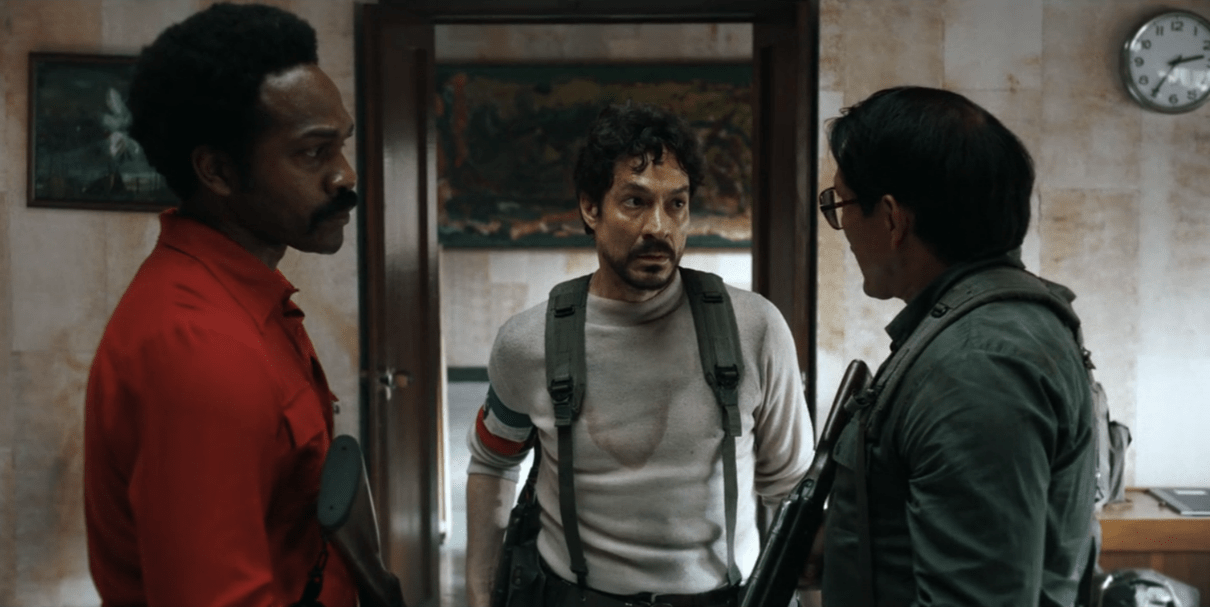
While the guerrillas are able to locate all of their main targets relatively quickly, the one thing that throws off their predictions is just how heavy-handed the military response can be. With the president leaving everything in General Vega Uribe’s hands, the scene at the Palace soon turns into a bloodbath. As the army arrives with tanks and a chopper to unleash a barrage from every direction, numerous guerrillas and civilians lose their lives, if not to the gunfire, then to the actual fire that manages to destroy an entire floor. A small group of survivors, mostly comprised of cafeteria workers and led by a man named Jimmy Beltran, is the last to be rescued, but many of them seem to mysteriously disappear soon thereafter.
As the families of those declared missing struggle for answers, Pilar Navarrete, Jimmy’s partner, begins to suspect that something more sinister has unfolded. Her suspicions soon turn out to be true when a few soldiers anonymously come forward to activist and lawyer Eduardo Umaña, revealing that many survivors fell under suspicion of helping the M-19 forces and were taken to secret camps, where they were tortured. The more that Pilar and the others try to question the official narrative, however, the more resistance they face, leading up to the assassination of Umaña. Two decades later, a prosecutor, Ángela María Buitrago, takes up the case with renewed vigor, this time leading to some long-awaited answers.
Under Siege Ending: What Happened to Jimmy Beltran? Is He Dead or Alive?
‘Under Siege’ ends on a tragic, but ultimately bittersweet note as Jimmy Beltran’s remains are found more than three decades after his disappearance. For his partner, Pilar Navarrete, who had not once stopped pursuing the truth and demanding justice, this moment comes as a lot more than just closure, as it represents something far greater. Although Pilar’s quest started with the sole reason of reuniting with her partner, or at least knowing what happened to him, over time she became a leader of all the aggrieved families. The recovery of Jimmy’s remains, then, counts as one little victory for their cause, despite it also meaning that she will never see him again.
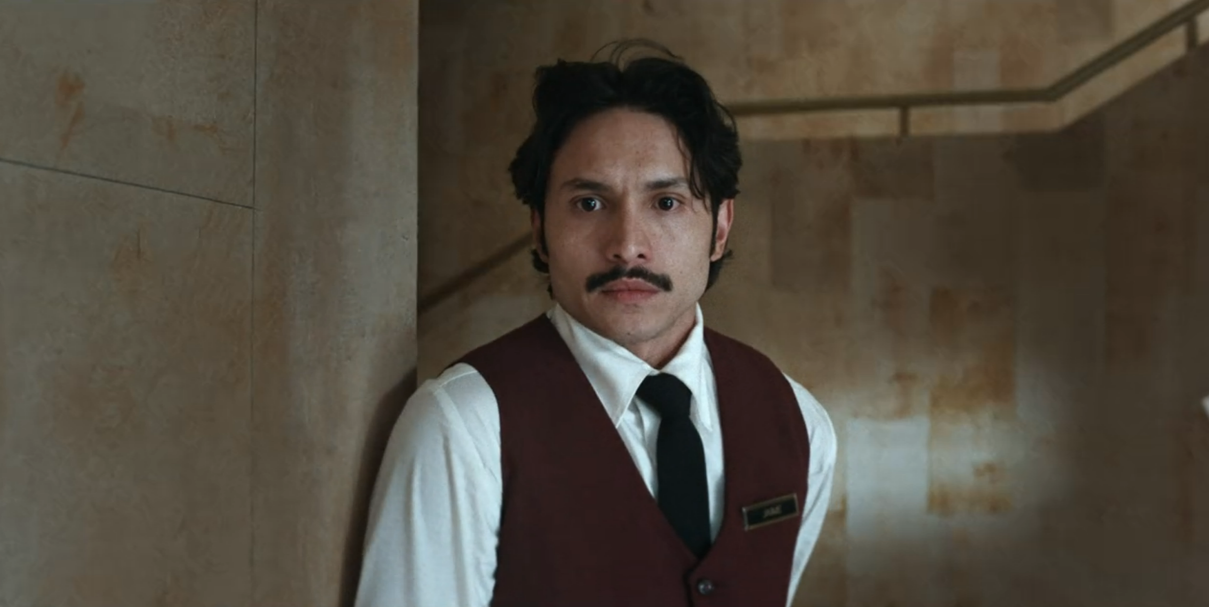
What’s truly perplexing about Jimmy’s case is how his remains are ultimately discovered to be caught up in an identity mix-up. As it turns out, Jimmy’s body was burnt beyond recognition, and his remains were misidentified as those of Julio César Andrade, an auxiliary magistrate. We actually see the Andrade family pick up a box of burnt skeletal remains in the second episode, and with this revelation, the scene gains an entirely new context. After an exhumation brings the truth to light, both Pilar and the audience alike are met with a new question: whether this misidentification was a genuine error on the military’s part, or a strategic decision to quite literally bury the evidence of their wrongdoings all those years ago.
The idea that Jimmy meets his end during the palace siege is contradicted by the video proof of him being carried away by the authorities, and thus, it cannot be the case that he was burnt to death during the fire. Instead, the more likely order of events suggested here is that he was taken to the hidden military dungeons as a suspect, before being ruthlessly tortured and killed. Then, after disfiguring his corpse beyond recognition, the military simply handed him off to a second party, allowing them to bury the evidence, until the truth ultimately came out. The irony of it all, though, is also noted by Pilar in the final sequence, as it is now the Andrade family that has to wrestle with the fact that they simply have no idea where Julio César disappeared, or if he will ever receive justice.
Is Irma Franco Dead? Where is La Mona?
Unlike Jimmy Beltran, whose story gets a tragic but definitive conclusion, Irma Franco’s fate is left open-ended, almost to a morbid effect. While we know that she was detained by Colonel Vega and tortured relentlessly for several hours on November 7, nothing is known about where she was taken after that. Her disappearance is represented starkly, with no clues given about where she might be or what might have happened to her. Given what we see on screen with regard to the military, however, it is almost certain that Irma is met with a terrible fate, regardless of whether she lives or dies.
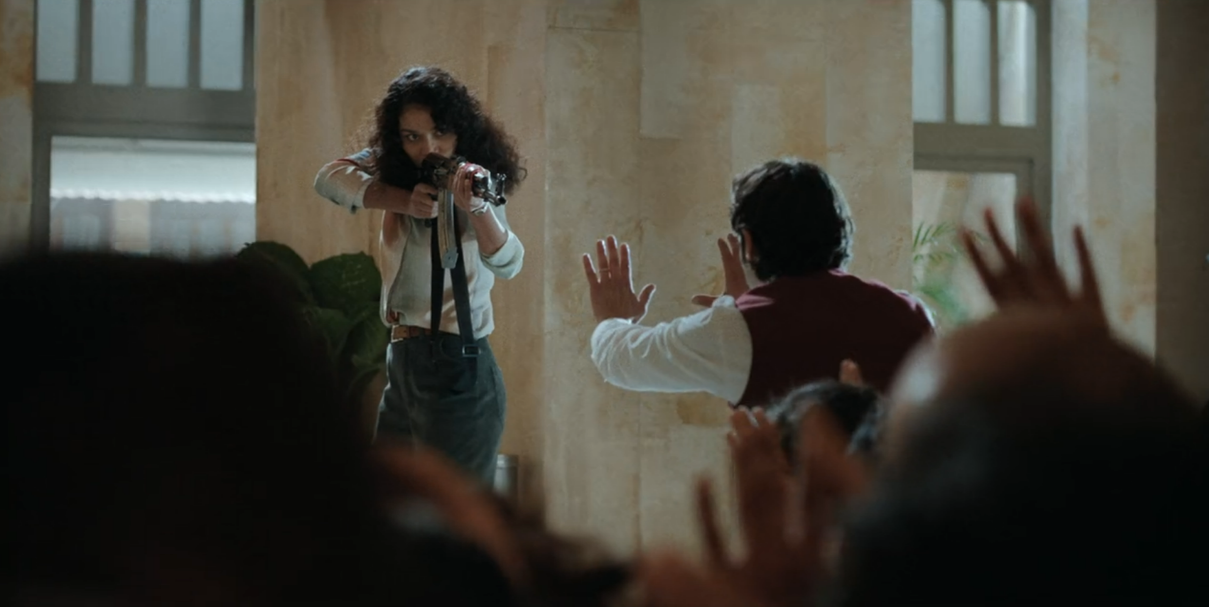
Through Irma’s character, we are confronted with a series of complex moral and ethical questions that don’t necessarily come with easy answers. While the M-19’s cause is depicted as one with the best interests of the masses, it’s also undeniable that they have the blood of dozens, if not hundreds, of innocent people on their hands. Conversely, the military uses this as an excuse to strip Irma of all rights and to justify severe rights violations and systemic abuse. This juxtaposition underscores the series’ broader argument that basic legal and human rights cannot be selectively revoked based on a person’s actions or ideology.
Interestingly, La Mona, the lone survivor of the siege from the M-19 camp, seemingly disappears from the plot as far as the timeskip plot beats are concerned. While we get one brief glimpse of her through Olga’s perspective, it appears that Mona is already at her limit. After all, the very reason she even signed up for the mission was to be with Memo, and with him dead, these things seem to have been drained of their meaning and purpose. Given that the military now knows her true identity, engaging in any form of activism is likely out of the question for Mona, and though the show never confirms this, there is a good chance that she moves out of the city to start a new life, possibly with a new identity. It is a rather grim ending in the face of it all, but also leaves La Mona as one of the few people who know what truly happened that fateful day, in all of its shades.
Does Colonel Vega Go to Prison? What Happens to Olga?
If there are two people who can be clearly pinpointed as the core of the abuses depicted in the show, they are General Miguel Vega Uribe, who calls the shots from the top, and Colonel Alfonso Plazas Vega, the mastermind behind the military counter-attack on the ground. While we don’t get to see Vega behind bars for his actions, the truth about him ultimately comes out, bringing him to court. Ironically, the piece of evidence that acts as the final nail in the coffin comes from his own house and his own video recordings, as several split-second frames show Jimmy Beltran and many others being carried by the authorities while clearly out of the Palace, thus confirming foul play.
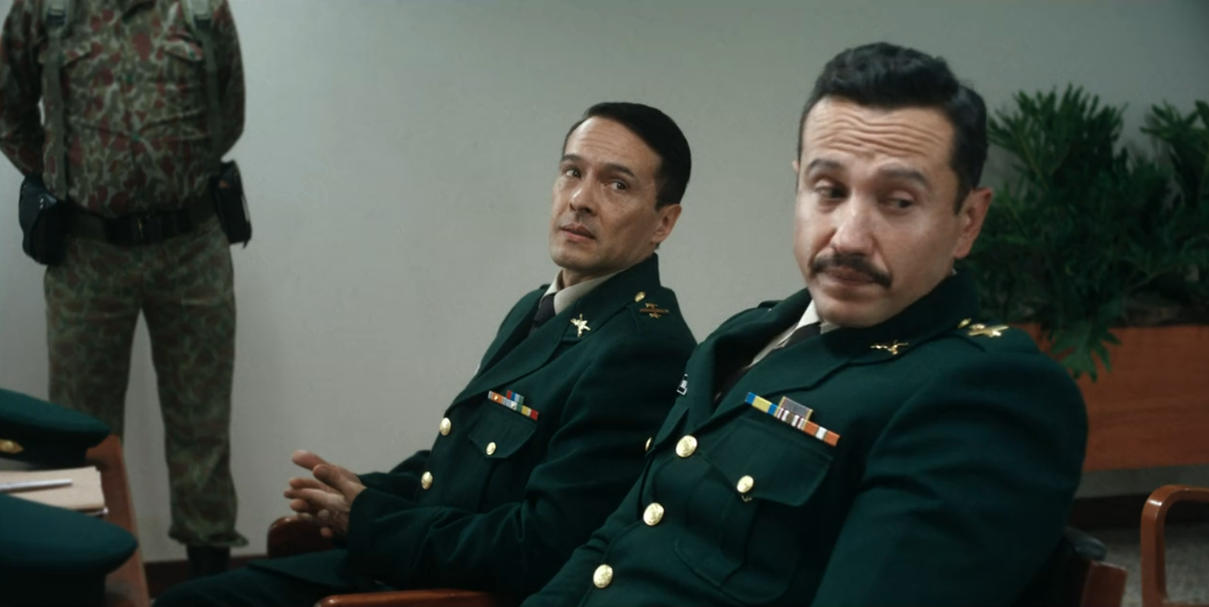
Vega’s defense strategy is a surprisingly effective one at first glance, as he essentially transfers all blame to the larger system, one that is too abstract to be even confronted with, much less toppled. However, by the end of the series, the court surprises Vega by finding him guilty, recognizing him as an indirect perpetrator through an organized power structure. While it may have been a much larger system that led to the forced disappearances of many survivors, it is only because of individuals like Vega, and their own agency and decisions, that the system is allowed to perpetuate in the first place. That said, just him going behind bars doesn’t even come close to providing the families with all the answers, as that is a longer, much more challenging battle that people like Pilar must lead.
Where Vega represents one side of the spectrum in the story, Olga represents another, as a journalist who finds herself closely involved with the case at every step, only to never yield to the oppressive forces. It is her journalistic integrity that leads people to learn about Irma Franco’s disappearance and, subsequently, many of the truths that the military attempted to bury all those years ago. Despite being threatened with her life at numerous points, she, much like Pilar, never backs down, and at the end of the series, her tenacity is rewarded. Olga goes on to become a political scientist and writer, noting down her findings for the entire world to read and learn from.


You must be logged in to post a comment.