
 Abhiroop Das
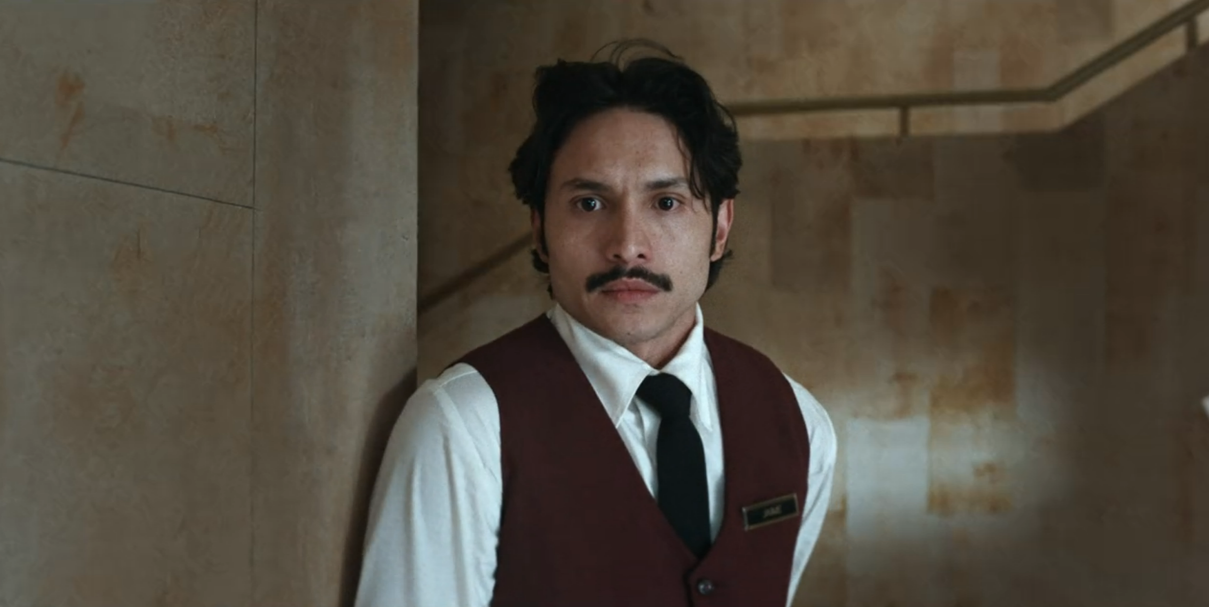
Created by Natalia Santa and Mariana Berengue, Netflix’s ‘Under Siege’ unfolds a tragedy in two parts: first by tracing the takeover of the Palace of Justice by the M-19 guerrilla group, and then by examining the disappearance of many survivors afterward. Between the group’s surprise assault and the military counterattack, however, many questions and ambiguities get lost, leaving the families of the survivors in anguish. When some decide to join forces and raise their voices against the forced disappearances of their loved ones, the state’s internal machinery is shaken up once again, giving way to a legal battle spanning several years. In capturing this saga, the political thriller series, titled ‘Palacio’ in Spanish, allows us to peek through different perspectives from all corners of the board, all in desperate pursuit of the truth.
Under Siege is a Dramatization of the 1985 Siege of the Palace of Justice
‘Under Siege,’ titled ‘Palacio’ in Spanish, is a fictionalized account of the real-life 1985 Palace of Justice hostage crisis and its devastating aftermath. In the show’s own words, it is a work of fiction based on real events, penned by a writing team consisting of Enrique Videla, Enrique Lozano, Jenny Ceballos, Estefanía Piñeres, and Natalia Santa. Instead of just being a reconstruction of the tragedy that took place on November 6 and 7, 1985, however, the show also focuses on the subsequent disappearance of several people from the Palace of Justice, and the enduring pursuit of truth that was, and continues to be, undertaken by their near and dear ones as of writing.
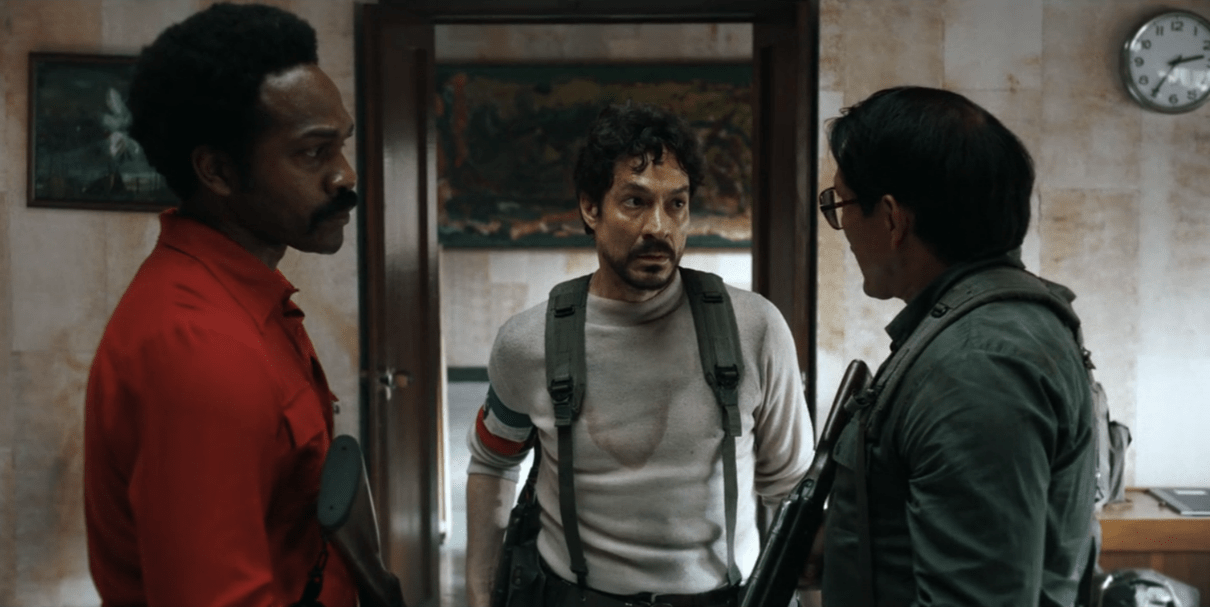
The events dramatized for the series largely trace their origins to Colombia’s turbulent political climate during the 1980s, particularly the conflict between the government and the M-19 guerrilla movement. Also known as the 19th of April Movement, the group was formed in 1974 following the disputed 1970 presidential election, and had engaged in numerous armed operations up to that point, including the 1980 siege of the Dominican Republic embassy. While the group had entered into a ceasefire agreement with President Belisario Betancur’s government in August of 1984, by the following year M-19 would come to announce its intention to put the government on trial for allegedly breaking its commitments. Before long, the Palace of Justice in Bogotá, which housed Colombia’s Supreme Court and Council of State, emerged as the main target.
The M-19’s Takeover Was Met With a Controversial Military Operation
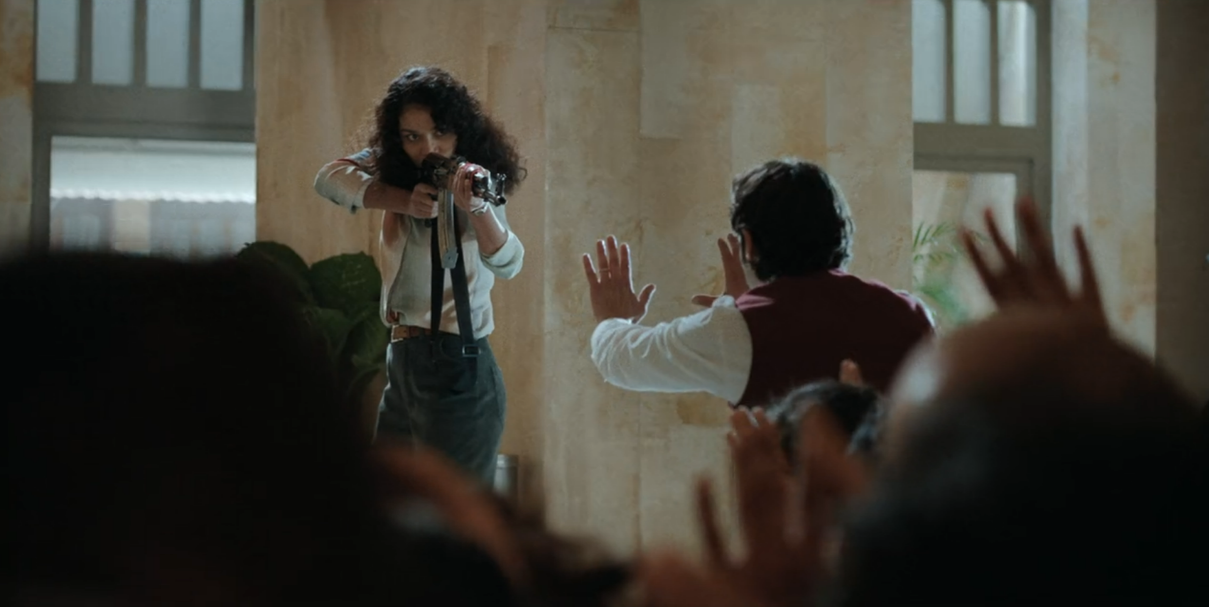
On the morning of November 6, 1985, approximately 35 M-19 guerrillas entered the Palace of Justice and took more than 300 people hostage, including Supreme Court magistrates, court employees, lawyers, and visitors. While the building had been put under reinforced protection in the days prior, records indicate that the National Police withdrew its additional security two days before the siege. As the M-19 carried out its operation, named Antonio Nariño for Human Rights, a military response was triggered. The Colombian Army, thus, launched an operation to retake the building on November 6, with the confrontation continuing into the following day.
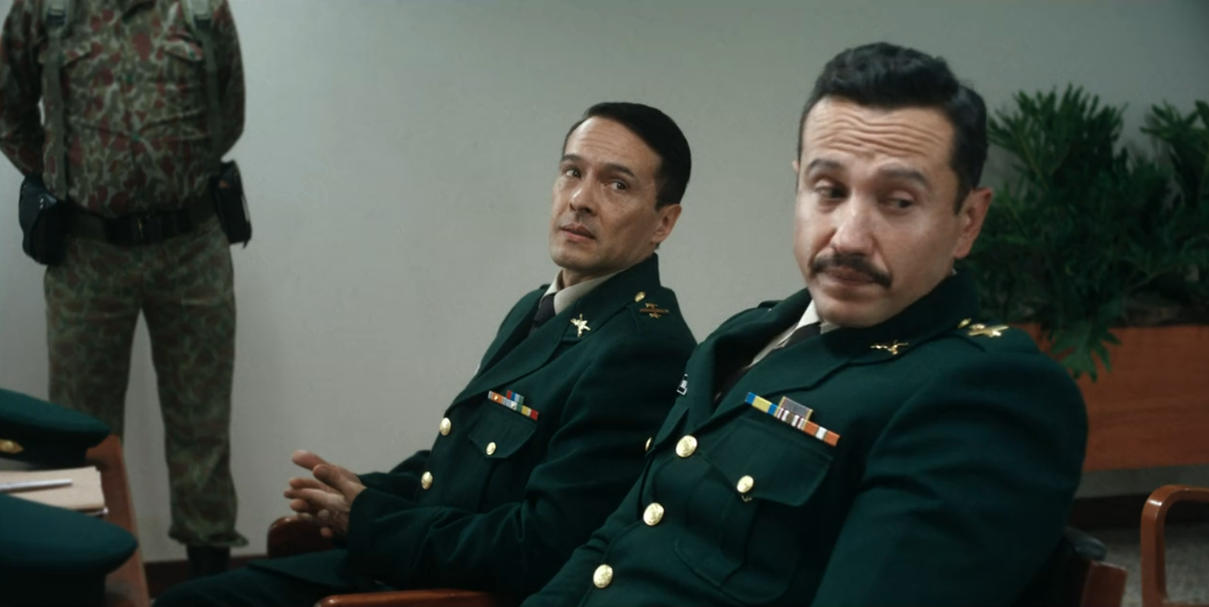
The military’s conduct during the counter-assault operation, specifically its use of force and the treatment of people who emerged from the building alive, has been the subject of much scrutiny, controversy, and discourse in the years since. While the events inside the building have been extensively investigated and many details remain contested, the show constructs a heavily fictionalized account, told not just from the perspective of the M-19 guerrillas but also from that of the military leaders, soldiers, and survivors who were in the palace. One real-life detail integrated into the script, for instance, is Supreme Court President Alfonso Reyes Echandía’s repeated appeals to the authorities to suspend the firing, which he made on air during a live telephone interview with Caracol Radio while he was in the building.
Despite Echandía’s warning that the hostages were caught between the two armed groups, the operation did not halt. Three fires broke out inside the Palace, with the third, which reportedly began on the fourth floor, destroying much of the building. By the afternoon of November 7, the military had regained control of the Palace, but it came at a very high cost. The Colombian Supreme Court’s account recorded the recovery of 94 bodies, and 11 people remain missing in connection with the events. Those killed included 11 Supreme Court magistrates, among them its president, Alfonso Reyes Echandía, as well as M-19 members, military personnel, security guards, and civilians. However, this was not the end of the crisis for everyone who had been inside the building.
The Fate of Several Survivors Remained Unclear in the Aftermath of the Siege
Existing records show that, out of the total survivors, some were taken to the Casa del Florero, where authorities identified and questioned them before transferring some to hospitals, military installations, or reuniting them with their families. Among those taken away, however, were several people who never returned home, leaving their families without an explanation of what had happened to them. As per initial reports, the group included eight employees of the Palace cafeteria, three occasional visitors, and M-19 guerrilla member Irma Franco Pineda. The families’ concerns weren’t without basis, as military authorities reportedly suspected some of them of assisting the M-19, including by supplying the guerrillas with food, weapons, and ammunition. These allegations, however, were not established as fact.
Irma Franco’s disappearance particularly drew a lot of attention, because, unlike the cafeteria employees and visitors, she was an M-19 member who had participated in the siege. Survivors subsequently identified her at Casa del Florero, with a caretaker later testifying that she was taken away in a vehicle under heavy security on the evening of November 7, and as of writing, her whereabouts remain unknown. At the same time, families of the missing continued to demand answers through complaints, public demonstrations, and legal proceedings. They challenged official accounts suggesting that their relatives had either died inside the Palace or joined the guerrillas. One of the eight cafeteria employees named Ana Rosa Castiblanco, who was initially listed as disappeared, was identified in 2001 through DNA testing after her remains were recovered from a mass grave.
The Families of Those Reported Missing Have Continued to Seek Justice
The ensuing legal battle eventually brought retired Army Colonel Luis Alfonso Plazas Vega, who had commanded the Cavalry School during the retaking operation, to trial. On June 9, 2010, a Bogotá criminal court convicted him of the forced disappearance of 11 people, sentencing him to 30 years in prison. However, in 2012, the Bogotá Superior Tribunal only partially upheld the judgment, retaining his conviction for the forced disappearance of Carlos Augusto Rodríguez Vera and Irma Franco Pineda. Later, in December 2015, the Supreme Court quashed the appellate judgment regarding those two convictions and acquitted Vega, stating that it had found the evidence insufficient.
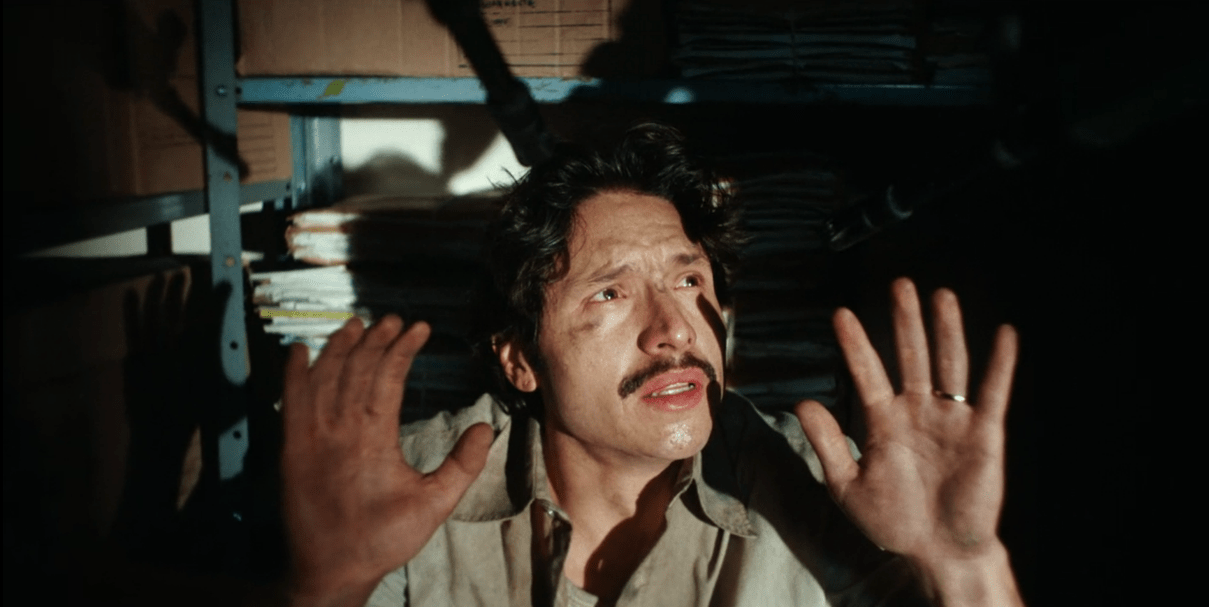
The acquittal of retired Colonel Luis Alfonso Plazas Vega did not resolve the wider questions surrounding the disappearances, leaving several families still seeking answers. Their pursuit has continued through public commemorations, investigations, and occasional forensic breakthroughs, although not every family has received the answers it sought. The identification of cafeteria worker Bernardo Beltrán’s remains in 2017, more than 40 years after the takeover, led to renewed global attention to the tragedy, but many questions still remain unanswered.
For the creators of ‘Under Siege,’ the complex historical records surrounding the siege and its aftermath understandably posed a considerable challenge for storytelling. In a conversation with El País, showrunner Natalia Santa revealed that the production involved more than seven years of research. This involved interviews with approximately 50 people, including witnesses, military personnel, and relatives of the disappeared, as well as a close look at the Colombian Truth Commission’s findings. This attention to detail is felt in every second of the show, and breathes life into the emotional and psychological complexities imbued in the narrative.
Read More: Is Anaesthesia Based on a True Story?


You must be logged in to post a comment.