
 Abhiroop Das
Helmed by Adrian Panek, Netflix’s ‘Colors of Evil: Black‘ or ‘Kolory zla: Czern’ takes place sometime after the events of ‘Colors of Evil: Red,’ this time exploring the darker underbelly of the Kashubian countryside. Prosecutor Leopold Bilski, newly transferred and bored out of his brain, tries his hand at solving cold cases, but gets suspicious when a case concerning a child’s disappearance from two years ago seems to have been brushed under the rug. Before he can resuscitate that investigation, another child disappears in broad daylight, sending the entire town into a state of frenzy. As Bilski gets to work, it soon becomes apparent that the town is quite good at keeping secrets, and might have been so for decades. The Polish-language crime thriller movie shines a light on how cycles of abuse, prejudice, and systemic violence are often behind the darkest of crimes.
Colors of Evil: Black is an Adaptation of a Polish Novel About Myths and Folklore
‘Colors of Evil: Black’ is a work of fiction based on the eponymous novel by Polish writer Małgorzata Oliwia Sobczak, which marks the second entry in her ‘Colors of Evil’ trilogy. While the first novel centers around an urban criminal investigation, this time around the focus is on the more quaint corners of Kashubia, and there is a reason for it. In a conversation with Portal Kryminalny, Małgorzata revealed that her move from the bustling town of Sopot to the Kashubian countryside had a profound effect on her imagination, which is reflected in the setting of her work. From there, she researched local myths and legends about ghosts, spirits, and creatures, and how those stories continue to affect the people who call this region home.
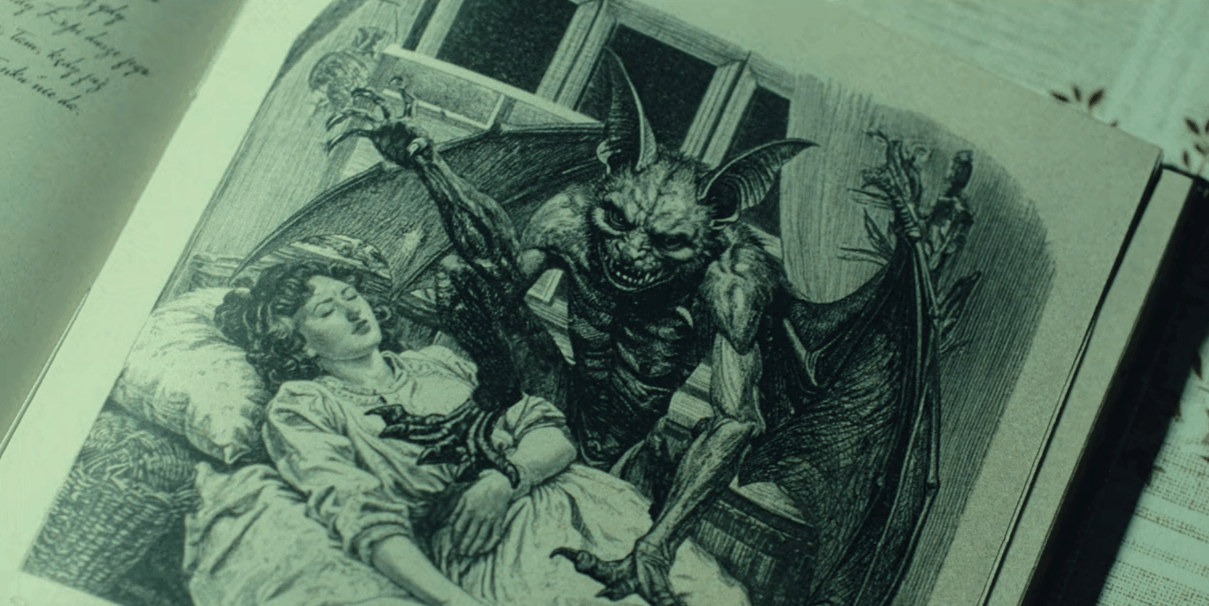
One of the legends that caught Małgorzata’s attention the most involved demons or vampiric creatures, also known as Łopi or Wieszcz. She recalled that people who adhered to these beliefs often went to extreme lengths to ensure that a deceased person’s spirit stayed in their body. One such measure allegedly involved the severing of the deceased person’s head and placing it next to their feet so as to prevent a resurrection. While these extraordinary accounts are largely anecdotal, they nonetheless inform the background of Małgorzata’s story and characters. She drew special attention to how some Kashubian legends still shape people’s consciousness, and this, too, becomes a thematic focus of the story.
Małgorzata Oliwia Sobczak Loosely References a Real-Life Serial Killer in Her Novel
In the movie adaptation of Małgorzata Oliwia Sobczak’s book, director Adrian Panek presents a de-mythologized version of the killer, which builds intrigue and isolation among viewers. In the novel counterpart, however, the killer is given the nickname “Monster of Kartuzy,” likely a reference to a real-life Colombian serial killer, Pedro López, also known as the Monster of the Andes. Between the late 1960s and 1980, López was convicted of the murder of at least 110 people, the majority of whom were pre-teen girls. However, he reportedly claimed the victim count was much higher. Investigators also concluded that he sexually assaulted many of his victims before killing them.
In March 1980, Ecuadorian authorities finally brought him into custody after a young girl who was approached by him alerted the locals. On January 27, 1981, an Ecuadorian court convicted him and sentenced him to the maximum prison term then available under the country’s laws. He was released in 1994 after serving roughly 14 years, and later spent time in a Colombian psychiatric institution. In 1998, he was released after being declared sane, but disappeared soon after, and there have been no confirmed traces of him since.
For Małgorzata, one detail that stood out was the fact that López was allegedly sent away from his home at the age of 8 by his mother, after she discovered him sexually assaulting his sister. Małgorzata highlighted this as an instance that loosely informed her approach to her antagonist, and while there are some thematic parallels involved, López doesn’t appear to have influenced any aspect of the story directly. She also added that, while much of the serial killer’s characterization has been invented from scratch, it is also informed by numerous references, clues, and inspirations, big and small, none of which are connected to López.
Colors of Evil: Black is an Experiment in Unraveling the Systemic Roots of Crime
During her interview with Portal Kryminalny, Małgorzata Oliwia Sobczak also revealed that she wrote ‘Colors of Evil: Black’ before ‘Colors of Evil: Red,’ which went on to become a breakout hit. As such, she never felt much of the public pressure typically encountered when writing sequel narratives. At the same time, the events of book 2 thematically expand on the series’ broader commentary on crime and evil, particularly by introducing a systemic angle. Setting the tale in a close-knit town allowed for more characters to be involved in the mystery, and for Małgorzata, this became a way to channel what she has described as “terrible instincts hidden in ordinary people.”
In an interview with Magazyn Pocisk, the writer also mentioned historical determinism as one of the driving forces behind her books. Given her interest in studying and creating fictionalized chains of cause and effect, it makes sense for the story to be set in the 80s-90s period, as that allowed her to explore completely different chunks of space and time. While she confirmed that her works also weave in contemporary issues from the reality of the time period she is writing about, she also noted that everything is wrapped up in several layers of fiction, ensuring that no one-to-one parallels can be easily drawn. That said, ‘Colors of Evil: Black’ remains a work deeply interested in capturing the history of an era from as many angles as possible, be it folklore, geography, or the people themselves.
Read More: Colors of Evil Black Ending Explained: Who is the Killer? Is Piotrus Found?


You must be logged in to post a comment.