
 Abhiroop Das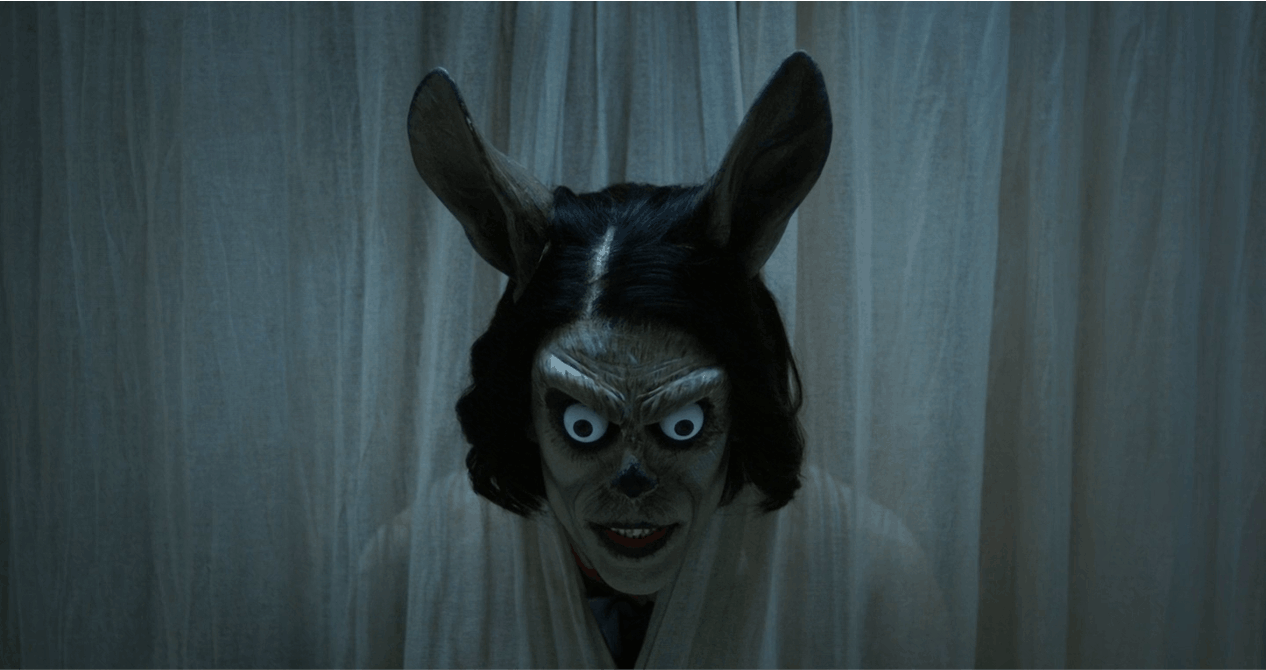
Helmed by Damian McCarthy, ‘Hokum‘ tells a story baked in mythos, mythology, and folklore, forcing its protagonist, writer Ohm Bauman, to question whether there exists horror beyond the page. Struggling to finish his magnum opus and haunted by the memories of his past, Ohm decides to visit the Bilberry Woods Hotel, where his parents spent their honeymoon, hoping to scatter their ashes in the best possible way. However, this brief trip soon takes on a spooky shade as it becomes clear that the hotel is haunted by malevolent spirits. The real nightmare of this horror thriller movie, however, lies not in parsing the dark, unpredictable corners of the physical space, but in figuring out the depths of Ohm’s mind, and the trauma that lies within. SPOILERS AHEAD.
Hokum Plot Synopsis
‘Hokum’ begins with a creative visualization of the final novel of the ‘Conquistador’ trilogy by Ohm Bauman who is currently battling writer’s block. Though his character now has the map that can bring him home, it is trapped in a tough glass bottle, with nothing but sand surrounding the man. Desperate, the man calls for the boy, his only companion, and demands that he stand still and let his skull be used to break the bottle, even if it kills him. While Ohm struggles to write any further, he is constantly haunted by the ghost of his mother. Deciding to bring his parents some closure, he takes their ashes to rural Ireland, where they celebrated their honeymoon at The Bilberry Woods Hotel. However, from the moment he checks in, a strange uneasiness begins to set in.
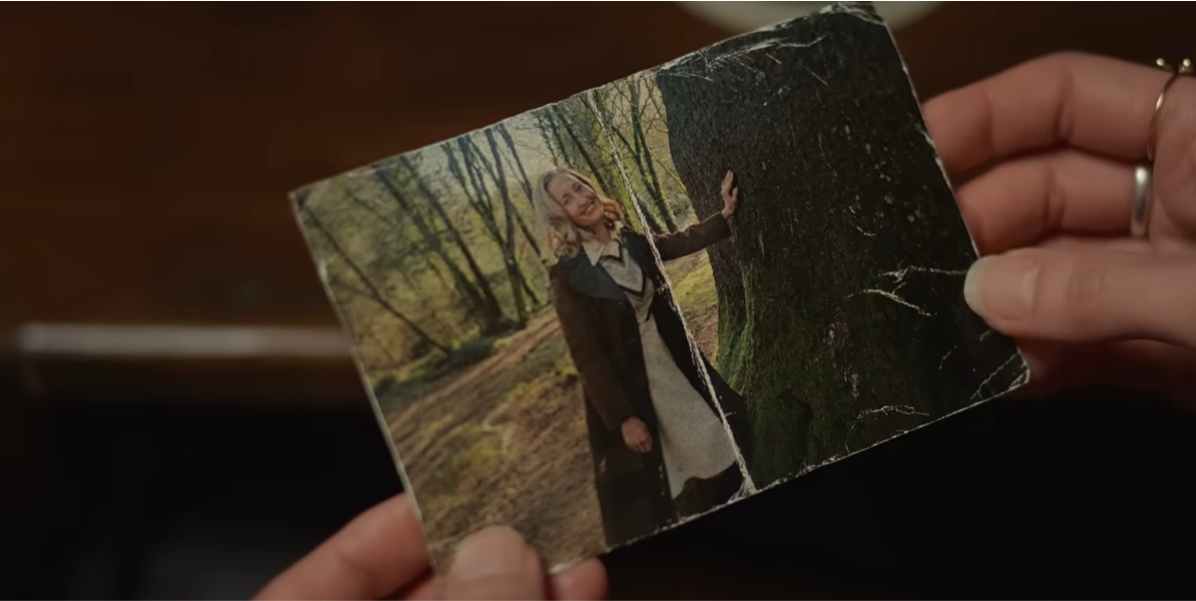
The hotel’s owner, Cob, seems to be telling two children the story of Cailleach, a local witch who is believed to hunt children down and usher them to the underworld. Not long after, Ohm learns from several people that the hotel’s honeymoon suite floor, where his parents presumably lived, has been permanently locked down because Cob believes that a witch is trapped there. Not caring about any of this, Ohm rests his parents’ ashes in the nearby forest, eventually meeting a number of unique characters, including an unhoused man named Jerry, who claims to have the best stock of psychoactive mushrooms, a bellhop cum aspiring writer named Alby, and a hotel attendant named Fiona, with whom Ohm quickly develops a friendship.
Over the course of the night, we learn that Ohm, as a child, accidentally killed his mother with his father’s pistol and has been guilt-ridden since. Though he attempts to take his life at the hotel, Fiona saves him just in time. However, by the time Ohm returns to the hotel, he learns that Fiona has gone missing. Strangely, Jerry claims that she is trapped in the honeymoon suite, and when Ohm tries to break into that floor at night, he is ambushed by the desk clerk Mal, who seems more skiddish than usual. As it turns out, Mal got Fiona pregnant, and, fearing the future, spiked her drink and pushed her down a mysterious dumbwaiter in the honeymoon suite.
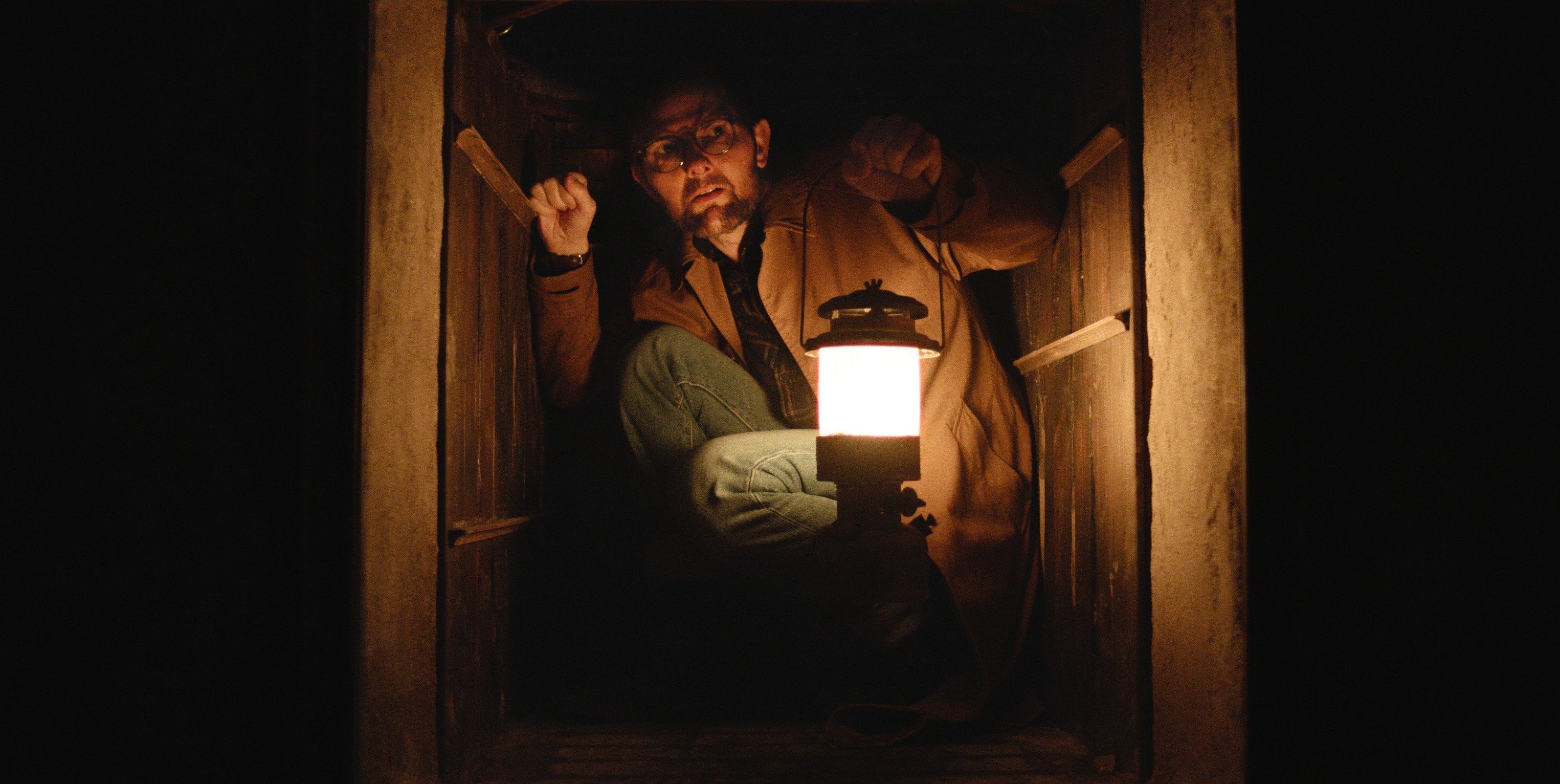
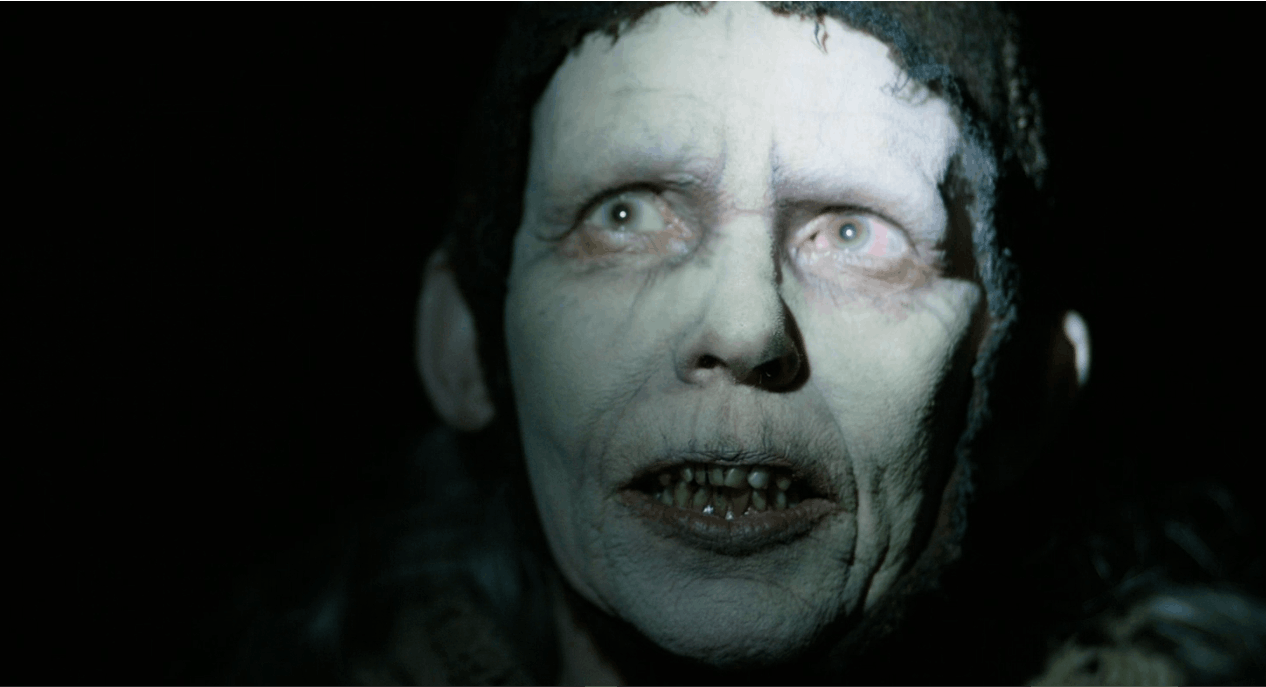
While Fiona died not long after, there appears to be something far more inexplicable and terrifying lurking on the floor alongside Ohm, and with Mal locking him in the room on his way out, a confrontation becomes inevitable. Eventually, Ohm figures out the mechanism to control the dumbwaiter and has a brief but fierce encounter with the Witch, who seemingly lurks below. Their nervous exchange continues well into the next morning, when Jerry ultimately comes to Ohm’s rescue, only to be killed by Mal. However, Ohm, by now, is determined to do anything to get Fiona’s killer to justice, even if it means wielding the supernatural to his advantage.
Hokum Ending: Is the Witch Real? Did Ohm Imagine it All?
‘Hokum’ ends with Ohm escaping the hotel just as the Witch descends into the underworld, confirming that she is real. However, the twist in this conclusion lies in Alby, the bellhop, revealing that he spiked Ohm’s drink with Jerry’s hand-made mushroom powder, way back during their first exchange. While this doesn’t directly connect to the events of the present, it does force Ohm to wonder if everything he’s experienced so far has just been a series of drug-fuelled hallucinations. However, looking down at his own arms, he sees the scars of the chains on his wrist, suggesting that the Witch’s torture was almost certainly real. Where things get muddled is when Ohm’s drug trips are combined with the larger horrors of the mansion, creating an effect that is as real and physical as it is psychological.
Hearing about the mushroom powder, Ohm’s mind goes back to the hours before the hotel break-in, when he and Jerry were sitting together. Unsurprisingly, Jerry never quite stops drinking his mushroom juice, and now, with fresh context, it’s very likely that Ohm may have had more than a sip. On the night of his suicide attempt, Alby’s spiking of the drink also recontextualizes that brief elevator scene, where a drugged-out Ohm hears the Witch’s screams, only for his mental health to worsen and push him towards such a strong decision. In the climactic section of ‘Hokum,’ this small bit is expanded to cover the Witch’s entire mythos, creating a psychogeographic profile that allows Ohm to relive, reimagine, and confront his traumatic past.
While the Witch is fully depicted as a real entity, the mythical story about her being captured by the hotel owner doesn’t quite seem right. The Witch’s complete supremacy over the gates of the underworld suggests that the floor’s dumbwaiter might be a sort of liminal space, which allows the supernatural to blend in with the natural and the psychological. We get perhaps the best visual and symbolic package of this in the children’s show sequence, where a scary bunny rabbit recounts and ridicules Ohm’s past, specifically the death of his mother. Such a scene can only be explained as a part of Ohm’s drug trip, with him hallucinating his subconscious longings in tandem with the Witch’s desire for more. While this correlation may seem confusing at first, there might be a way to accurately separate the two phenomena.
Ohm’s Glasses Are the Key to Telling the Real and the Unreal Apart
‘Hokum’ relies on the time-tested trick of reflections, lights, and shadows being the perfect indicators for what is real and what isn’t. As such, looking at the reflection in Ohm’s glasses is a good tell for what is actually happening in front of his eyes, and what is a part of his drug-fuelled imagination. The children’s show with the rabbit host, for instance, is a clear instance of the latter variety, as we can see only static being reflected in Ohm’s glasses throughout the scene. On a symbolic level, it serves as a blend of his maternal trauma, as well as his guilt surrounding Fiona’s death, whom he discovers in a Halloween-themed bunny suit. The bits where Fiona’s body temporarily disappears are also most likely a figment of his imagination, manifesting as the desire to escape overtakes everything else in his mind.
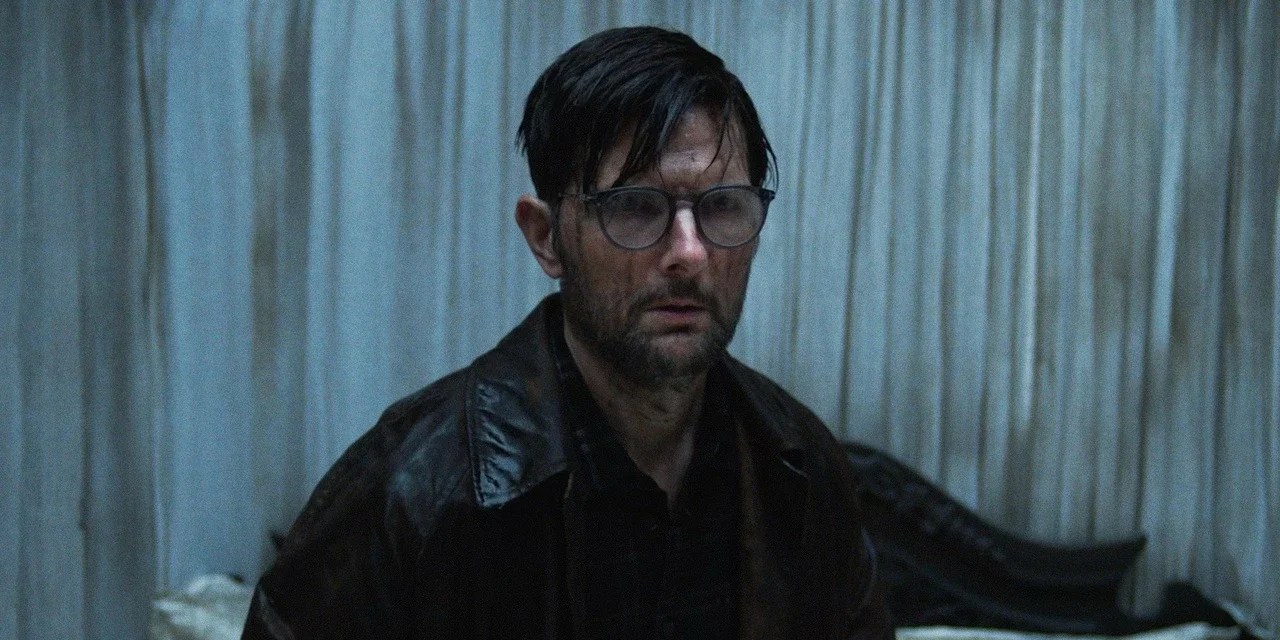
It is also likely that the entire chalk sequence of creating a circle is a figment of Ohm’s overactive imagination, possibly stemming from his background as a writer, where demarcations are often shown as a tool against witchcraft. In reality, this scene is most likely an extrinsic representation of the mystical circle of sand that he writes into his novel, and is seen at the start of the movie. We know that the circle of chalk is useless, as the Witch ultimately has no trouble attacking and binding Ohm, which is unlike the previous night, where he seemingly survives by outlining the bed and holding the Witch back.
While many of the film’s scares come from Ohm’s own mind, there are a few sequences that have no real explanation other than the supernatural. On one occasion, we see Ohm tinker with the dumbwaiter just as a mysterious figure gets up from the bed behind him. This, coupled with the many instances of his mother’s ghost appearing without his knowledge, hints at this being a space where ghosts take physical form. Conversely, there also might be some truth to Jerry’s statement about getting high, opening the door to the mythic and the ghastly, revealing a side of the world that is both darker and more sincere than what plain reality has to offer.
Where is Mal Dragged Away? Is Fiona’s Body Found?
While Ohm manages to escape the hotel in the final moments of ‘Hokum,’ Mal has a much crueler, more fitting fate. After descending down the dumbwaiter in the hopes of finishing off Ohm, Mal comes face to face with the Witch herself, who quickly binds him up with chains and begins a slow ritual of literally dragging him to hell. While the narrative largely keeps an air of ambiguity when it comes to the Witch and her abilities, this scene makes an open case for the supernatural being an essential part of the movie. After binding Mal to her chains, the Witch merely walks up to a door where numerous entities are deviously, almost hungrily lying in wait. Very soon, Mal gets dragged away to what is most likely the film’s interpretation of hell, or simply, the mythological underworld.
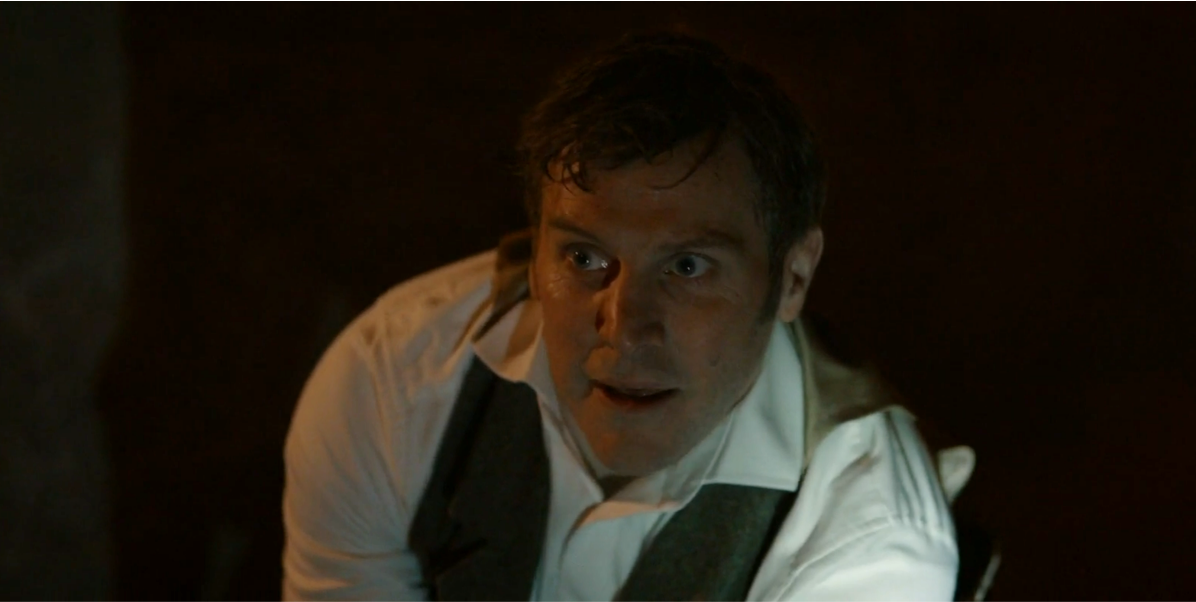
If there is someone to whom the title ‘Hokum’ applies best, it’s not Ohm, but actually Mal. While he is familiar with the story of the Witch in the honeymoon suite, at no point does he genuinely believe the story until the end. Instead, he attempts to make the room his own, filling it up with dark secrets like the murder of Fiona. As such, the Witch rightfully punishes him by locking him deeper into a supernatural part of this hotel, all the while freeing Fiona’s spirit. When Ohm falls unconscious while trying to escape, we can hear a woman’s voice calling Fergal for help, and this is most likely the ghost of Fiona.
To top things off, we see her eyes close at last as the entire hotel burns down, signaling that her soul is finally getting the closure and escape it’s needed all along. What starts out as a platform for Ohm to reconcile with his mother’s death ultimately merges with the story of the Witch’s resolution and, vicariously, brings Fiona justice and stops fate from cycling back.
How Does Ohm’s Book End? What Does the Goat Skull Mean?
While Ohm initially plans to end his book trilogy with a bleak ending, where the man is seemingly forced to kill a child, the events of ‘Hokum’ bring forth a change of heart. At the end, Ohm, having survived the tragedy, pens down a new conclusion, where the man stops himself in time and instead hands the bottle over to the child, asking him to strike instead. Though the child readies himself to hit the man straight in the head, he, too, ultimately refuses the act and flings the bottle away, leading both of the characters to embrace each other. The most curious thing about this new ending is the addition of a goat’s skull, which is buried in the sand and lies a few inches away from where the bottle lands. As a piece of symbolic imagery, the goat skull largely yields to two interpretations.
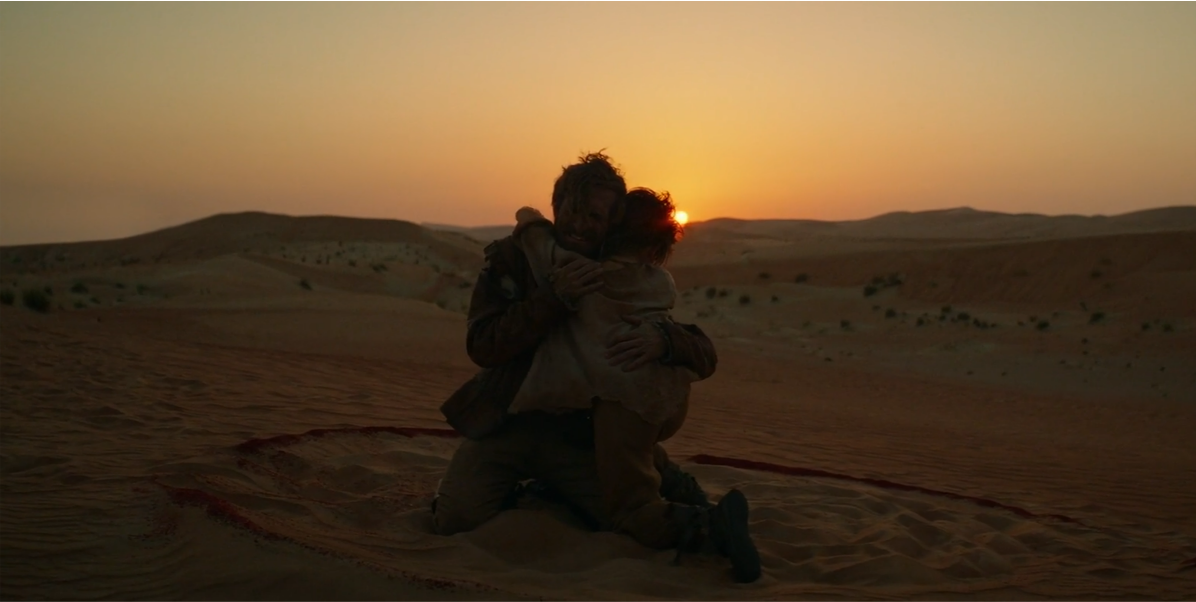
It should be noted that the whole exercise of self-sacrifice rests upon the skull being deemed as the only thing strong enough to break the glass bottle. However, the presence of a goat skull right next to our two characters rejects the dramatization of the act. In essence, it is a fundamental rejection of bleakness and impulsive actions, which might be an easy way to artificially add so-called dark themes to a story, but often belie more productive and compelling character decisions. Fiona is the first person to call out Ohm’s poor choice of ending, and though he raises a toast to bleak endings in that moment, his opinion is now pushed into a more mature direction.
Another interpretation of the goat skull connects itself to Ohm’s past, and specifically how it informs his narrative decisions. The idea of the man sacrificing the child might be a subconscious manifestation of Ohm’s guilt, given that he accidentally led to his mother’s death as a child. If one is to read the ‘Conquistador’ trilogy’s original ending as a form of self-punishment, the actual ending of ‘Hokum’ flips that narrative on its head. Ohm, having reconciled with his mother’s death, makes the first and biggest step on his journey of healing and self-forgiveness. Through the presence of the goat skull on the sand, the story not only comments on the characters’ mistaken path but also presents them with hope. When the man and the child inevitably go to pick up the bottle, they will find the means to go back home in peace, much like Ohm himself.


You must be logged in to post a comment.