
 Abhiroop Das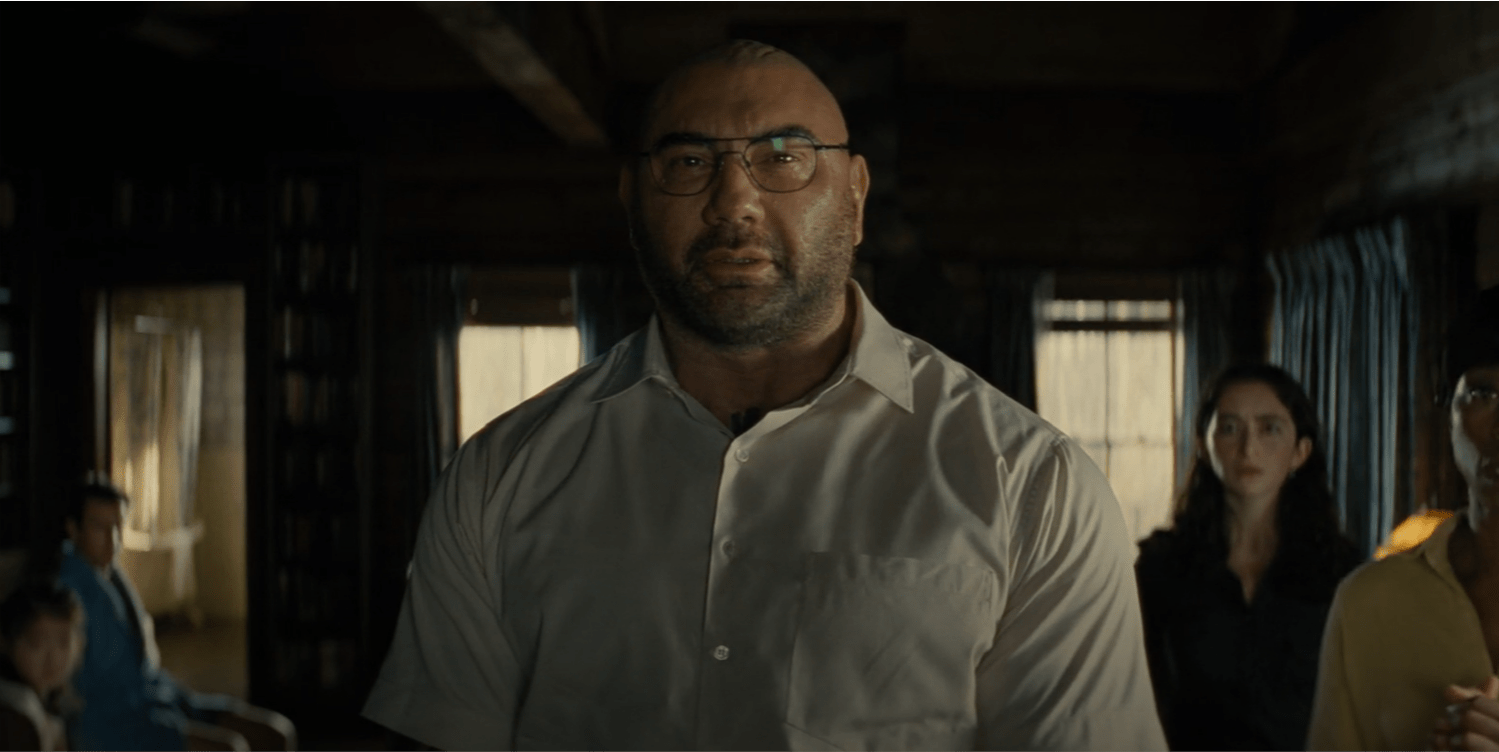
Helmed by M. Night Shyamalan, ‘Knock at the Cabin‘ breaks into the idyllic life of Andrew and Eric, a couple on vacation with their daughter, Wen, who are approached by four intruders with an unusual goal. As the four hold the family captive, they declare that an apocalypse is on the way and that they have fully seen what destruction is ahead through a series of shared dreams. The only way to avoid the end of the world, as it turns out, is if someone in the family of Andrew, Eric, and Wen decides to sacrifice themselves for the greater cause. This absurd premise then goes on to define the tone of the rest of the psychological horror film, based on Paul G. Tremblay’s novel ‘The Cabin at the End of the World.’ By the end, the family’s faith and love for each other give way to an ultimate decision, one that promises to reshape the world. SPOILERS AHEAD.
Knock at the Cabin Plot Synopsis
‘Knock at the Cabin’ begins with Andrew and Eric going on a vacation with their seven-year-old daughter, Wen, to an isolated cabin in Pennsylvania. There, while playing with the flowers, Wen spots a tall man, who introduces himself as Leonard. Their playful conversation takes a turn when he claims that he needs her and her parents’ help in order to save the world, and almost on cue, three more people join him. By the time Wen rushes back to alert Andrew and Eric, it is already too late, as the people appear at the door, knocking and asking to be let in. When the family resists, one of the strangers, Sabrina, sneaks in through the back door and knocks Eric out. Some time later, he wakes up to find the intruders inside the house, and his family in captivity.
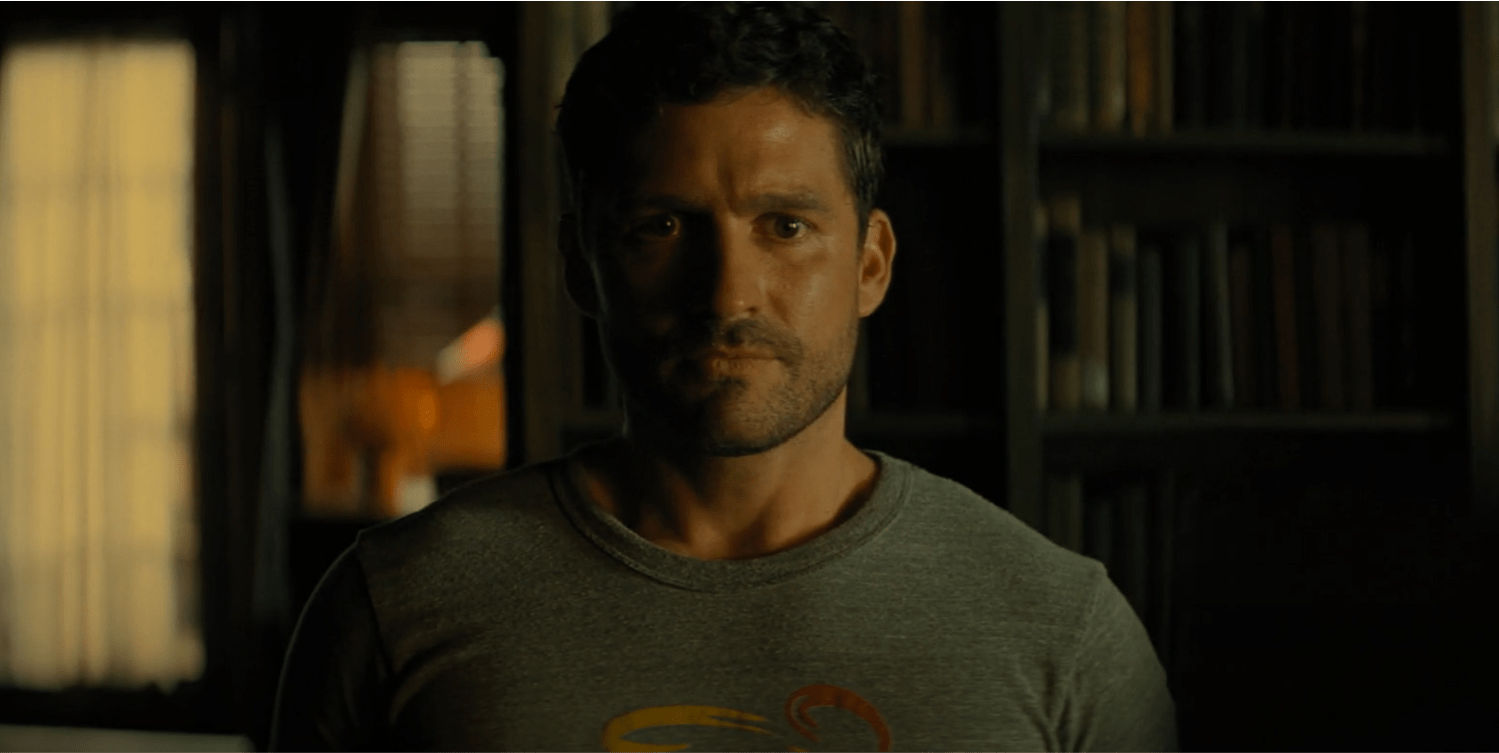
Andrew and Eric initially suspect that they are being targeted by locals for being a gay couple, but Leonard, presumably the leader of the group, assures them that it is not the case. On the contrary, he introduces himself as a second-grade teacher, followed by Sabrina introducing herself as a nurse, along with Adriane, a chef, and Redmond, who prefers not to have his full identity revealed. Leonard then goes on to claim that all four of them have had the same dream of an upcoming apocalypse, and that the only way to stop it is if either Andrew, Eric, or Wen voluntarily sacrifices their lives. Though the family doesn’t believe this at first, Leonard shows his commitment by detailing the events that are about to happen and how each day one of them will sacrifice themselves as part of the ritual.
As the family struggles to make sense of this mess they have found themselves in, Andrew recognizes Redmond as a man named Rory O’Bannon, who attacked him years ago. Redmond, however, denies this claim, and soon the day ends, and he decides to die at Leonard’s hands. The following day, Adriane too, sacrifices her life, but no matter how much Leonard tries to compel the family, they refuse to make a decision that ends with one of them dead. However, just as Leonard predicted, the planet seemingly gets marred with waves of apocalyptic events, be it earthquakes, tsunamis, or a fierce virus. At one point, Andrew manages to briefly escape and come back with a gun, shooting Sabrina in the process. However, Leonard takes control once again, finishing Sabrina off before deciding to take his own life. Before doing that, he urges Andrew and Eric to make a sacrifice, and if they don’t, an apocalypse is sure to consume the world.
Knock at the Cabin Ending Explained: Who Dies? Why Does Eric Sacrifice Himself?
At the end of ‘Knock at the Cabin,’ Eric volunteers to be sacrificed for the sake of the world, and Andrew reluctantly shoots him, ending the apocalypse. Given that this entire saga unfolds within the four walls of the cabin, completely isolated from the rest of the world and its woes, Eric’s sacrifice isn’t exactly derived from a completely rational drive. Rather, it is an exercise in faith, and Andrew’s reaction to it, much like the viewers’, is more reflective of his own psyche than of the situation at hand. When Eric dies, it is not in order to save all of humanity, but more specifically to leave Wen behind with a safer, happier world to grow up in. Fittingly, towards the end, he sees a vision of his own, where Andrew is older, and Wen is all grown up, and together they are happy.
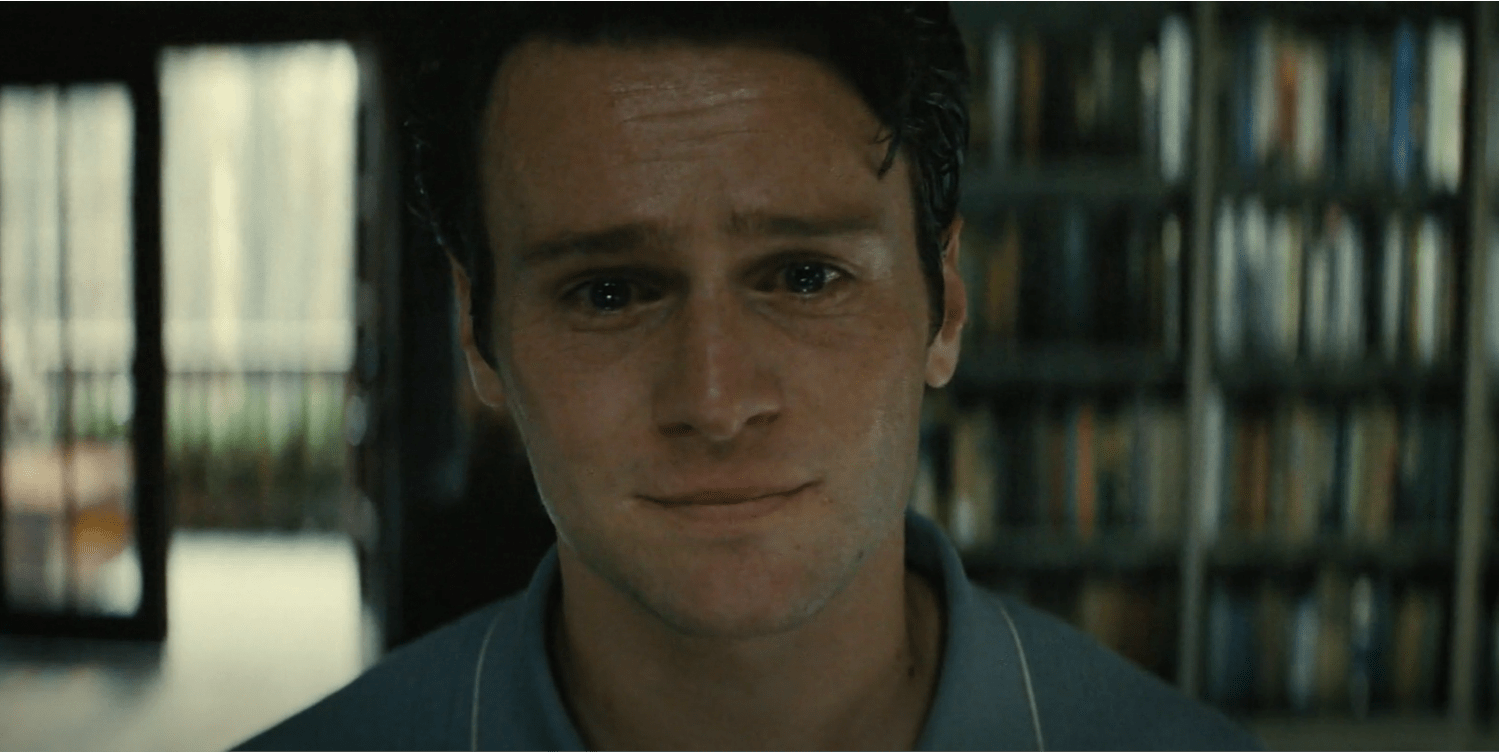
Eric’s drive to sacrifice himself comes from a place of completely selfless love, and it is a part of why he believes that this family in particular was chosen. From the moment they got together and the moment they decided to raise Wen together, Eric and Andrew have defied social impositions and carved their own path, which makes them uniquely capable of making the hard choice for the sake of love. In the final scene of the movie, Andrew and Wen find themselves wrestling with how to remember Eric, and this tension manifests with his favorite song playing over the radio. As the fond memories rush back in to hurt, Andrew instinctively turns the radio off, only for Wen to turn it back on, as if wordlessly conveying that this is the memory of her father that she wishes to keep. Though Andrew protests at first, he eventually agrees, and they drive off into the unknown future.
While the movie ends with Eric’s death, the conclusion of the novel, ‘The Cabin at the End of the World,’ which this story is based on, is completely different. The divergence happens roughly around the gun sequence, as in the book, Andrew and Leonard’s struggle for the gun ends with Wen getting shot and killed. To make things even more twisted, Leonard then declares that she doesn’t count as a divine offering, as her death was accidental, instead of a consensual sacrifice. This breaks Eric and Andrew completely, to the point that they vow to rebel against this supernatural phenomenon. If Wen’s death isn’t enough of a sacrifice for God, they surmise, then it is not a God worth obeying. With that, the duo walks out of the house, determined not to lose each other, but also ready to face whatever might come.
Does the Apocalypse Stop? Was it Real?
Interestingly, the apocalypse that is supposed to be ravaging the Earth stops the exact moment that Eric dies, leaving the question of whether it’s real a lot harder to answer. While Andrew initially holds on to the belief that the four intruders are lying and using fake recordings to convince them of the apocalypse, the reality of things begins to settle in from the moment he and Wen step out of the cabin. As it turns out, the entire world indeed was shaken up by a string of catastrophic events, all of which lined up with the dreams that the four people saw. The question, then, becomes completely supernatural in nature, as to who might be behind this phenomenon, and why it specifically depends on human sacrifice.
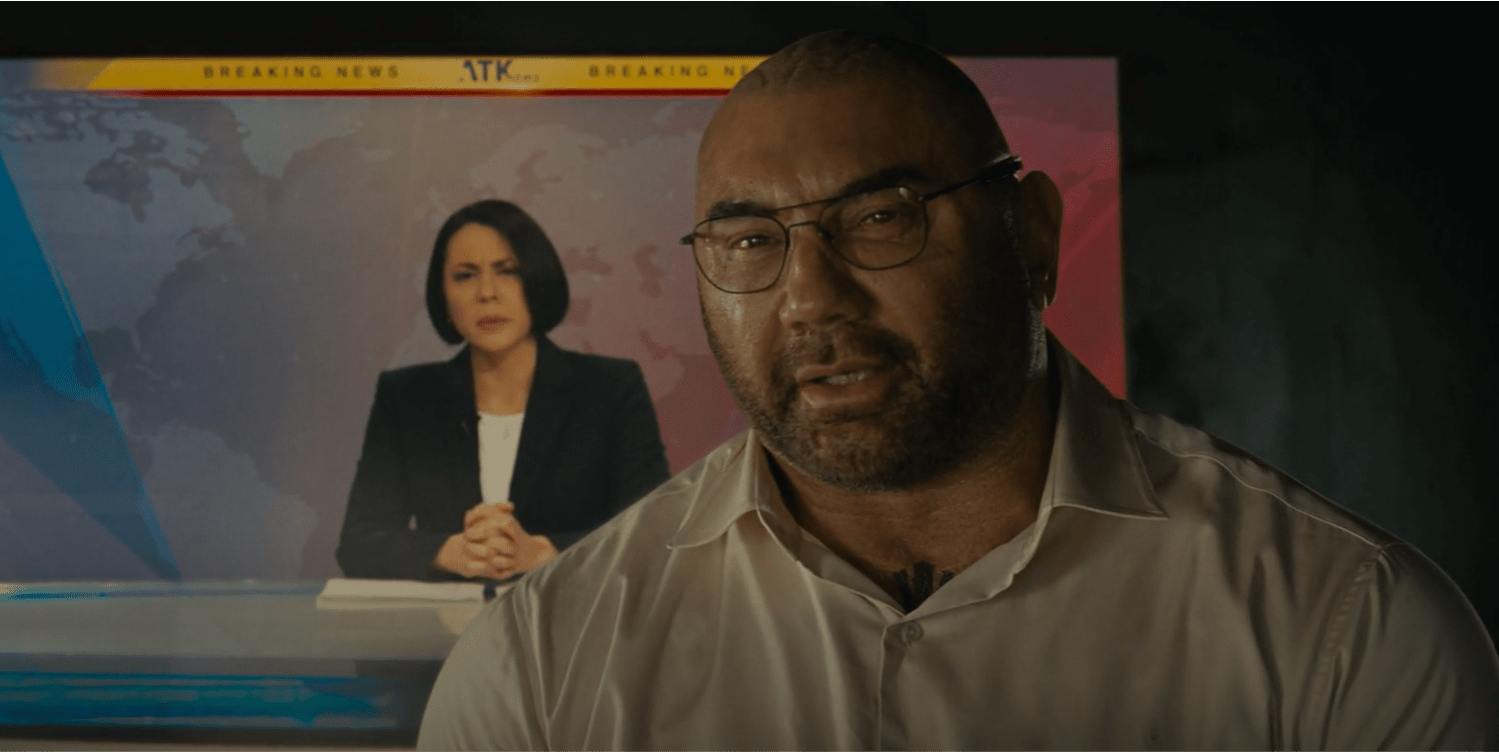
A clue into the mysterious situation comes from Leonard’s comments about how such choices have been made for many millennia, which brings in an allusion to various theological narratives about sacrifices. Another detail comes in the final moments, after the credits, when the ‘Knock at the Cabin’ title card shows up once again, accompanied by the sound of knocking. This seems to suggest that the cycle has begun anew, and this time a new family must make the difficult choice in order to keep the wheels churning. While this loop theory dampens Eric’s sacrifice a bit, it also points towards a shared sense of humanity that has kept the world together over the years, pushing the inevitable apocalypse back.
Another interpretation of this entire turn of events is that it is all a coincidence, with a single earthquake triggering a series of catastrophes that persist for a while before dying out. This lines up with what is meant to be the other big coincidence of the story, that Redmond is actually Rory O’Bannon, the man who assaulted Andrew all those years back. The four people even consider for a moment that the entire story might be a lie concocted by Redmond, since he was the one who first came forward with the idea. It is plausible that this triggers a mass psychogenic illness amongst Leonard, Sabrina, and Adriane. However, given how everything in the movie follows the fate set by the dreams almost perfectly, it is hard to believe that there isn’t something supernatural going on.
Who Were the Four Strangers? Were They the Four Horsemen?
In the final stretch of ‘Knock at the Cabin,’ Eric suggests that the four intruders who turned their lives into a living hell actually may be the Four Horsemen of the Apocalypse in disguise, and that opens up a new symbolic dimension for the story. In biblical narratives, the four horsemen are characterized as Conquest, War, Famine, and Death, respectively. Each one, ruling over their respective domains, brings waves of suffering upon Earth, ultimately serving as heralds to the end of the world itself. Within the context of this film, however, the horsemen are reinterpreted as a non-supernatural version of themselves, bringing in doom not by abilities but by their mere words and actions.
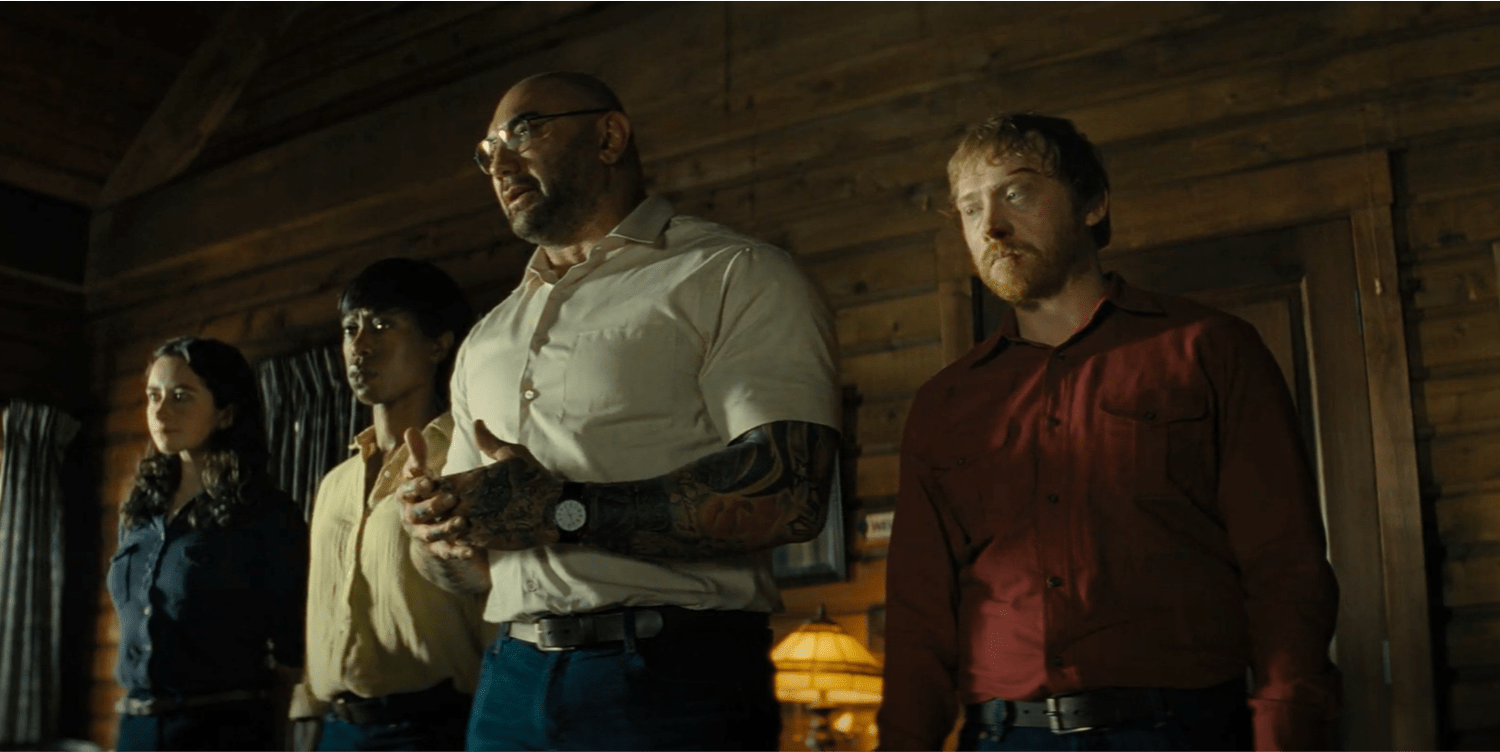
In likening the intruders to the horsemen, Eric first claims that Redmond is a representation of humanity’s malice, which by itself summarizes the original purpose of Conquest and War. From there, however, the symbolic purpose of the remaining three people begins to shift to a more positive side, with Adriane, the second to die, representing care and nourishment. Similarly, Eric later says that Sabrina was a symbol of healing, due to her profession as a nurse, whereas Leonard, a school teacher, represented guidance. These characters have no direct antecedents in the conventional depictions of the four horsemen, and in a way that is fitting. Unlike the original heralds, they seek to save the world from an apocalypse, which is why the path they show is that of kindness and compassion, rather than cruelty and violence.
Peeling away the theological layers of the characters, we are met with a far more human interpretation. Rather than being attached to some lofty label such as the Four Horsemen of the Apocalypse, the four intruders are just real people. When Andrew checks out their car, he finds proof of their ordinary lives tucked away in various corners, such as a framed photograph of Leonard in his gymnasium, or the work ID-cards of Sabrina, Redmond, and Adriane. In a way, this places them back into a larger fabric of humanity, serving as reminders that they are not too different from the very people they were urging to die. While it is possible that they may have a supernatural angle attached to them, the four strangers are ultimately just a scared group of humans, trying to save the world the only way they know how.
Read More: Knock At The Cabin: Is the Movie Inspired by True Horror Events?


You must be logged in to post a comment.