
 Abhiroop Das
Helmed by Gigi Saul Guerrero, Lifetime‘s ‘The Boy With My Son’s Face’ tells the story of Susan Webster, whose battle with post-partum depression leaves an immense physical and psychological toll on her. Nearly pushed to the brink, she agrees to her husband’s suggestion to start medication and get a nanny. However, nothing can quite prepare Susan for the tragic night when she loses her child, without any memory of what might have transpired. Before she can even process anything and mourn the death, she is arrested and sentenced to prison. It is only years later that Susan finds a picture of a boy who looks eerily like her dead child, only older. As Susan’s curiosity takes over, this psychological thriller takes on a much larger and trickier subject, dissecting what it means to be a mother.
The Boy With My Son’s Face is an Adaptation of a Jenny Blackhurst Novel
‘The Boy With My Son’s Face’ is a fictional story based on the novel ‘How I Lost You’ by Jenny Blackhurst. Blackhurst reportedly found her creative impetus in the emotions she felt around the birth of her first son. In a conversation with Words with Jam, she detailed her experience with pregnancy, adding, “It’s definitely a time a woman can feel most vulnerable and suggestible.” Blackhurst was particularly fascinated by the question of change and what it really means for one’s sense of self to transform after pregnancy. That, combined with her love for crime novels, motivated her to pen the book in 2011. When establishing the crime thriller aesthetic for her novel, the writer also drew inspiration from writers such as Patricia Cornwell, Alex Marwood, Sharon Bolton, Mo Hayder, and Sophie Hannah.

Another important element in Blackhurst’s creative toolkit is her expertise in psychology, which partly comes from her Master’s degree in the subject. She described the process of picking apart a person’s thought processes and taking on complex subjects like nature vs. nurture as enthralling, and that shows in the effort she pours into making her characters as psychologically believable as possible. Notably, while Blackhurst may have drawn some vague influences from her lived experiences, the story in ‘How I Lost You’ is far from biographical. Its television adaptation by writers Oritte Bendory and Barry L. Levy likely also brings in some original additions, all of which serve to enrich the larger narrative.
The Boy With My Son’s Face Loosely Resembles the Real-Life Story of Kim Mays and Arlena Twigg
While ‘The Boy With My Son’s Face’ may be a work of fiction, there is a small possibility that it references real-life incidents of a similar nature. In early December of 1978, the infant daughters of Barbara Mays and Regina Twigg were switched at the hospital. Mays’ daughter went to the Twigg family and was named Arlena Twigg, whereas Regina’s daughter went to the Mays and was named Kim Mays. Reports say that Arlena was born with a congenital heart defect, which affected her for much of her childhood. In 1987, when she was nine, Arlena received an open-heart surgery, but died shortly after. Incidentally, the blood reports issued during the surgery revealed that she was not the Twiggs’ biological child, and subsequent searches soon led the family to Kim Mays and her father, Bob Mays.
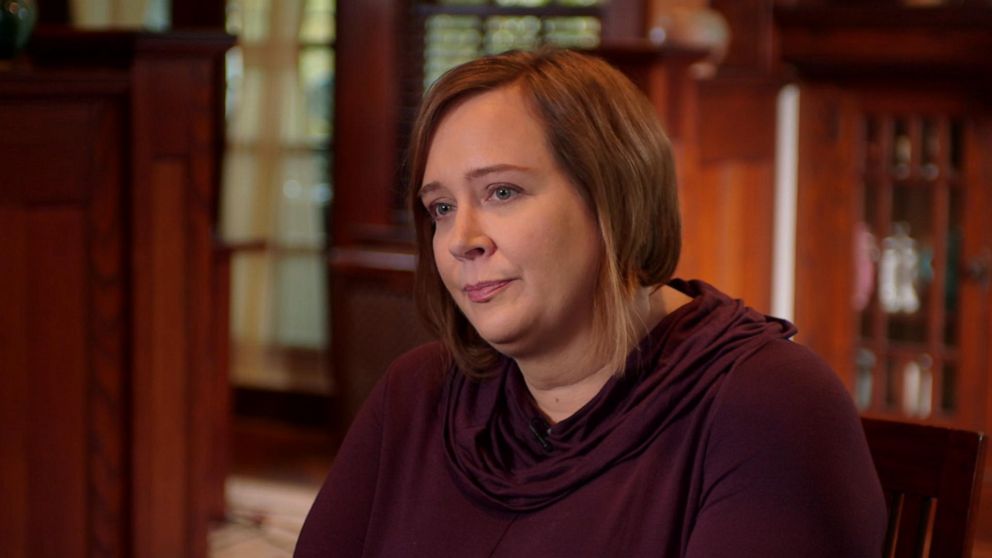
The true story of Kim Mays and Arlena Twigg’s switch at birth made national headlines in the subsequent years, and it has been speculated since that the doctor in charge, Ernest Palmer, intentionally swapped the two babies. In 1993, a nurse’s aid named Patsy Webb came forth claiming that Palmer had ordered the staff to switch the two babies’ ID bracelets. However, given that Palmer died before Webb made the allegation, not much can be known about this thread. While there are some vague similarities between the case of Mays and Twigg and the story of ‘The Boy With My Son’s Face,’ the Lifetime production is nonetheless a crafted narrative, with Blackhurst’s novel serving as its primary basis.
Read More: Is Scarpetta a True Story? Is Kay Scarpetta Based on a Real Forensic Pathologist?


You must be logged in to post a comment.