
 Abhiroop Das
Helmed and co-written by Richard Switzer, Lifetime’s ‘The Man in the Window’ is a psychological thriller that takes an ordinary day in the life of Sarah and turns it upside down. Following the death of her husband, Sarah is pushed into a particularly dark phase in her life, and that is made worse by a murder that takes place in her neighborhood, creating waves of panic. However, what truly piques her interest is the man who has just moved in across the street, named Jack.
Sarah is suspicious of him from the get-go, but it only intensifies when she begins connecting the dots on the recent events in her locality and the arrival of this elusive neighbor. Before long, Sarah is unknowingly pulled into a house of horrors unlike any other, and nothing can quite prepare her for the revelations that lie trapped inside. The movie taps into the fine line between doubt and paranoia, specifically what it means in the context of urban crime.
The Man in the Window is a Fictional Tale That Seemingly Draws Loose Parallels to Real-Life Crimes
‘The Man in the Window’ is an original story penned by Amy Irons and Richard Switzer, with no direct basis in reality. While Lifetime is famous for reimagining real-life cases and incidents as a dramatic narrative, that does not appear to be the case with this TV movie, as the bulk of its intensity comes from how these fictional characters feel and act under high pressure. However, the story of Sarah is not without its share of loose overlaps with reality, particularly in cases of neighbors reporting suspicious behavior. While in some cases these reports led to lives being saved, some victims weren’t as fortunate, and it is likely the Lifetime production is influenced by a wide range of real-life parallels.

One incident that might have inspired parts of ‘The Man in the Window’ took place on May 27, 1991, when neighbors of the serial killer Jeffrey L. Dahmer called the police and tried to alert them about his crimes. Reportedly, they spotted 14-year-old Konerak Sinthasomphone outside of Dahmer’s apartment in Milwaukee with clear signs of abuse. One of the neighbors shielded the child from Dahmer as the other called the police and relayed this information. However, the officers responded by concluding it was a domestic dispute, and they returned the child to Dahmer’s apartment, ignoring the neighbors’ pleas. Sinthasomphone was reportedly killed not long after this incident, and Dahmer wasn’t arrested until July 1991, following which he was found to have sexually abused and murdered at least 17 people.
The Story of a Man Who Survived Robert Berdella Might Have Influenced the Lifetime Movie
Another similar incident occurred on April 2, 1988, on Charlotte Street, Kansas City, where a man jumped off a second-story window and ran to the neighboring houses in a vulnerable condition. The man, Christopher Bryson, was reportedly kidnapped by the serial killer Robert Berdella and had been subjected to prolonged abuse and torture over four days before he managed to escape when Berdella was not at his home. The neighbors promptly called the police, who ushered Bryson to a nearby hospital and waited for Berdella to return.
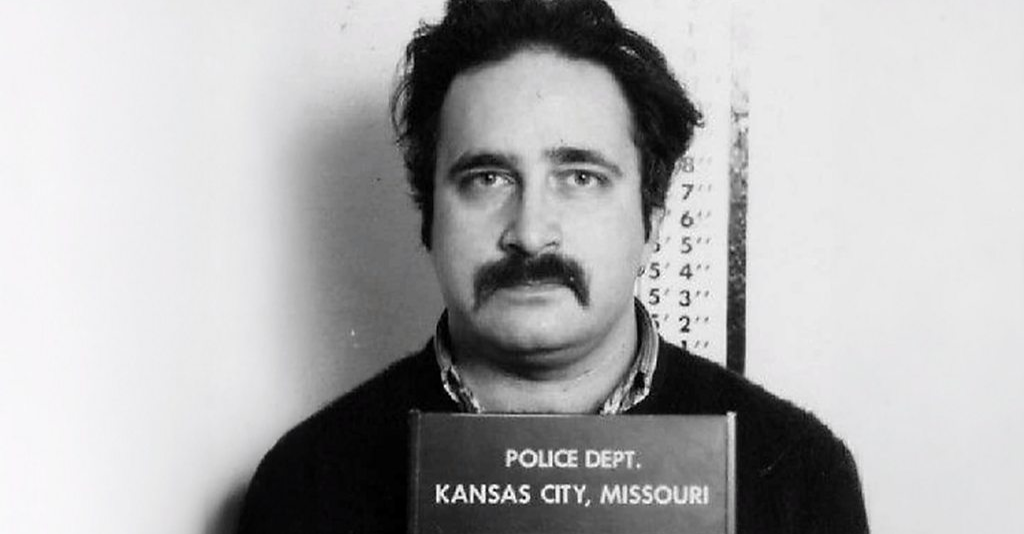
Following this, the serial killer was arrested and later confessed to the sexual assault and murder of at least five people. Berdella pleaded guilty and was sentenced to life imprisonment in December 1988. While the story of ”The Man in the Window’ is also centered around a concerned neighbor, it should be noted that it doesn’t have any direct parallels to how Bryson was rescued.
While both the Jeffrey L. Dahmer and Robert Berdella cases bear some similarities to the plot of ‘The Man in the Window,’ these connections are largely superficial at best, and there is no indication that the film is based on any specific real-life case or individual. Instead, it is more likely that the creators used cases like these as a vague reference point and then built a fictional narrative from scratch. This is not an unusual method of storytelling when it comes to Lifetime’s TV movies, and a similar structure can be found in titles like ‘The Couple Across the Street‘ and ‘The Seemingly Perfect Family.’ Just like the story crafted by Irons and Switzer, these works draw on reality to weave a fictional, yet deeply relevant story.
Read More: Is Jo Nesbø’s Detective Hole a True Story? Is Harry Hole Based on a Real Detective?


You must be logged in to post a comment.