
 Abhiroop Das
Created by Ryan Murphy, FX’s ‘The Shards’ is a psychological thriller adapted from Bret Easton Ellis’ eponymous novel. While at the heart of the story lies Bret‘s internal anguish about love, sex, and friendship in his final year of high school, the show quickly takes a dark turn with the arrival of a serial killer. Known as the Trawler, the killer has an established modus operandi of going after people’s pets before targeting them. As he leaves behind a trail of bodies morbidly exhibited in public spaces, Bret gets paranoid about strange happenings in his own house. The Trawler is not his only worry, after all, as there is the Riders of the Afterlife, who break into homes and brutally kill the owners. Faced with these two overwhelming threats, Bret, just like society at large, struggles to navigate reality and how grim it can get.
Bret Easton Ellis Created the Trawler to Represent the Serial Killer Terror of the 80s
The Trawler is a fictional serial killer created by author Bret Easton Ellis for his novel, ‘The Shards.’ While the rest of the story loosely draws from Ellis’ personal experiences in the early 80s, the killer is a wholly invented character, meant to fit with the general psychological horror framework of the book. Its TV adaptation, which is also co-written by Ellis, largely maintains the same characteristics, while also giving us brief glimpses into the Trawler and his ominous, masked attire. While he can be interpreted as reflecting the rise of serial killers in America from the 70s to the 90s, the Trawler also finds his unique fictional identity when viewed in tandem with the larger thematic messaging of this story, one focused on unraveling the complex teen consciousness of that time period.
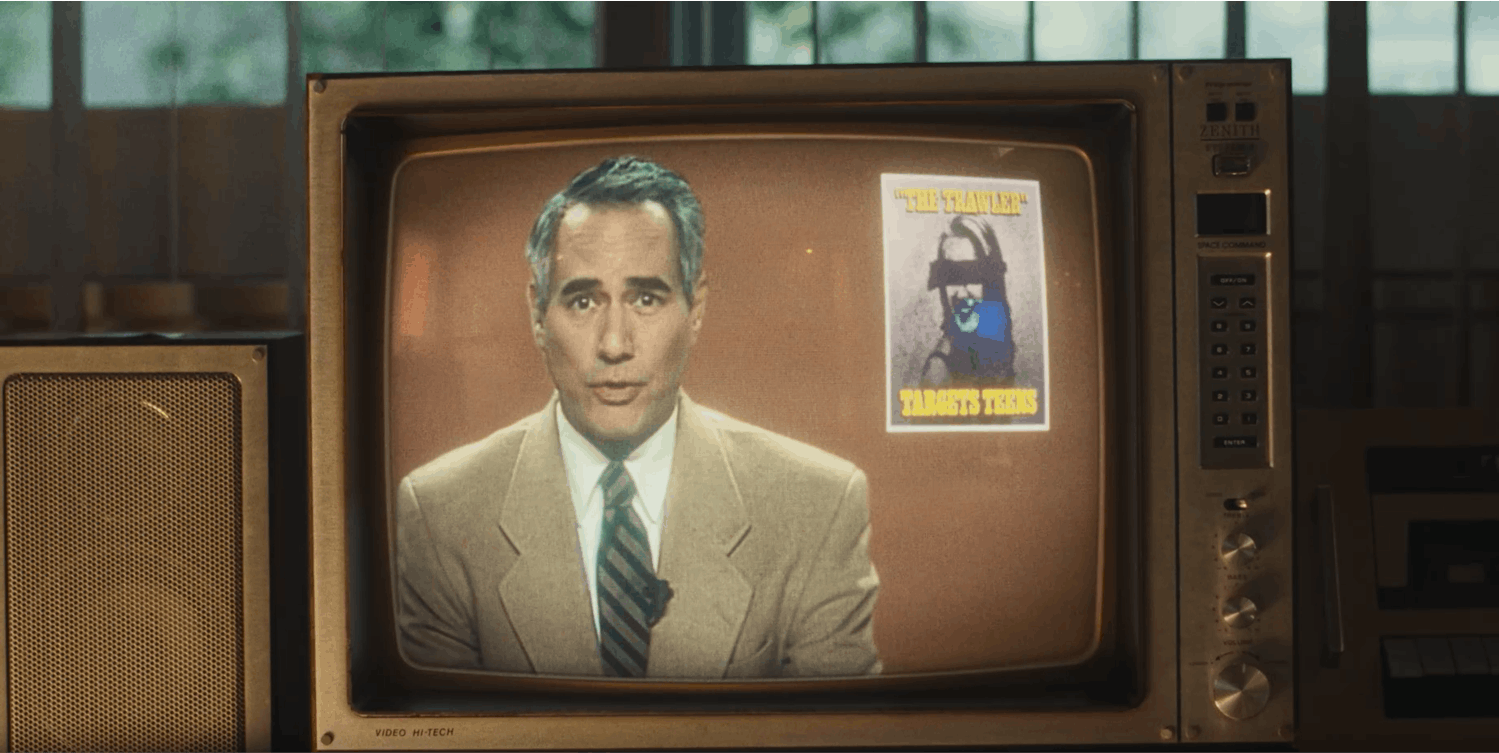
Given that ‘The Shards’ reimagines some aspects of Ellis’ time as a final-year high school student, perhaps a comparison can be made between the Trawler and serial killers who operated in Tinseltown around that time. In a conversation with Rolling Stone, Ellis recalled being terrified of the serial killing duo known as the Hillside Stranglers. Between 1977 and 1978, cousins Kenneth Bianchi and Angelo Buono Jr. abducted, sexually assaulted, tortured, and murdered at least ten young women in Los Angeles. Their crime spree ended after Bianchi moved to Washington state and murdered two college students, which created a fresh trail of evidence that the investigators could connect back to the Hillside Stranglers’ murders.
Bianchi was apprehended on January 12, 1979, and subsequently entered a plea agreement, where he pleaded guilty to five of the murders and agreed to testify against Buono Jr., to avoid the death penalty. In October 1979, he received seven consecutive life sentences, and, as of writing, remains incarcerated in the Washington State Penitentiary, following his eighth parole denial in 2025. Buono Jr. went to trial and was found guilty of nine counts of first-degree murder on November 18, 1983. He received a sentence of life imprisonment without the possibility of parole and died of a heart attack on September 21, 2002.
The Trawler is Conceptualized as a Dark Spin on the Writer Archetype
While the Trawler may not be based on the Hillside Stranglers, how Bret Easton Ellis feels about the real-life serial killings in the 1970s and 80s is clearly reflected in the book. As an author, he is best known for ‘American Psycho,’ in which the protagonist, Patrick Bateman, is known for possessing a near-uncontrollable bloodlust. Traces of his psychopathic personality and antisocial behavior can also be seen in how the Trawler interacts with ‘The Shards,’ and it makes sense for these two characters to share a creative lineage.
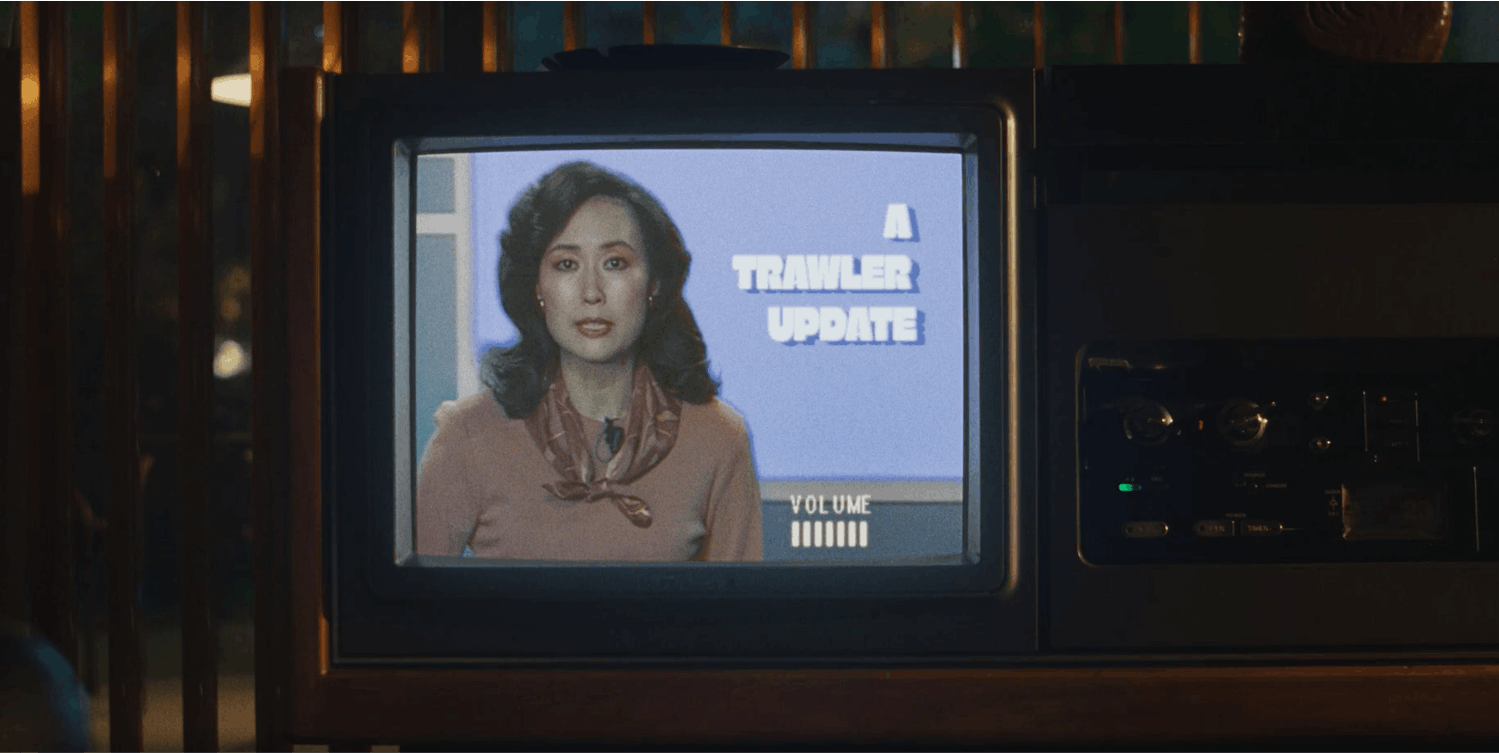
Both the Trawler and Bateman are also piercing critiques of the society they come from, which fits in perfectly with the meta storytelling of the respective works. The self-referentiality of ‘The Shards’ goes a step further when we look at Ellis’ interview with Madame Figaro, where he described the Trawler as an evil double of the writer. He went on to explain the killer in symbolic terms, likening him to a morbid artist who reassembles bodies and objects much as a novelist assembles a story. Questioning the role of an author in molding their stories has always been one of Ellis’ main literary interests, and it seems to find its expression in the form of the Trawler.
The Riders of the Afterlife is a Fictional Cult of Serial Killers
Much like the Trawler, the Riders of the Afterlife is an invented serial killing cult created by Bret Easton Ellis for the novel, and adapted to the screen by Ellis, Ryan Murphy, and the rest of the writing team. What makes this group distinct from the Trawler is their emphasis on rituals and cult practices, as well as satanic imagery. As such, the group represents a different form of serial murders, which also finds its inspiration in real life. The 80s are also known as the era of the Satanic Panic, with the rise of rumors about people being abducted and killed as ritual sacrifices. For Ellis, however, the main reference for the cult came from his own lived experiences.
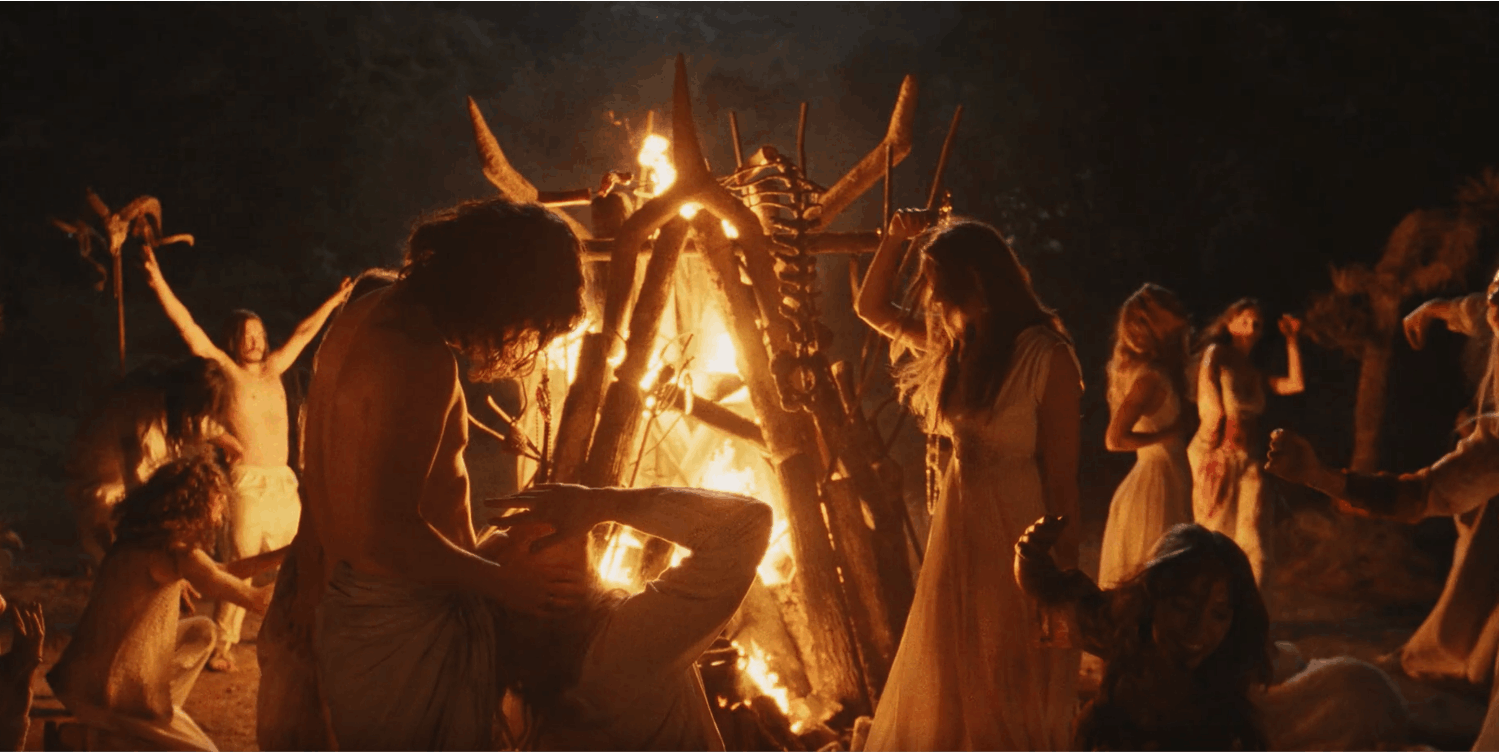
In his interview with Rolling Stone, Ellis talked about the stories he had heard of young boys who had disappeared, only to be found in a cult. He also recalled hearing about people who organized search parties to locate these boys and separate them from such cults, and these elements can be found in ‘The Shards’ as well, albeit fictionalized to an extent. Ellis is aware of the cult’s similarities to the notorious Manson Family cult, led by Charles Manson, who later orchestrated the Tate-LaBianca murders of 1969.
Bret Easton Ellis Was Conscious of the Manson Family Parallels When Creating the Cult
Operating primarily near Los Angeles, Manson gathered a following of roughly 100 individuals, mostly young women, whom prosecutors stated he controlled through isolation, psychedelic drugs, and apocalyptic teachings, among other coercive and abusive methods. Manson was arrested in October 1969 on suspicion of automobile theft, before investigators traced his commune to the Tate-LaBianca killings. On March 29, 1971, he was convicted of first-degree murder and conspiracy for orchestrating the killing spree, resulting in a death sentence that was later commuted to life imprisonment. After spending more than four decades behind bars, Manson died of natural causes on November 19, 2017, at the age of 83.
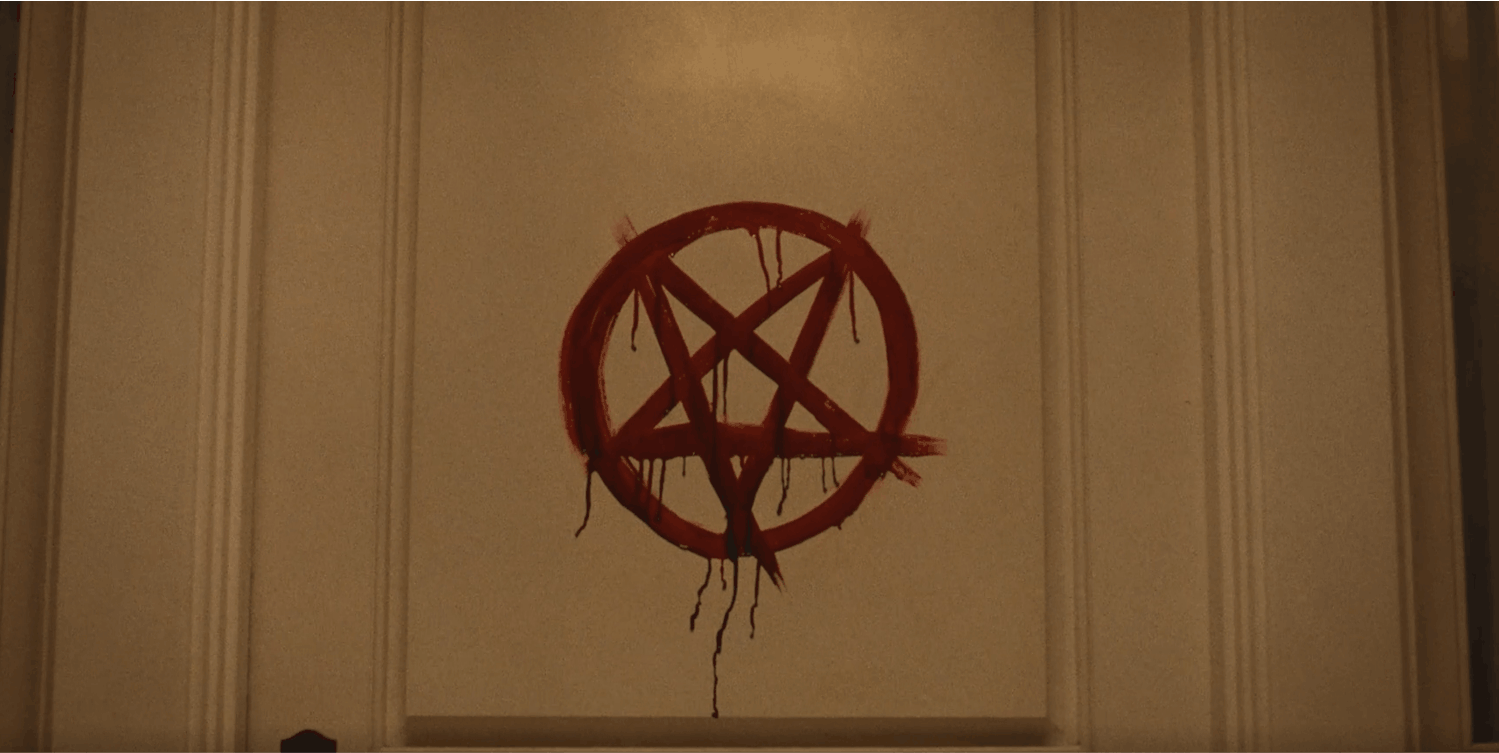
The Manson family is referenced in both ‘The Shards’ and in Ellis’ interviews, where he described being fearful of them, even in his dreams. As such, it is likely that the Riders of the Afterlife are his take on such serial killing cults and the effect they had on the public consciousness of Los Angeles at that time. While he has never confirmed that the cult is a direct nod to the Manson family, it is likely that they served as a reference point for the overall feel. That said, the arc that this cult follows in the show is a distinctly fictional one, which reiterates the nature of Ellis’ work, both as a novel and as a TV series.
Read More: The Shards Episode 1 and 2 Recap: Pilot and Don’t You Want Me?


You must be logged in to post a comment.