
 Abhiroop Das
Written and directed by Tommy Wirkola, Netflix’s ‘Thrash‘ brings one of the biggest hurricanes ever recorded to the quaint coastal town of Annieville. Though the residents are warned of imminent flooding, downpour, and a seemingly never-ending onslaught of hurricane-force winds, nothing matches the scale of what hits the shore. However, it’s not just the storm that they have to worry about, as a shiver of aggressive bull sharks also makes its way into the town, as disoriented as it is hungry.
The disaster thriller movie captures this nightmarish reality through the eyes of a woman named Lisa, who is nine months pregnant, an agoraphobic teen named Dakota, and a trio of siblings, all of whom are stranded in their respective tight spaces. All the while, the Category 5 hurricane, dubbed Henry, shows no sign of stopping and essentially declares that those who wish to survive must fight for their lives.
Hurricane Henry is Fictional, But Might be Influenced by South Carolina’s Fiercest Storms
The Category 5 hurricane known as Henry in ‘Thrash’ is a fictional creation of writer Tommy Wirkola. As the movie’s inciting incident, the hurricane dominates just about every scene with its torrential forces, which are made real by using an ingenious mix of VFX and practical effects. Though there may not be a direct real-life influence for how the movie approaches natural catastrophes, some vague parallels can be found in real hurricanes that have made landfall in South Carolina over the years. As of writing, the state has endured 132 tropical or subtropical cyclones since the year 1851, and out of these, four made landfall as major hurricanes, classified as Category 3 or above: the Great Charleston Hurricane of 1893, Hurricane Hazel of 1954, Hurricane Gracie of 1959, and lastly, Hurricane Hugo of 1989.
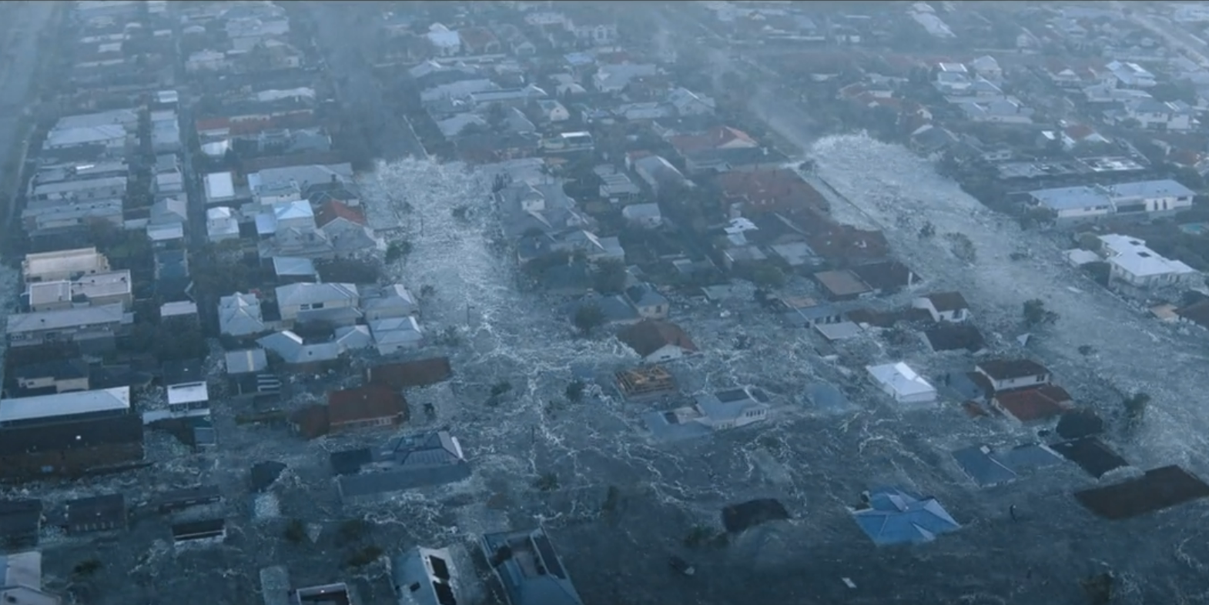
Out of the four recorded major hurricanes of The Palmetto State, Hurricane Hugo appears to have the closest resemblance to the film’s Hurricane Henry, both in terms of intensity and destruction. The cyclone took formation on September 10, 1989, near Cape Verde, and was officially recognized as a hurricane 3 days later. At its peak, Hugo had a sustained wind speed of 160 miles per hour, which made it a Category 5 hurricane. In the coming days, it made landfall across various regions in the Caribbean before touching coastal South Carolina around midnight on 21 and 22 September. At that time, the hurricane was classified as Category 4 and generated storm tides as high as 20 feet in the Bulls Bay region.
As it moved deeper inland, Hugo maintained hurricane-force winds of around 100 miles per hour and was reportedly responsible for 35 deaths. As of writing, it remains the costliest storm in the state’s history, with reports indicating damages worth $7 billion at the time. Though Hugo, much like Hurricane Gracie and Hazel, never reached Category 5 during landfall, what makes it similar to Hurricane Henry in ‘Thrash’ is the sheer devastation it caused, especially due to its storm surges and loss of property.
Thrash’s Hurricane Almost Warrants a Whole New Category to Itself
Zooming out of South Carolina, the homeland has faced four Category 5 hurricanes that have struck the mainland over the years. These are the 1935 Labor Day hurricane, Hurricane Camille of 1969, Hurricane Andrew of 1992, and Hurricane Michael of 2018. Though it peaked at Category 4, the Great Galveston hurricane of 1900 remains the deadliest hurricane in US history, claiming the lives of between 6000 and 12000 people. All of these storms had a catastrophic effect on the regions they hit, and might have served as references for the creators. However, no such linkages have been confirmed yet, and Henry appears to be largely original in creation. The invented hurricane gets its most unique feature in the form of a shark attack. As of writing, there haven’t been any confirmed incidents of shark attacks during tropical cyclones in the homeland, though similar cases have reportedly occurred in Australia.
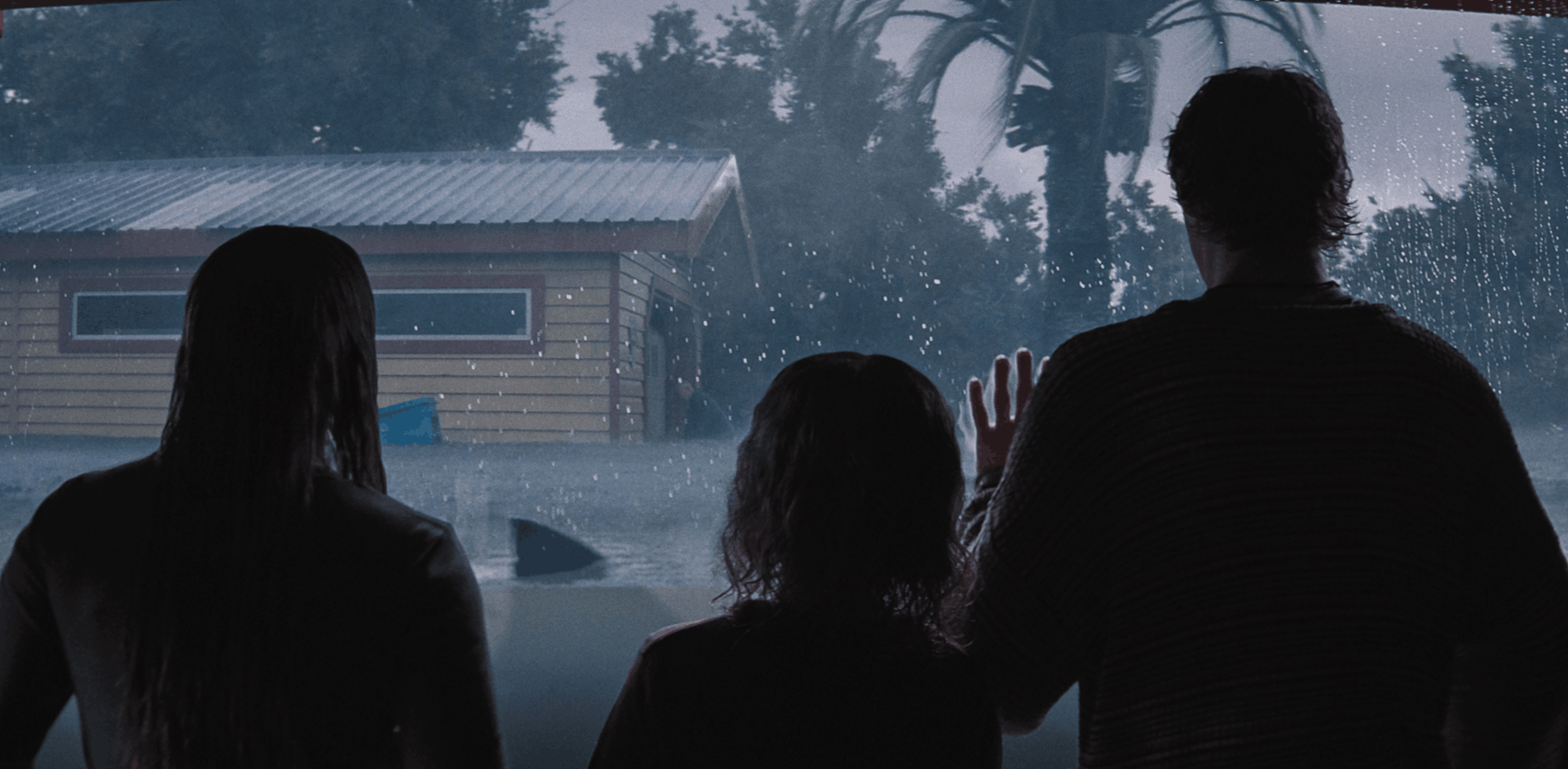
In the movie, Hurricane Henry is often described as being big enough to deserve a Category 6 classification. While no such category exists in the real-life Saffir-Simpson scale, this detail does point in an interesting direction. Chris Gloninger, a climate scientist who consulted on the movie, told Tudum that arguments for a Category 6 rest on the fact that “the Category 5 storm is open-ended, and the wind damage relationship … goes up exponentially.” In the movie, that level of intensity is brought to life through the skills of the creative artists. As many of the town sequences are filmed in a series of interconnected sets, some of the effects reportedly involved filling the spaces with water. However, the illusion of rising water levels was achieved by shortening the building sets layer by layer. In addition to that, the crew likely relied on a mix of wind machines and visual effects to make Hurricane Henry feel as immersive on screen as possible.
Read More: Is Netflix’s Thrash Based on a True Story? Are Hurricane Sharks Real?


You must be logged in to post a comment.