
 Abhiroop Das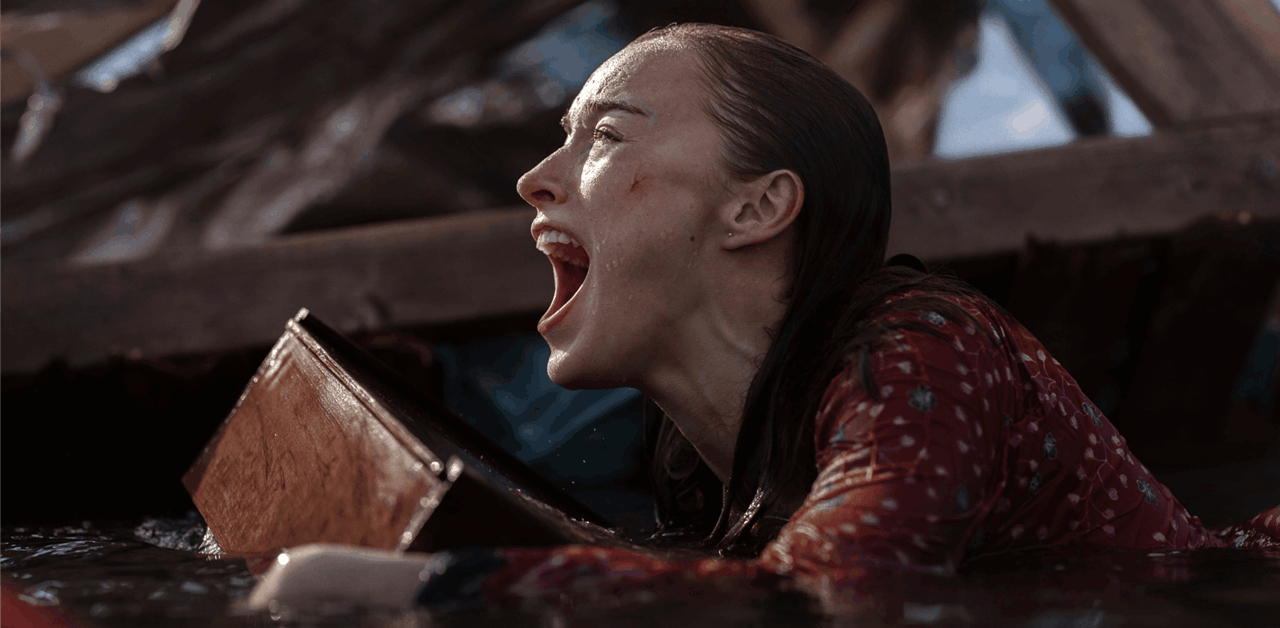
Helmed by Tommy Wirkola, Netflix’s ‘Thrash‘ unleashes nature’s fury in the form of a hurricane unlike ever seen before. When the coastal town of Annieville finds itself in the literal and figurative eye of the storm, a number of characters find their lives intertwined. Among these is Lisa Fields, who is nine months pregnant, an agoraphobic person named Dakota Edwards, and three orphaned siblings, all of whom get trapped when water surges in. Their biggest fear, however, is not just the storm, but the group of sharks it pulls into the town. With blood and destruction in every corner, the sharks quickly grow aggressive, turning the next few hours into a living nightmare. In capturing these characters’ struggle for survival, this disaster thriller movie captures the pure horror a tropical cyclone can usher in in real life.
Thrash’s Story is Loosely Reminiscent of South Carolina’s Biggest Hurricane Landfall to Date
‘Thrash’ presents a fictional story about a Category 5 hurricane that sweeps through a South Carolina town, endangering the lives of its residents, including a pregnant woman named Lisa. While the larger story beats come from writer Tommy Wirkola, the background for the movie is loosely based on real life, specifically in how The Palmetto State is known to be at high risk when it comes to hurricanes. As per the FEMA National Risk Index, 15 of South Carolina’s 46 counties rate high or very high on the hurricane-risk category. A similar percentage of the region is also prone to flooding and tornado hazards, which can and often do become a destabilizing factor for the millions who call the state their home.
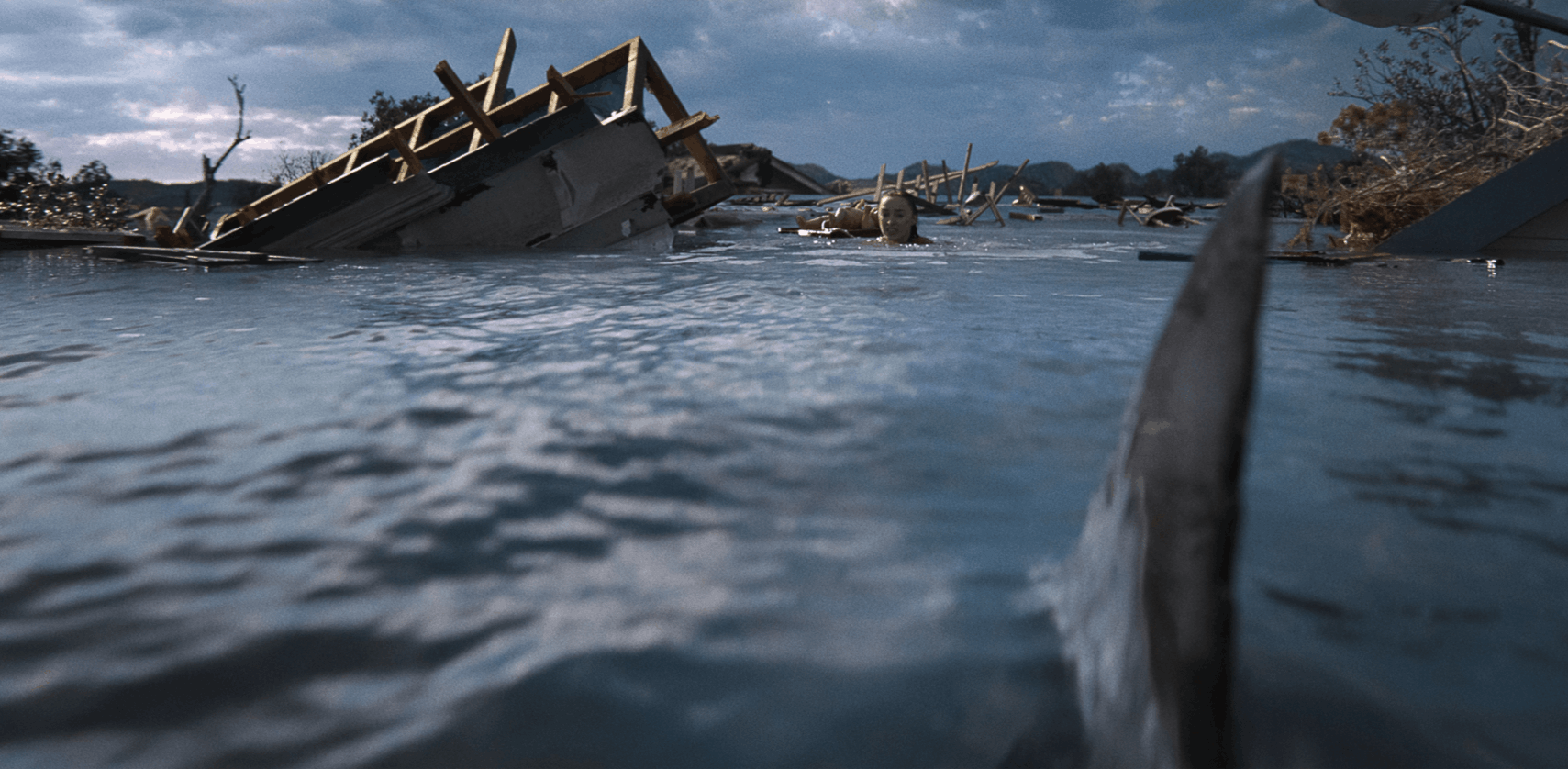
Typically, hurricanes in the homeland are measured by using the Saffir-Simpson hurricane wind scale, which classifies certain tropical cyclones across multiple categories based on their sustained wind speed. While there are five such categories in total, all cyclones of Category 3 and above are classified as major hurricanes by the U.S. National Hurricane Center. These cyclones can range between 111 miles per hour in Category 3 to higher than 157 miles per hour in Category 5, often causing heavy and irreparable damage to structures and threatening lives. Though the movie features a hurricane of similar destructive capacity, the state of South Carolina has not recorded a direct Category 5 hurricane landfall as of writing.
Notably, Hurricane Hugo, which moved ashore in South Carolina around midnight on September 21-22, 1989, briefly reached Category 5 status a week earlier, on September 15, while moving over the Atlantic Ocean. Upon making landfall in the state as a Category 4 cyclone, it recorded a sustained wind speed of 140 miles per hour. The hurricane reportedly caused storm surges over 20 feet high near the fishing town of McClellanville. Reports state that about 264,000 people were evacuated from the region, but the storm still claimed 35 lives and caused roughly $7 billion in property damage in South Carolina. While the state has endured several hurricanes, Hugo appears to be the closest real-life parallel for the movie’s storm, though the creators have not commented on any such linkages.
The Shark Attack in the Movie Might be a Reference to a Popular Urban Trend
One thing that sets the story of ‘Thrash’ apart is the arrival of sharks into the flooded city, which unleashes even more chaos and bloodshed. While various alleged shark sightings have been reported in the aftermath of tropical storms and cyclones, most of these claims have been debunked over the years. These supposed sightings are nestled into popular culture under the label of “Hurricane Sharks,” and the first well-known image appeared in 2011, during Hurricane Irene. Reportedly, a fake image of a shark swimming in a flooded street in Puerto Rico made national headlines before it was ultimately debunked. Similar fabrications also emerged during Hurricane Sandy, Irma, and Florence, with sharks being digitally edited into photos of flooded spaces.
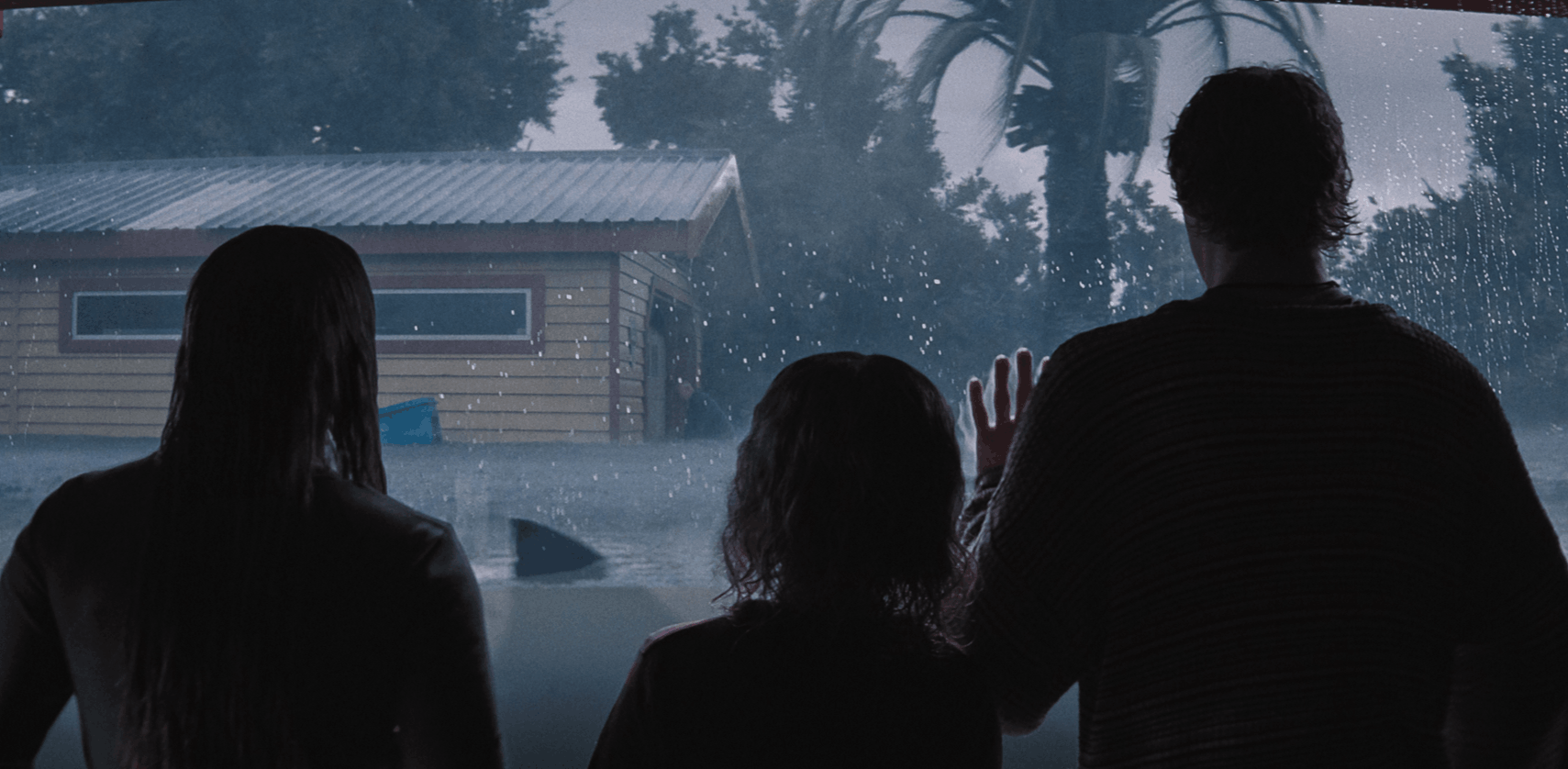
Notably, there is one recorded incident of a shark sighting in Fort Myers, Florida, after Hurricane Ian in 2022, that is widely believed to be authentic. When a video featuring a shark in the local water bodies went viral, skeptics and journalists began looking into the clip. An exhaustive report by the Associated Press confirmed that the video was real and filmed on site, but could not determine whether the animal was indeed a shark. Similarly, in 2013, a series of floods in the Carbrook region of Queensland, Australia, reportedly led to the inexplicable disappearance of several bull sharks that resided in a local lake. While hurricanes are known to pose a serious threat to ecosystem balances, the movie likely isn’t based on any specific real-life cases.
For producer Adam McKay, who closely worked with writer-director Wirkola on the film, shark attacks in Australia form a direct parallel to the plot. In February 2026, a series of flash floods led to a rise in bull shark attacks along the New South Wales coast, with as many as four cases being recorded within a 48-hour period. While the incident took place after the estimated production period of the movie, the similarities show how closely fiction mimics reality in this case. During a conversation with Tudum, McKay attributed such floods partially to climate change, and that sense of ecological consciousness is also reflected in the film.
Read More: Where Was Netflix’s Thrash Filmed?


You must be logged in to post a comment.