
 Abhiroop Das
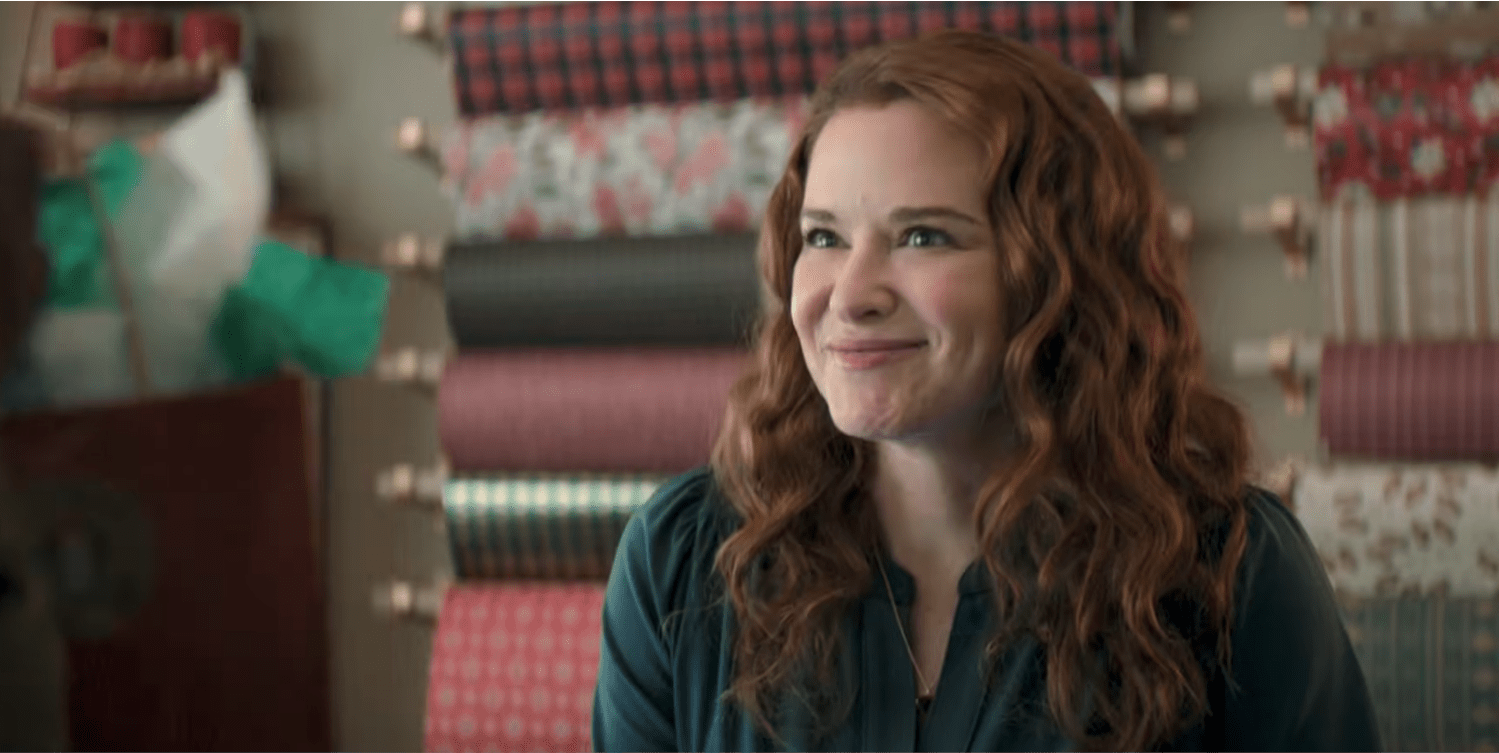
Created by Ken Cuperus, Hallmark’s ‘Mistletoe Murders‘ adds a festive spin to its small-town murder mystery narrative by setting the story around a year-round Christmas shop and its rather unusual owner. Under the Mistletoe, as the shop is called, is the heart of the town of Fletcher’s Grove, where everyone seems to know each other, and doors are always open for friends and neighbors to pay a visit. Newcomer Emily Lane, however, prefers to keep a tight wrap on her personal life, and for good reason. But when a series of murders shake up Fletcher’s Grove and cause the townsfolk to panic, Emily is left with no choice but to dig into her buried past and put a special set of skills to use, all the while carrying on with the persona of the nice, harmless owner of a Christmas shop.
Fletcher’s Grove is a Fictional Town Drawing References From a Classic Mystery Series
The quaint, cozy little town of Fletcher’s Grove is actually a fictional creation by Ken Cuperus, designed as the main setting of ‘Mistletoe Murders.’ Depicted as a tourist hotspot in Upstate New York, the town was originally constructed as the backdrop for the Audible version of the story, before being adapted for the screen by Cuperus and his production crew. The name of the town is a rather sly nod to the iconic character of Jessica Fletcher from the equally iconic TV show, ‘Murder, She Wrote.’ In it, Fletcher serves as a mystery writer and amateur sleuth who solves some of the most notorious cases plaguing the fictional town of Cabot Cove, which makes the comparison all the more fitting. In the same vein, however, the name amplifies how Fletcher’s Grove is invented by design, primarily serving the demands of the mystery genre.
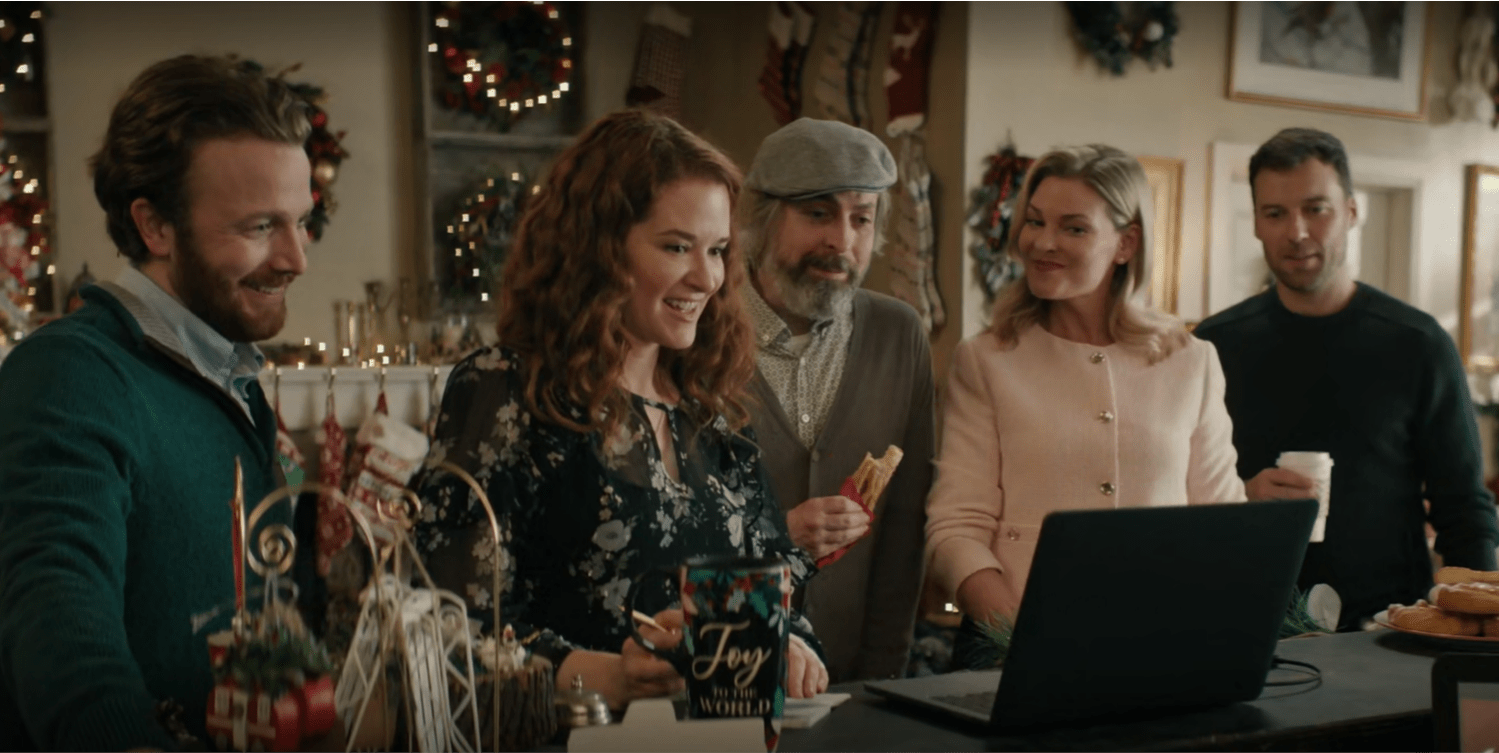
The word Fletcher isn’t the only bit of inspiration that Cuperus takes from ‘Murder, She Wrote,’ as he explained in a conversation with ‘Deck The Hallmark Podcast.’ Jessica Fletcher’s in-universe book tours, he noted, allow murders to happen outside Cabot Cove, which is a structural approach he also applies to Emily’s cases. This allows him to flesh out the world of ‘Mistletoe Murders’ without making the locations within Fletcher’s Grove repetitive. While one can also draw comparisons between this show and titles like ‘Twin Peaks,’ ‘Midsomer Murders,’ or ‘Murder in a Small Town,’ which feature the fictional towns of Twin Peaks, Midsomer, and Gibson, respectively, it’s the little details that make Cuperus’ invention stand out.
While Fletcher’s Grove may not be real, it does seem to fit into the larger archetype of small, sylvan towns known for their tight-knit community. Curiously enough, much of the town’s main street that we often see on screen has been built entirely from scratch. The production itself is based much farther south, in Ontario, with filming taking place in and around Toronto, and the town’s main-street exteriors created on a backlot. The William F. White Studios Backlot at 3800 Sideline 32 in Pickering, Ontario, offers roughly 23 acres of streetscape made of elaborate sets and constructs, all of which give Fletcher’s Grove an illusion of realism.
Under the Mistletoe is a Creative Take on Year-Round Christmas Shops
Just as the larger town of Fletcher’s Grove is an invented creation, Under the Mistletoe is a fictional year-round Christmas store created by Ken Cuperus. As a shop owned by the protagonist, Emily Lane, Under the Mistletoe features pretty prominently across the show, and while it may be filmed in a practical set, the store doesn’t draw from any particular real-life antecedents. Instead, the idea behind the store likely comes from the larger tradition of year-round Christmas shops, which specialize in selling holiday-themed decorations, souvenirs, and treats.
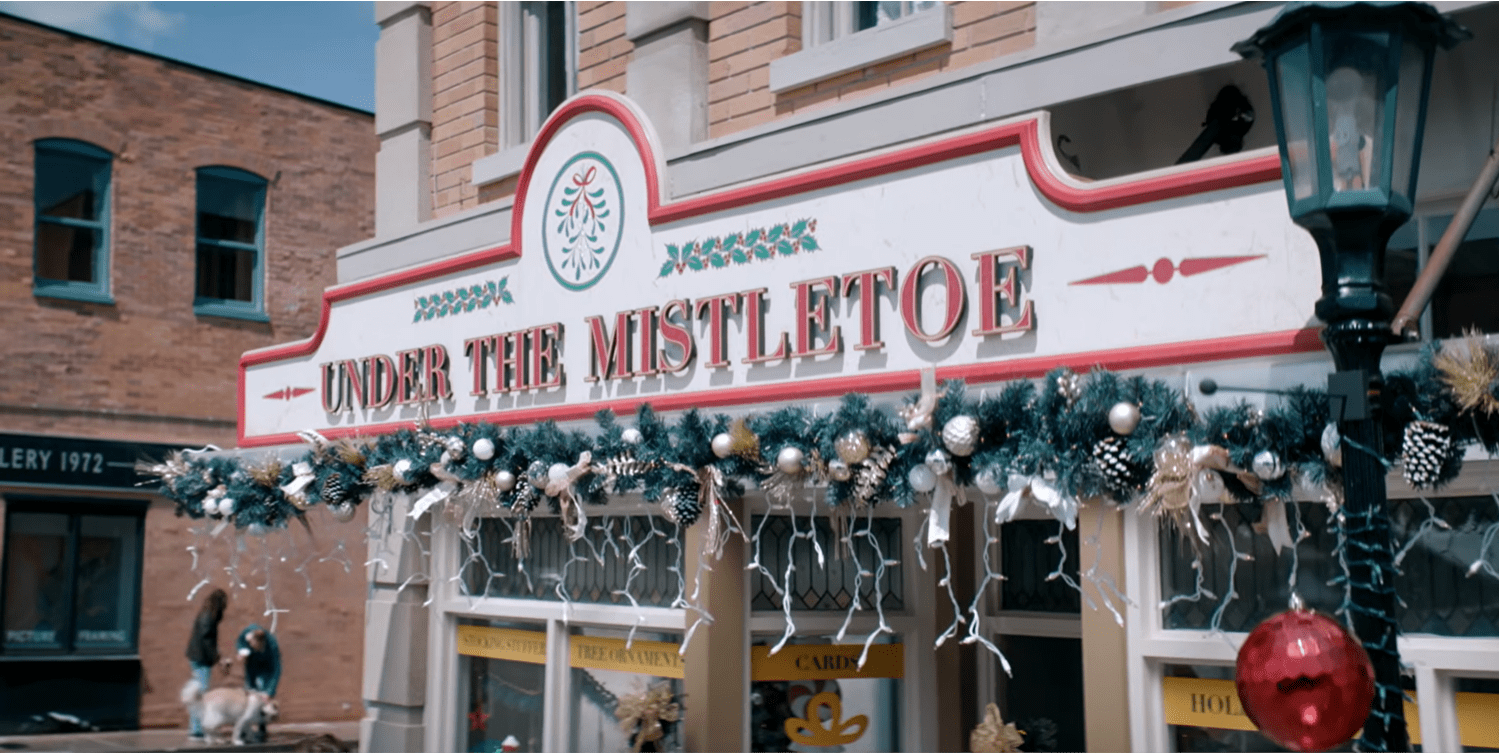
Such stores are popular all over North America and Europe, and tap into the spirit and nostalgia surrounding Christmas. For instance, Just Christmas, located on 34 Queen Street in Niagara-on-the-Lake, describes itself as Canada’s oldest year-round Christmas store and has operated from the same location since 1985. Famous for an inventory that includes a lot of holiday-themed goods, the store has become especially popular among tourists over the years, and represents one of the many classy shops that may have served as a reference point for the show’s take on the idea.
Within the context of the show, however, Under the Mistletoe also connects to Emily’s own relationship with the festival and her memories of it, making the shop feel thematically relevant. Hallmark is no stranger to shows and TV films surrounding Christmas and the holiday season at large, given its famous ‘Countdown to Christmas’ run of titles starting around October and wrapping up by January 1 of the following year. Thus, it makes sense for a major narrative device in the show to fit into that pattern as well, keeping up the festive vibes as audiences around the world tune into the show.
Read More: Mistletoe Murders Season 1 Ending Explained: What is Emily’s Real Name? What is Her Past?


You must be logged in to post a comment.