
 Abhiroop Das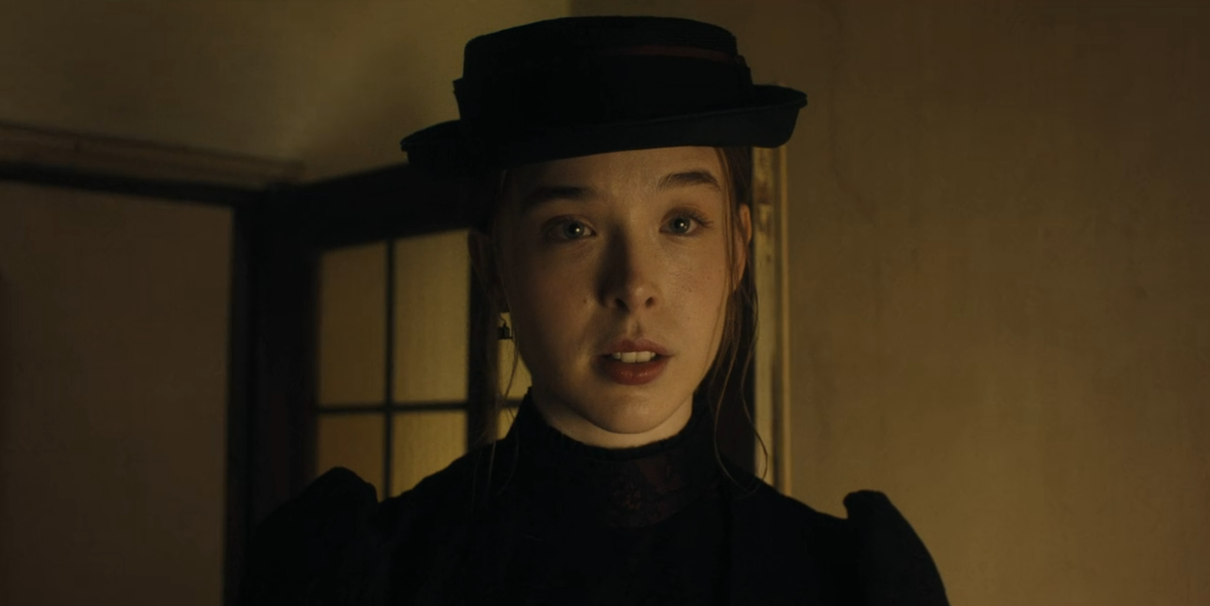
Created by Ian Brennan, Netflix’s ‘Monster: The Lizzie Borden Story,’ marks the fourth season of the acclaimed ‘Monster‘ series, moving away from infamous serial killers such as Jeffrey Dahmer and Ed Gein to tell the story of one of the most famous murder suspects in history, Lizzie Borden. In 1893, Lizzie was tried for the murder of her father, Andrew Borden, and her stepmother, Abby Borden, the year prior. The trial went on to leave a permanent impact on public consciousness, shaking up discourse on gender, crime, and the various socioeconomic intersections that lie within. This biographical crime drama anthology fictionalizes Lizzie’s story to a great extent, giving us a deep look into her psyche and circumstances both in the days before the murders and the days after. SPOILERS AHEAD.
Monster The Lizzie Borden Story Plot Recap
‘Monster: The Lizzie Borden Story’ begins with an altered version of Lizzie killing her stepmother, Abby Borden, by repeatedly striking her with an axe, before doing the same to her father, Andrew Borden. From this gruesome opening, the story dials back to a few months earlier, showing how Lizzie leads a life being constantly abused by her parents, but especially by Abby. However, things begin to look up when an Irish woman named Bridget Sullivan gets hired as the new maid. Quickly impressing everyone with her cleaning and cooking skills, Bridget particularly becomes the apple of Lizzie’s eye, introducing her to new thoughts, literature, and experiences, some of which are also sexual in nature.

Among other things, Lizzie becomes obsessed with the story of Elizabetta, referring to the Hungarian Countess Elizabeth Báthory, who was rumored to have killed hundreds of virgin girls to bathe in their blood. As time passes, Lizzie and Bridget begin to fall in love, but that directly clashes with the other complications at home. Bridget, for instance, also has a transactional sexual exchange with Andrew, and gets pregnant and has to undergo a painful amateur abortion process. Desperate to free herself and Lizzie from the family’s shackles, Bridget eventually suggests that they should kill Andrew and Abby. Though Lizzie initially disagrees, she joins in on the plan after Abby brutally kills all the pigeons that Lizzie had been raising at her bird house.
Lizzie and Bridget’s first plan is to poison Andrew and Abby, and while they get really sick, the poison fails to have a lethal effect. Though not under suspicion, Bridget nonetheless gets punished with having to work 20 hours a day at the house of the physically abusive Bertha Manchester. This becomes Lizzie’s tipping point, and together with Bridget, she murders Bertha with an axe before framing the scene as a robbery gone wrong. From there, the duo slowly begins to plan out the murder of Lizzie’s parents, but when the day comes, all of their strategies get thrown out of the window. With some help from Bridget, Lizzie strikes Abby with an axe till she is dead and mutilated, and then fights off her father before delivering him with a similar fate. Though the police don’t suspect her of the crimes at first, the evidence, coupled with her perplexing statements, eventually leads to her arrest, and the trial that follows soon captures the nation’s attention.
Monster The Lizzie Borden Story Ending: Is Lizzie Ever Caught? Is She Found Guilty or Innocent?
‘Monster: The Lizzie Borden Story’ ends with Lizzie being acquitted by the jury following what is dubbed the “trial of the century.” Despite all the contradictions in Lizzie’s account of the events, what ultimately saves her from a conviction is a collective belief that a woman is supposedly incapable of committing such a horrific crime. Having suppressed women all this time, the system goes on to then put a cap on their capability, and Lizzie simply turns this into a strength in her case. As she reveals in the years to come, the murder case is never actually solved, and no other suspect is ever pursued with as much intensity as Lizzie was, largely due to a lack of evidence. As her entire legacy gets shrouded in doubt, however, Lizzie gets to spend the rest of her life as many can only dream of.
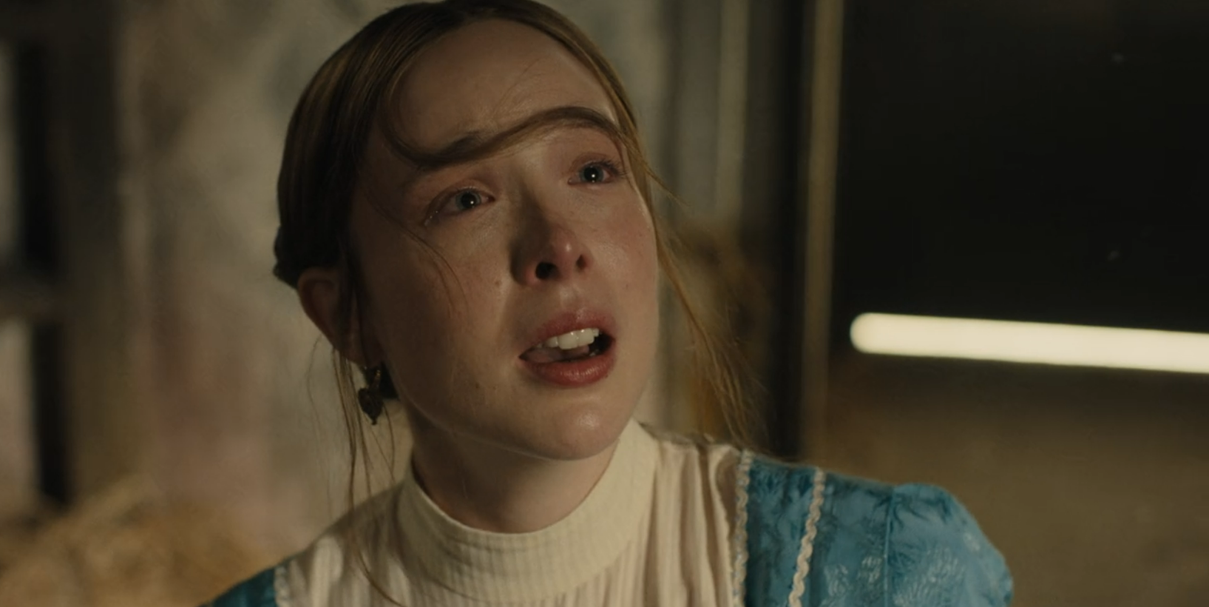
Following Emma Borden’s changed testimony, which brings the definitive turn in the case and ultimately frees Lizzie, the two sisters inherit their parents’ wealth and go on to lead a life of luxury. Their experiences, however, turn out to be far from equivalent, as while Lizzie seems comfortable with not having a family of her own, Emma slowly gets reduced to a shell of her former self. That isn’t to say that Lizzie’s life is perfect either, as her torment is, and remains, a psychological one. While it isn’t guilt that she feels about her act, the very idea that she cannot go back and change anything anymore haunts her, especially because Bridget isn’t there to share the weight with her this time.
Though we don’t get to see the entirety of Lizzie’s life in detail from the moment of her conviction, it is implied that she is never once brought in for a retrial in the murder case. The court of public opinion is far less kind to her, as Lizzie has to watch her life’s story get altered and mythologized in real time, hauntingly recreating her own experience with the tale of Elizabetta. While the gruesome, macabre story informs a huge chunk of her psyche, it doesn’t escape Lizzie that she is merely glancing at one end of the story. How history chooses to remember Elizabetta and eventually Lizzie herself is solely through the lens of a crime she isn’t even found guilty of. While later renditions, such as the book Aileen loves, do paint a fuller picture of the circumstances Lizzie went through, the deepest truths about her life remain shrouded in mystery.
Do Lizzie and Bridget End up Together?
The final episode reunites Lizzie and Bridget as lovers, revealing that they have maintained a passionate affair for more than a decade. The first time we see Bridget after her escape is at the trial, when Lizzie gets acquitted and walks out, suppressing her jubilation. The sight of Bridget essentially completes this long and arduous journey for her, and through the timeskip, it is implied that the two lovers are eventually reunited, though in secret. In her time of keeping a low profile, Bridget moves to the countryside, uses the cash she packed to buy a stone house, and marries a much older man, all in the hopes of having a better life. In reality, however, she soon finds herself retreating to a morose disposition, and that is only quelled when she leaves her unhappy marriage for good.
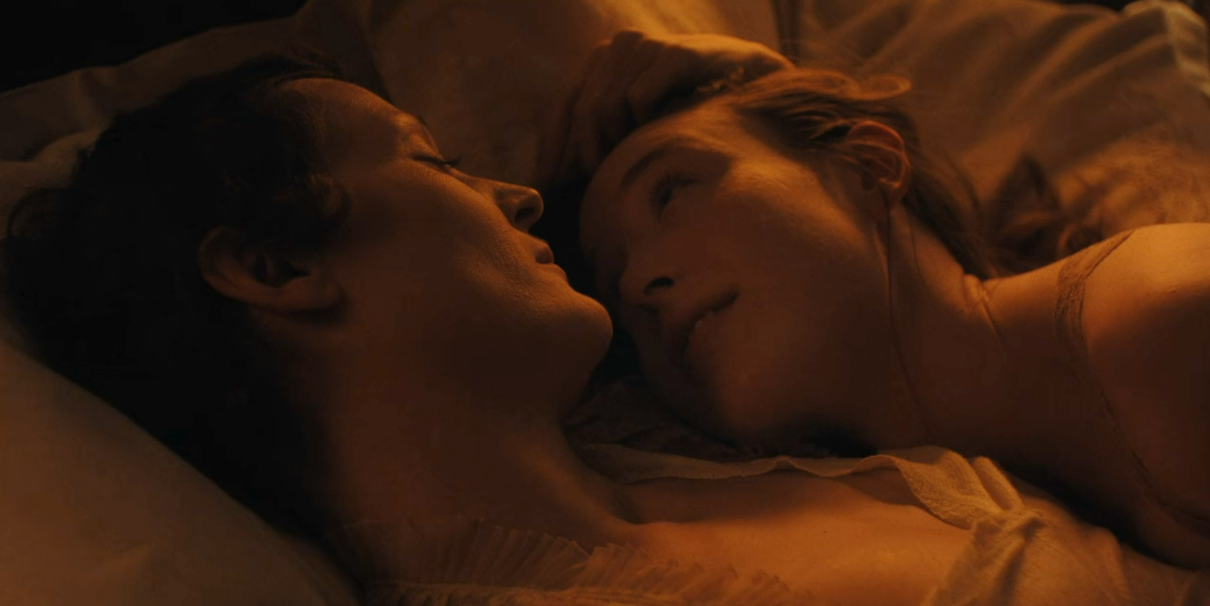
While Lizzie and Bridget emerge as co-conspirators in the killings of Andrew and Abby, their lives take on completely different directions from that point onwards. That isn’t necessarily because of Lizzie, though, as she wants Bridget to move in from the get-go. What truly holds Bridget back is not too dissimilar from the time when she cowered and froze at the sight of Lizzie killing Bertha Manchester. For her entire life, Bridget has been scared of her own potential, having had to hold on to anything life threw her way. Only much later does she realize that she is merely subconsciously reiterating the same fear that men have of powerful women, in her own words. Thus, she heads to Lizzie’s house without wasting a moment, with the story implying that they spend the rest of their lives together.
Who is Aileen? What Happens to Her?
Though we never learn Aileen’s full name over the course of the show, there is hardly any doubt that the character we see is a fictionalized version of Aileen Wuornos, who was found guilty of killing seven of her male clients from her time as a sex worker. While we only see Aileen’s first kill in the series, in retaliation for being sexually assaulted, the rest of her story is implied. Where things take a distinctly fictional turn, however, is in detailing Aileen’s obsession with Lizzie Borden, and how it brings her all the way to the Borden house, now turned into a Bed & Breakfast, where she celebrates her anniversary. While their stories may be separated by almost a century, a thematic through line nonetheless runs here.
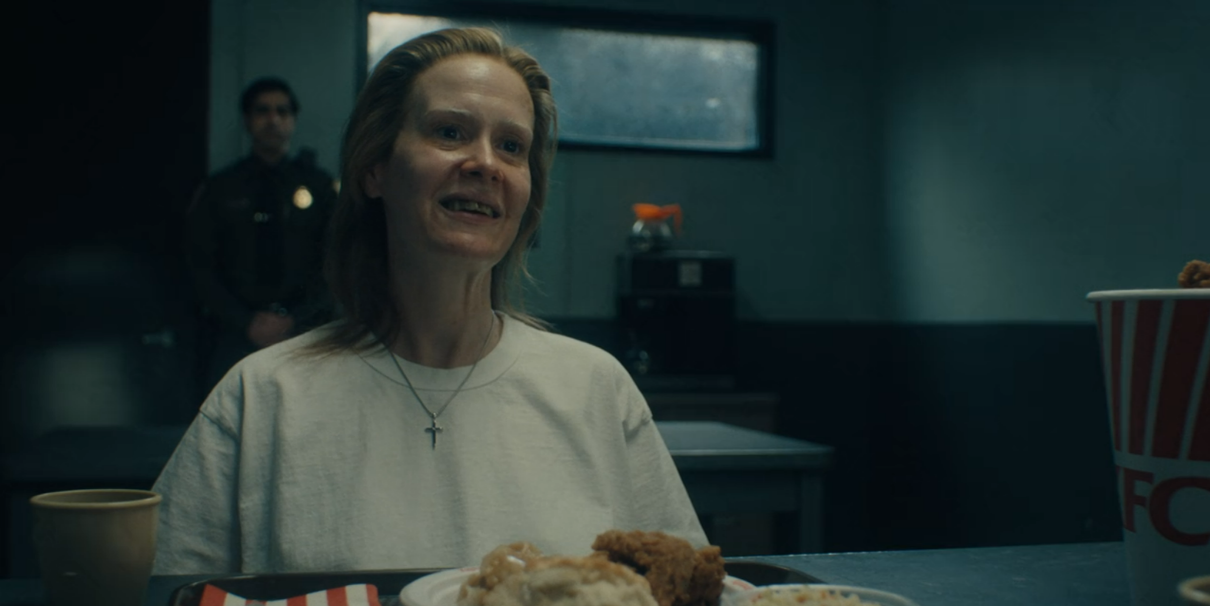
The show draws a parallel between Lizzie’s growing fascination with the story of Elizabetta and the effect that Lizzie’s own story has on Aileen. Connecting these three generations, so to speak, is a common thread of how women are put into stereotypical molds that are created by society and solidified by the system. Though we see Aileen defend herself in court by recounting the horrific experiences she endured, the ruling ultimately goes against her, and she is sentenced to death by lethal injection. As she lies still, moments away from death, she muses about Lizzie, describing her as the one who got away with a crime. In reality, however, Aileen draws strength from Lizzie’s actions, albeit in a twisted sense, before passing away.
Is the Final Scene Real or Imaginary?
The final sequence of the season, while completely fantastical in nature, also feels guttingly realistic in ways. As Aileen gets executed by lethal injection and the light leaves her eyes, the scene shifts to a brightly lit, empty version of the execution room. The only people there, alongside a now unrestrained Aileen, are none other than Lizzie and Bridget. Facing Aileen, they declare that this is the afterlife, and they are all going to meet God together. The scene isn’t meant to be taken literally, however, as we then make a harsh jump back into reality, where Aileen’s remains lie cold and motionless, with doctors declaring her time of death as the curtains roll, quite literally, on the story. The afterlife sequence, however, holds a symbolic meaning that brings these two threads together.

In ‘Monster: The Lizzie Borden Story,’ the afterlife that we see at the end represents a world without discrimination and injustices, where the truth is allowed to breathe freely. Lizzie even explicitly refers to the space as the land of the truth, and, in their particular context, it represents a world where they aren’t punished by society for their mere existence. For Aileen to be united not just with Lizzie, her idol, but also with Bridget suggests that she understands the true course of events on some subconscious level and hence manifests both of them together. While the reality of things may be far grimmer, Aileen finds some comfort in her dying moments, to land on the same wavelength as the people she identifies with the most, people who are blindly labeled by society as monsters.
Read More: Where Was Monster The Lizzie Borden Story Filmed? All Shooting Locations


You must be logged in to post a comment.